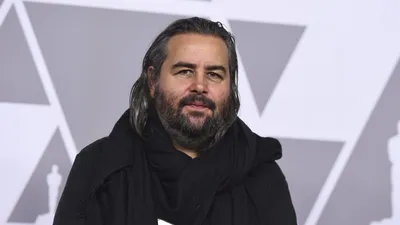
Hoyte van Hoytema: Large-Format Cinematography Breakdown for Filmmakers
Image source: ‘Dunkirk’ Cinematographer Hoyte Van Hoytema On Christopher Nolan’s Visceral Approach To Cinema
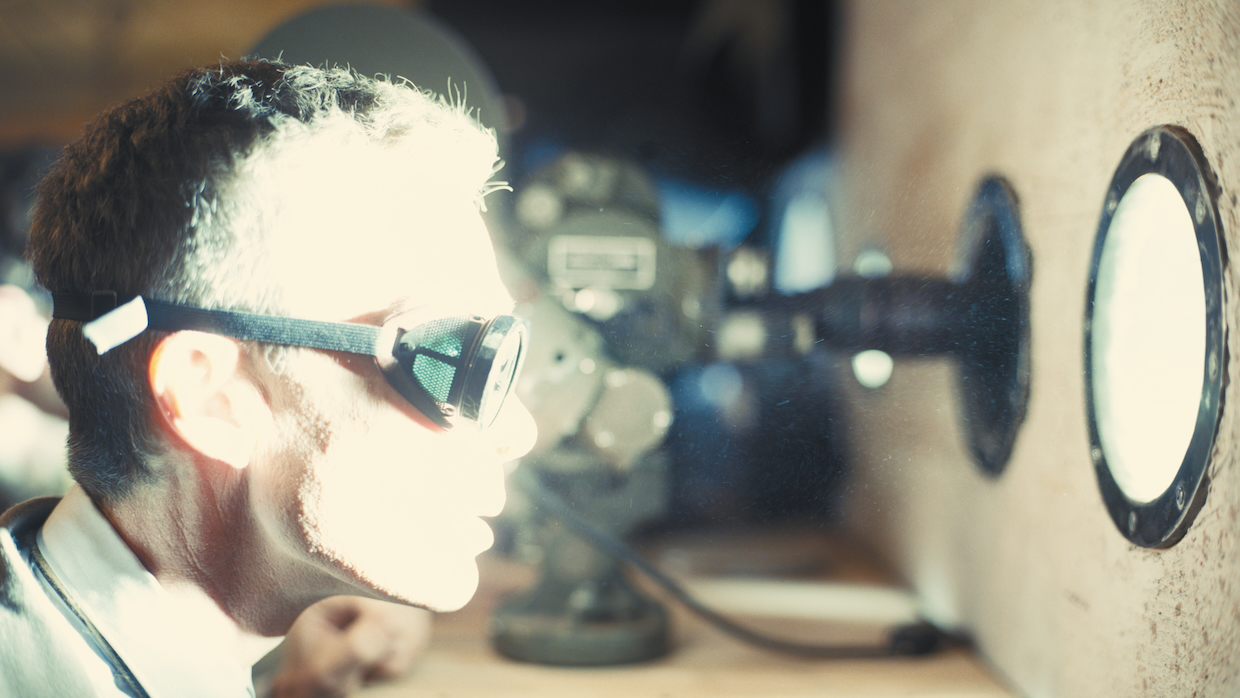
Image source: Creative Reactions: Cinematographer Hoyte van Hoytema …
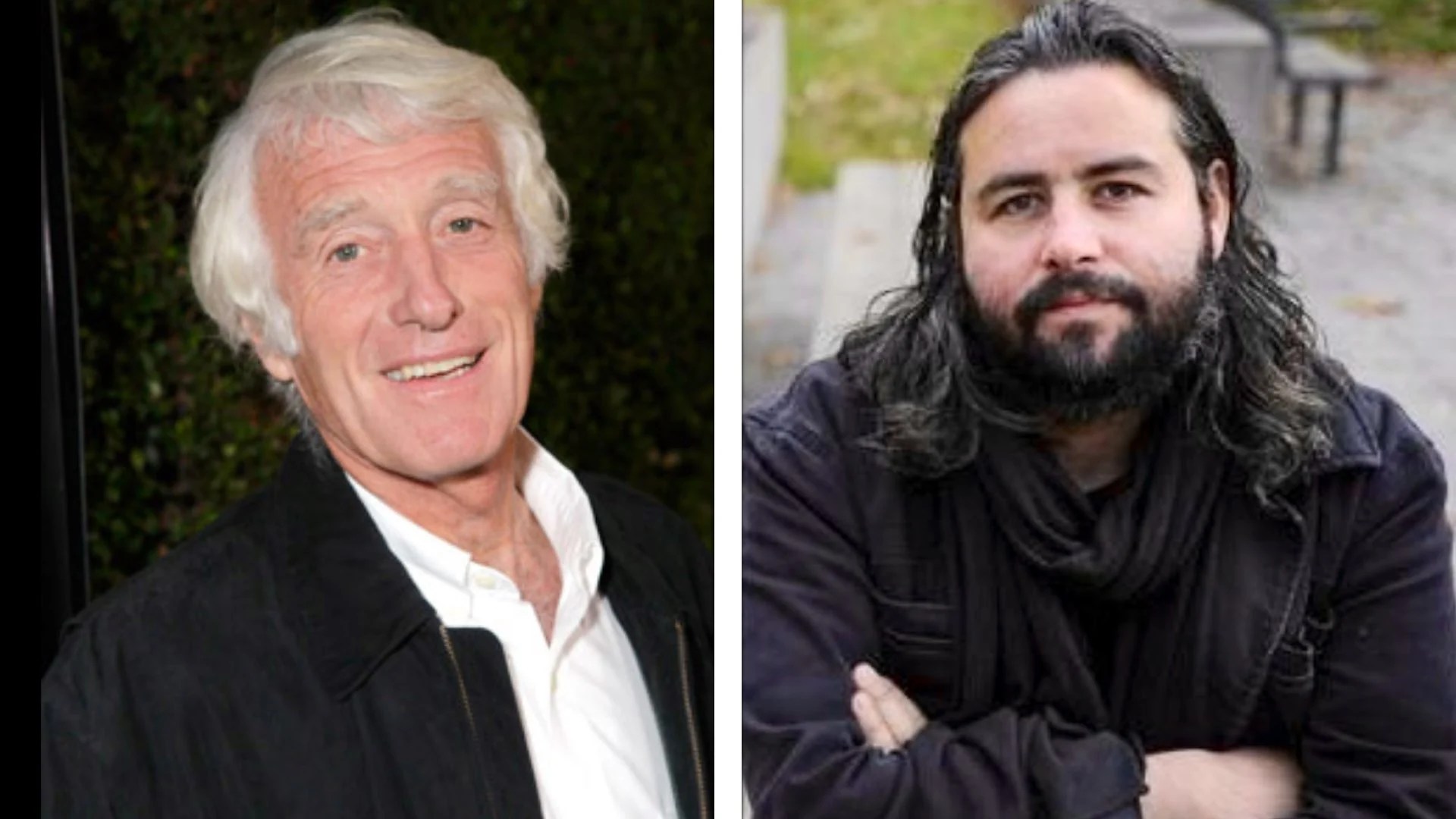
Image source: Team Deakins Interviews Cinematographer Hoyte van Hoytema
Hoyte van Hoytema’s large-format cinematography
Hoyte van Hoytema’s large-format work is not about making images merely bigger or sharper. The method is to make the viewer feel physically close to a person, landscape, or event, then shape camera choice, lensing, and lighting so that closeness survives on a giant frame. Oppenheimer is the clearest example because it applies IMAX-scale cinematography to a dialogue-heavy psychological drama. 1, 2
The format serves the scene
In Oppenheimer, the production combined 65mm film running horizontally through 15-perforation IMAX cameras with 65mm film running vertically through 5-perforation Panavision cameras. The IMAX image supplied the scale and immersion van Hoytema wanted; the quieter Panavision System 65 camera made direct dialogue recording more practical. He has said they sometimes shot additional IMAX takes of dialogue scenes in the hope of using them. That is the central trade-off: use the largest frame where it helps, without sacrificing a performance to camera noise. 1, 3, 4
His idea of immersion is also compositional. Van Hoytema describes the IMAX frame as drawing attention to a center while the surrounding world recedes into peripheral vision. Rather than asking viewers to inspect every edge of a giant image, he places them close to a person or event and lets the wider frame make that encounter feel enveloping. 2
A useful way to think about the approach is that the frame becomes spatially expressive before it becomes decorative. The scale is not there to show off resolution; it is there to control how much of the world the audience feels around the subject. In practice, that means the blocking, lens choice, and camera distance all have to work together, because a large-format frame punishes loose visual design.
flowchart LR A["Scene's dramatic need"] --> B{"Direct dialogue essential?"} B -->|Yes| C["Quieter 5-perf 65mm camera"] B -->|No or usable sound possible| D["15-perf IMAX camera"] C --> E["Choose camera distance and lens"] D --> E E --> F["Light and stage for a tangible space"] F --> G["Scale outside the subject; intimacy at its center"]Faces, lenses, and movement
For Oppenheimer, van Hoytema said 50mm and 80mm lenses were his usual IMAX “sweet spots”: 50mm for a wider view, 80mm for a tighter one. He felt much longer lenses could flatten the image, while very wide ones made its edges feel distorted. But a film built around faces needed more than those standard choices. Panavision’s Dan Sasaki adapted and built optics that could focus much closer, allowing the camera to approach actors rather than simply enlarging them from a distance. For select shots, they also adapted a 40mm IMAX lens for unusually close portraits—the “paranoia lens,” as van Hoytema and Nolan called it. 1, 3
That distinction matters because a close camera changes perspective in a way a long lens cannot. A face photographed from within its space feels embedded in the scene; a face isolated by compression can feel detached from it. In the security-hearing scenes, the tight room and close lensing keep attention on small shifts in expression rather than turning the hearing into a polished spectacle. Van Hoytema has said the constraint helped him trust the writing and performances. 3
He also works to free large-format cameras from the idea that they belong only on tripods in front of mountains. On Interstellar, he modified and supported an IMAX camera so he could operate it on his shoulder; on Oppenheimer, he again used brief handheld bursts alongside dollies and cranes. The point was not handheld movement for its own sake, but the ability to bring a large-format image into the action. When the camera can move like a participant instead of a monument, the format becomes responsive rather than stately. 1, 5
Film, light, and physical effects
The large-format negative gives van Hoytema the clarity he values, but he does not want a sterile image. For Oppenheimer, he used Kodak 65mm Vision3 250D for brighter conditions and 500T for lower-light scenes, valuing their remaining grain and texture. Kodak also manufactured 65mm Double-X black-and-white stock for the film; making it work required camera-gate and pressure-plate changes and adjustments to the processing workflow. Colour and black-and-white distinguish the film’s narrative viewpoints, not merely its eras. 1, 3
His lighting often starts with a believable source. In Oppenheimer’s Room 2021 hearing, for example, he put no fixtures inside the set: lights outside the windows were adjusted to follow the real daylight. That approach keeps the image anchored to a location rather than to a lighting plot, which helps large-format cinematography feel inhabited instead of manufactured. The scale of the frame then carries the atmosphere, while the practical logic of the light keeps the scene believable.
For the Trinity sequence, the apparent scale was assembled from distinct physical shots and effects—including on-site explosions, lit objects, and tank work photographed with a custom waterproof snorkel lens—rather than one all-purpose image of an explosion. 1, 3 That kind of construction is central to van Hoytema’s method: different images do different jobs. A close-detail shot can sell heat, a wider image can sell geography, and neither has to pretend to do both at once.
The same principle extends beyond Nolan. For Nope, van Hoytema described trying to preserve the sensation of seeing detail emerge in a dark valley, rather than lighting one patch of ground and losing everything around it. He again worked with Sasaki on lenses that let large-format cameras move closer to actors’ faces. Across these films, spectacle and intimacy are not opposites: the vast space gives the close human viewpoint its force. 6
What filmmakers can take from the method
Van Hoytema’s large-format work follows a few repeatable principles:
- Choose format by dramatic function, not prestige. IMAX is strongest when the scene benefits from size, depth, or immersion; quieter formats remain useful when sound, logistics, or performance take priority.
- Treat lens choice as a spatial decision. A 40mm, 50mm, or 80mm lens changes the relationship between face and background in a way that affects emotion, not just framing.
- Build the set to support believable light. Window light, practical sources, and exterior motivation often do more for large-format realism than aggressive fill.
- Use movement sparingly but purposefully. Handheld passages work best when they place the audience inside the scene, not when they simply advertise camera capability.
- Let effects be modular. Separate shots for heat, scale, detail, and reaction often cut together more convincingly than a single overloaded master.
For independent filmmakers, the larger lesson is that large-format cinematography is not a style of abundance. It is a discipline of selection. The frame is big, but the image still works best when every element inside it has a clear job.
References
-
Cinematographer Hoyte van Hoytema NSC FSF ASC gets up-close …
-
‘Oppenheimer’ cinematographer breaks down four key scenes: “Limitations become advantages”