Point-of-View Shots: How to Put the Audience in a Character’s Eyes
Image source: “Mastering Shot Sizes: A Filmmaker’s Guide to Transformative …
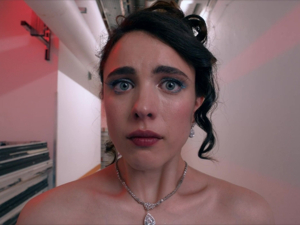
Image source: The Point of View (POV) Shot in Film — Ultimate Guide
Image source: Point of View Shot: How to Shoot POV That Lands - Soundstripe
Point-of-view shots: putting the audience in a character’s eyes
A point-of-view (POV) shot shows a scene from a character’s visual position, as though the camera has taken the place of their eyes. Its power comes not just from camera placement, but from making the audience understand whose view they are seeing. 1, 2
How the shot works
A familiar sequence shows a character looking off-screen, cuts to what they see, then returns to their reaction. The first shot identifies the viewer’s borrowed perspective; the last shows what the sight means to the character. The reaction is useful, but not essential—a filmmaker can establish the viewpoint through other cues, or withhold its owner to create suspense. 1, 3
flowchart LR A["Character looks off-screen"] --> B["Camera shows their view"] B --> C["Character reacts"] C --> D["Audience connects the sight to the character"]Imagine a character hearing a noise in an empty house. We see them turn toward a dark doorway, cut to the doorway from their eye height, then cut back as they hesitate. The doorway may reveal nothing; the POV still places us inside the moment of looking and waiting.
The most convincing POV shots usually preserve the same line of sight and visual logic that a real person would have. If the character is standing three feet from a doorway and looking slightly left, the camera should feel like it occupies that same head position and angle, not simply a random matching angle.
POV, eyeline match, and shot/reverse shot
A POV shot is one part of a larger language of continuity. An eyeline match connects a look in one shot to a subject or space in another shot, often without fully entering the character’s perspective. A shot/reverse shot alternates between two spaces or people, usually to maintain dialogue continuity. POV goes further: it replaces the neutral camera with the character’s visual position.
That distinction matters in edit terms. A scene can use an eyeline match without ever showing a full POV, such as when a character glances toward a door and the cut reveals the door from an objective angle. A shot/reverse shot can also borrow POV-like intensity when one side of the exchange is framed very tightly or from a subjective angle, but it still reads as an exchange between viewpoints rather than a literal seeing-through-the-character shot.
What it can do
POV can build closeness by letting viewers discover something at the same instant as a character. It can also create unease: a view from a watcher’s position may make the audience aware of a threat before the person being watched is. Sound, focus, and camera movement can strengthen either effect by suggesting how that character experiences the moment. 2, 3
A POV shot is not simply a close-up of something important. An insert directs attention to a detail; a POV ties that detail to a particular observer. Nor is an over-the-shoulder shot quite the same: it keeps us beside or behind the character, rather than at their eye position. 2, 3
POV is especially effective when the audience needs to identify with a specific emotional state: fear, curiosity, confusion, awe, or predation. Horror uses it for stalking and discovery. Drama uses it to show uncertainty or dissociation. Comedy can use it to let the audience occupy a character’s awkward or mistaken assumption before the reveal corrects it.
Framing and camera choices
A POV shot usually works best when the lens choice and framing feel observational rather than decorative. A moderately wide lens often reads as more human because it preserves peripheral context and spatial relationships. A longer lens can work when the character is watching from a distance, but it may feel less like direct vision and more like a spyglass.
A few practical choices shape the effect:
- Eye height: Align the camera with the character’s true eye line unless the story calls for a skewed or impaired viewpoint.
- Head movement: Small, natural pans or tilts help the shot feel embodied. A locked-off frame can imply stillness, dread, or fixation.
- Focus behavior: Rack focus can mimic attention shifting from near to far, while deep focus can suggest alertness and certainty.
- Lens distortion: Wide lenses exaggerate movement and proximity, which can intensify urgency but also make the view feel stylized.
If the character is dizzy, exhausted, intoxicated, or injured, the POV can drift, wobble, or briefly lose focus. That imperfection is often what makes the shot convincing, because a real human viewpoint is rarely perfectly steady.
Lighting and visual logic
Lighting should usually match the source and direction that the character would plausibly perceive. If the character is in a dark hallway looking toward a lit room, the POV should respect the contrast they would actually face. Exposure that is too clean or too even can flatten the subjective effect.
Motivated light helps the frame feel inhabited. A streetlamp, computer screen, practical bulb, or flashlight beam can justify what the character can see and what remains hidden. In darkness, a narrow beam or partial spill can make the frame feel more subjective than a fully illuminated space.
Color can also support the perspective. Cool, desaturated light tends to suggest distance, fear, or isolation, while warmer tones may make the view feel safer or more intimate. The key is consistency: if the POV is meant to reflect a character’s moment-to-moment experience, the look should behave like that experience, not like an unrelated establishing shot.
Making it convincing
Match the camera’s height and direction to the character’s gaze, and preserve the scene’s spatial continuity across the cut. If someone addresses the character during the POV, their gaze toward the lens can reinforce the illusion. Above all, plan the surrounding shots: an accurately placed camera may still look like an unclaimed view if the edit never establishes who is looking. 1, 3
The edit should also protect orientation. In a clean POV setup, the viewer understands where the character is standing, what direction they face, and what part of the space the shot reveals. If those relationships break, the shot becomes abstract rather than subjective.
Common mistakes include:
- cutting to a view that is too high, too low, or too far from the character’s true position
- showing too much environment before the audience understands who is looking
- using a POV when an insert would be clearer
- forgetting the reaction shot, which can leave the point of view emotionally unanchored
- overusing hand-held shake until the shot feels random instead of human
A good POV does not merely say “this is what is there.” It says “this is what it feels like to stand here and see it now.”
When not to use it
POV loses force if every important moment is subjective. Too many POV shots can flatten the grammar of a scene, especially in dialogue, where the audience also needs objective geography and clean emotional readouts from the actors. A few carefully placed POV shots usually work better than a sequence built entirely from borrowed vision.
The shot is also weaker when the story does not need identification with a single observer. If the scene’s purpose is clarity, scale, or dramatic irony, an objective camera may serve better than a fully subjective one.