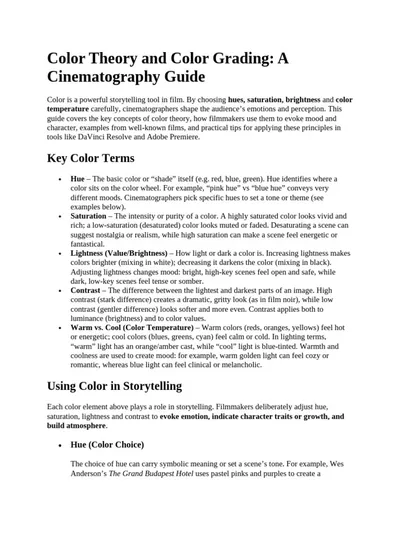
Mastering Colour Theory: Essential Insights for Cinematographers
Image source: Color Theory in Cinematography Guide | PDF
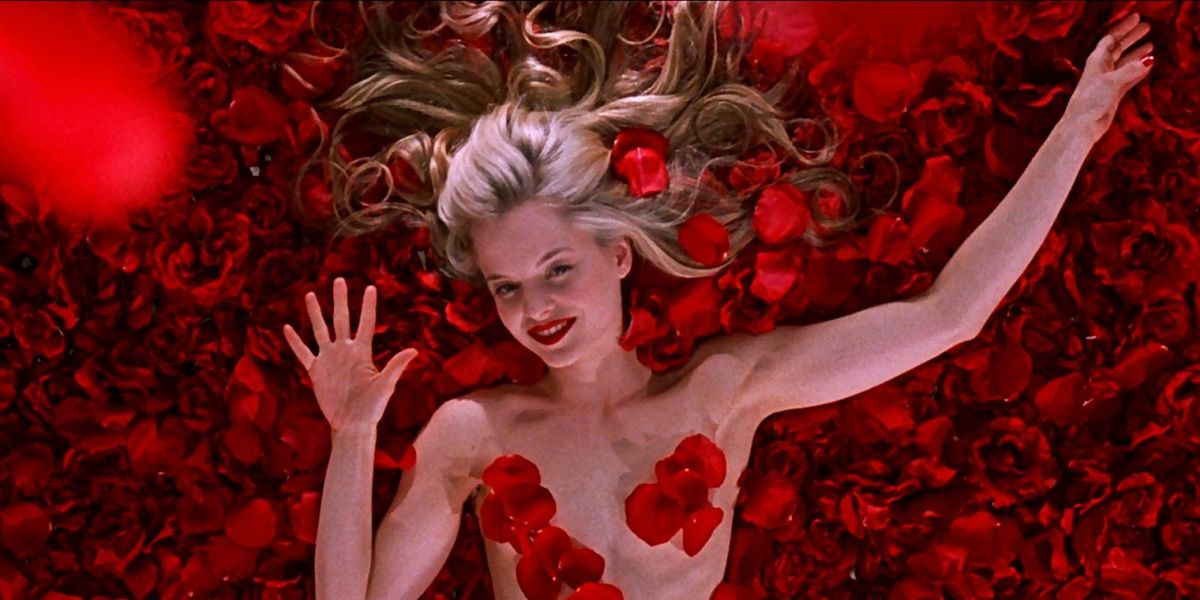
Image source: The Psychology of Color in Film
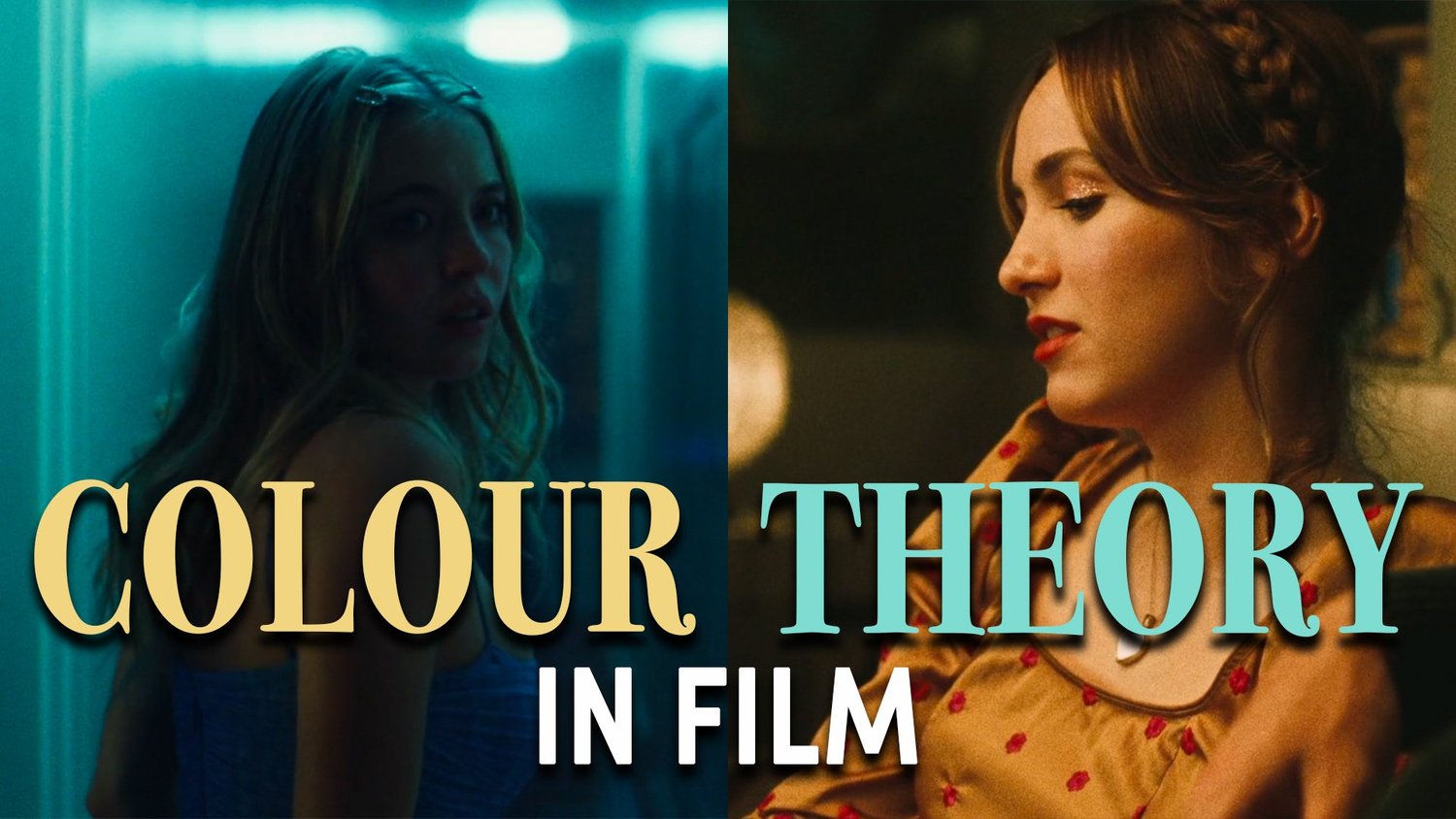
Image source: Using Colour To Tell A Story In Film - In Depth Cine
Colour theory in cinematography is the deliberate use of colour palettes, combinations, and contrasts to tell a story, evoke emotions, and shape how audiences perceive a scene. 1, 2
Core Components of Colour
Colour has three main attributes that cinematographers control:
| Attribute | What it is | Cinematic effect |
|---|---|---|
| Hue | The colour itself (red, blue, green, etc.) | Determines the emotional tone 3, 4 |
| Saturation | Intensity/purity of the colour | High saturation = energetic; desaturated = somber or realistic 3, 4 |
| Brightness (Value) | Lightness or darkness | Bright = safe/security; dark = danger/mystery 1, 3 |
The Colour Wheel & Key Schemes
The colour wheel is the foundation for choosing harmonious combinations: 1
| Scheme | Definition | When to use | Famous example |
|---|---|---|---|
| Complementary | Opposite colours (e.g., orange/blue, red/green) | High contrast, dynamic tension | Mad Max: Fury Road (orange deserts vs. blue skies) 1, 3 |
| Analogous | Neighbouring colours (e.g., red-orange-yellow) | Harmony, unity, subtle mood | The Grand Budapest Hotel (pastel pinks/reds/purples) 1, 3 |
| Monochromatic | One colour with varied shades/tints | Unified, cohesive atmosphere | Joker (green tints for chaos) 3, 4 |
| Triadic | Three evenly spaced colours (red-yellow-blue) | Vibrant, balanced energy | Spider-Man: Into the Spider-Verse 1, 3 |
Psychological Impact of Key Colours
Each hue evokes specific emotions: 3, 4
| Colour | Emotional associations | Film example |
|---|---|---|
| Red | Passion, danger, anger, love | Red coat in Schindler’s List 3 |
| Blue | Calm, sadness, isolation, trust | Moonlight (isolation) 3 |
| Green | Nature, toxicity, mystery | The Matrix (green tint) 3 |
| Yellow | Happiness, caution, madness | Kill Bill 3 |
| Orange | Warmth, nostalgia, energy | Her 3 |
| Purple | Royalty, mystery, fantasy | Black Panther 3 |
Practical Application
Colours are applied through production design/wardrobe (costumes, props, sets) and lighting during filming, then refined through colour grading in post-production: 5, 3
- Colour correction: Fixes exposure and white balance
- Colour grading: Stylizes the look (e.g., The Matrix’s green tint) 3
Colour also tracks character development (e.g., Walter White shifting from beige to black in Breaking Bad) and signals foreshadowing through palette shifts. 3
Want to dive deeper into a specific film’s colour palette or learn how to apply these schemes in your own cinematography?
References
-
Color Theory in Cinematography: How Filmmakers Use Color to Tell Powerful Stories #inhindi
-
Color Theory For Filmmakers | Mastering Color For Cinematography