
Understanding Lens Breathing: Why It Matters for Cinematic Quality
Image source: What Is Lens Focus Breathing?
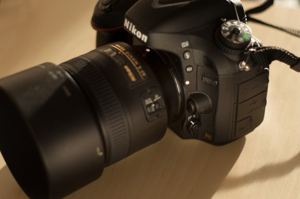
Image source: Focus/Lens Breathing: What Is It and Does It Matter? - SLR Lounge

Image source: Is Lens Breathing Being BLOWN Out of Proportion? | The PetaPixel Podcast
Lens breathing is the slight change in framing or magnification that appears when focus is shifted on a lens, making the image seem to zoom in or out a little. It matters because it can subtly alter composition, especially during focus pulls in video and in close-focus work such as macro or focus stacking. 1, 2, 3, 4
What it is
Focus changes can alter a lens’s angle of view, so the scene occupies a different part of the frame even though no zoom occurred. In practice, that means a subject may appear to grow or shrink as focus is racked from one distance to another. 3, 5, 1
The effect is easiest to notice when a shot contains strong framing references: straight lines near the edges, a face framed tightly, or a product centered on a tabletop. As focus shifts, those references appear to expand or contract along with the subject. The movement is usually small, but on a large monitor or in a careful edit it can look like the camera is breathing in and out.
Lens breathing is caused by optical design, not by camera movement. Many still lenses are optimized primarily for sharpness, size, cost, or autofocus performance, and some amount of breathing is an accepted trade-off. In contrast, cinema lenses are often designed to reduce the effect as much as possible so that focus pulls feel more consistent.
Why it matters
For still photography, breathing is often minor and easy to ignore in a single frame. For video, it can be distracting because the frame “pumps” during focus pulls, which makes the shot feel less stable or less polished. 4, 5, 6
That pumping becomes especially visible in shots where focus itself is part of the storytelling. A deliberate rack focus from a foreground object to a background subject should feel like a shift in attention, not a change in zoom. When the lens breathes heavily, the audience may notice the frame changing size instead of simply noticing the subject coming into focus.
Breathing also matters in compositional continuity. If a close-up is cut with another shot that matches framing very precisely, a breathing lens can make the transition feel inconsistent. In shot design, even a small change in magnification can affect how much negative space remains around the subject, whether a product label stays readable, or whether eyes stay positioned in the intended part of frame.
For macro work and focus stacking, the issue is more practical. When the subject is very close, small focus adjustments can create a more visible change in image scale. That can complicate stacking because each frame may differ slightly in framing as well as focus, increasing the amount of alignment work needed later.
When to care most
You care most when the framing must stay consistent: interviews, cinema work, product shots, macro, and focus-stacked images. It is usually less important for casual stills, where a slight change in magnification rarely affects the final image. 2, 6, 3, 4
Interviews are a common example because the subject’s face is the anchor of the shot. If the camera or operator makes a subtle focus correction and the head appears to swell or shrink, the movement can be more noticeable than the actual focus change. Product and tabletop work can be equally unforgiving, since the object often sits against clean backgrounds that make any framing shift obvious.
Macro work is the most sensitive of all. At close distances, the combination of shallow depth of field and magnification changes can make a focus pull feel exaggerated. Even a lens with moderate breathing at normal distances can look much more active when working close to minimum focus distance.
Practical takeaway
If you shoot video or close-up work, test lenses for breathing before important shoots and favor lenses designed to minimize it, especially cinema lenses. For everyday photography, it is usually not a dealbreaker—just something to be aware of. 7, 2, 3, 4
A simple test is to frame a scene with clear edges, focus on a near point, then shift to a far point without moving the camera. If the subject noticeably changes size or the edges of the frame “walk” inward or outward, the lens breathes enough to matter for that setup. Testing this way makes it easier to match a lens to the kind of shot it will actually be used for.
Common ways to reduce the problem include:
- choosing lenses known for low breathing in video work
- avoiding extremely critical framing on lenses that breathe heavily
- using longer focal lengths when the shot allows, since the effect may feel less disruptive in some setups
- planning focus pulls so the composition can tolerate a small shift
The goal is not to eliminate breathing in every situation. It is to know when the effect will be visible, when it will be distracting, and when it will be irrelevant. In practice, lens breathing is a small optical behavior with a big impact on how controlled a shot feels.
References
-
Focus/Lens Breathing: What Is It and Does It Matter? - SLR Lounge
-
Does Lens Breathing Affect My Zoom Lens Video Quality? - Image Review Studio