
Mastering Scene Blocking: Essential Techniques for Filmmakers
Image source: The Subtle Art of Blocking a Conversation - No Film School
Image source: Understanding Blocking and Staging in Film | PDF
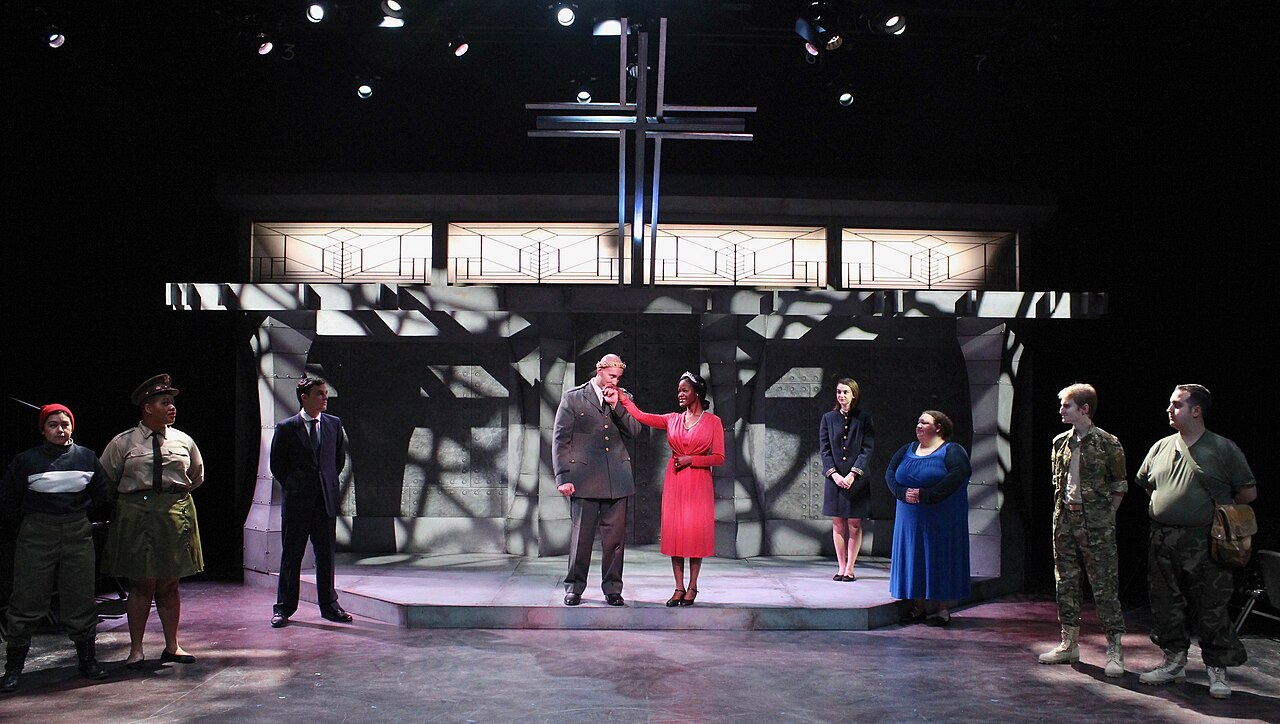
Image source: Blocking (stage)
Blocking is the planned movement and placement of actors in relation to the camera; staging is the broader arrangement of actors, props, set dressing, camera position, and camera movement within the frame. Together, they form the scene’s blueprint before the first take, shaping what the audience notices, feels, and understands. 1, 2, 3
Key differences
| Aspect | Blocking | Staging |
|---|---|---|
| Focus | Actor movement, placement, and interactions | Object/prop placement + camera placement/movement relative to blocking |
| Purpose | Choreograph actor movement; guide audience gaze & emotion | Create visual harmony and support the narrative within the frame |
| Analogy | Dance choreography | Stage design plus camera choreography |
Blocking is usually about performance geometry: where a character enters, when they cross, who takes the foreground, and how physical action changes the emotional balance of a scene. Staging includes those choices but also accounts for the frame as a whole, such as whether a doorway creates separation, whether a lamp silhouette helps depth, or whether the camera should stay fixed while the actors create motion inside the composition. In practice, good blocking and staging are inseparable because a move that reads well to the actor can feel flat or confusing once lens, angle, and background are considered.
A useful way to think about the difference is this: blocking controls the human traffic inside the scene, while staging controls the visual architecture around it. A quiet confrontation in a kitchen, for example, may begin with both characters on opposite sides of the counter, then shift when one character crosses into the other’s space. That single cross changes the power dynamic, but the surrounding staging determines whether the audience feels tension through distance, clutter, negative space, or a compressed close-up.
The 5 stages of blocking a scene on set
- Block – Decide where actors stand, move, and interact, then establish the first camera position 5
- Light – Light the set and position the camera for the first shot 5
- Rehearse – Run the scene with camera, actors, and crew for that setup 5
- Adjustments – Fine-tune lighting, movement, or framing based on the rehearsal 5
- Shoot – Capture the scene, then repeat the cycle for the next setup 5
This workflow keeps the scene readable from the outset instead of treating camera and performance as separate problems. It also prevents a common production trap: lighting for a blocking plan that changes later, which can force time-consuming relights or compromise the shot design.
Practical pre-shoot steps
- Start with a shot list: It maps where camera and actors need to go. 5
- Let actors try moves first: Observe their instincts, then refine them. 5
- Mark positions on the floor with spike tape for consistency. 4
- Rehearse with the camera present so movements fit the framing. 4
- Think in beats: Movement should track emotional or narrative shifts. 4
- Don’t over-block: Leave room for natural performance choices. 4
- Record rehearsals and review playback to see how staging reads onscreen. 4
A shot list does not need to dictate every step of the performance. Its real value is in identifying the visual requirements of the scene: which lines need coverage, where the axis must stay intact, and whether the setup relies on a clean profile, a push-in, or a reveal. Once those requirements are clear, the blocking can be built around camera logic instead of being forced into coverage after the fact.
Floor marks are especially useful in scenes with eyeline precision, practical effects, or shallow depth of field. A simple piece of tape can preserve continuity across multiple setups, but marks should support the performance rather than trap it into mechanical repetition. If every move becomes a hit mark, the scene can lose breathing room and feel pre-rehearsed in a bad way.
Recording rehearsal is one of the fastest ways to spot problems in blocking. A move that feels motivated on the floor may hide a face behind a shoulder, create dead space above the head, or collapse depth when the camera changes angle. Playback also reveals timing issues: an actor may reach a position too early, stealing energy from a reveal, or too late, causing a dialogue exchange to drag.
Core principles of strong blocking
Block for story, not just coverage. A crossing, sit-down, turn, or pause should reflect a change in power, information, or emotion. If a move can be removed without changing the scene’s meaning, it probably belongs to coverage planning rather than blocking.
Use movement to direct attention. The eye follows motion, contrast, and faces. A character who moves after another character finishes a line often inherits attention, which can be used to shift emotional focus without cutting. Small gestures matter too: a hand on a table, a step backward, or a delayed turn can reframe the scene.
Respect the camera’s perspective. A blocking choice that works in the room may fail in the lens. A wide lens can exaggerate spatial separation and make movement feel larger; a longer lens compresses distance and can make even a small cross feel heavier and more intimate. Blocking should be designed with the intended lensing in mind.
Protect eyelines and screen direction. In dialogue, a character’s position relative to the lens and scene geography affects whether the exchange feels stable. Crossing the line, turning the wrong direction, or moving without a clear spatial anchor can make the scene feel disorienting unless that confusion is part of the intended effect.
Let the environment do work. Doorways, tables, staircases, windows, and obstacles are not just background elements. They can create thresholds, barriers, and layers that make a scene feel intentional and cinematic. Good staging often uses the set to shape movement rather than simply leaving it empty.
Common blocking mistakes
- Blocking without emotional intent: Movement looks busy but changes nothing dramatically.
- Ignoring eyelines: Actors appear disconnected or mismatched in conversation.
- Overloading the frame: Too many moves compete with the dialogue.
- Flat spatial relationships: Everyone stands on the same plane, producing a static look.
- No plan for camera sync: The blocking works for performance but not for framing.
- Using movement as decoration: Characters move simply because the scene feels “too still.”
A simple method for building blocking
- Identify the scene’s emotional turns.
- Decide which character controls attention at each turn.
- Place the actors in a starting arrangement that supports that power dynamic.
- Add only the movements that change the scene’s meaning.
- Test the blocking with the intended frame and lens.
- Simplify anything that distracts from the performance.
This method works especially well for dialogue scenes, where the strongest choice is often the one that makes the relationship legible with the fewest gestures. A still scene can be more compelling than a busy one if the composition, eyelines, and performance all carry the tension.
Blocking and staging in practice
In a two-person argument, staging might place one character near a doorway and the other at the center of the room, using architecture to suggest escape versus confrontation. Blocking then defines the actual motion: who advances, who retreats, who interrupts, and when a position shift changes the emotional balance. In a more complex scene, such as a group conversation, staging establishes who anchors the frame while blocking determines how the scene’s attention moves from one character to another.
Strong scene blocking is often invisible in the best sense: the audience feels the story, not the mechanics. When movement, framing, and environment work together, the scene reads as natural while still being carefully designed.