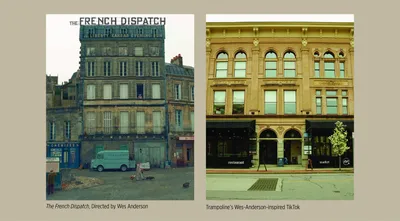
Mastering the Quirky Composition: An Insight into Wes Anderson's Shot Framing Techniques
Image source: A Wes Anderson Vignette - Trampoline Design

Image source: Pastel shades, tableau shots: Recreating the Wes Anderson aesthetic

Image source: The Cinematic Style of Wes Anderson
Wes Anderson frames shots with symmetry, centered subjects, and a very controlled, front-facing camera style that makes the image feel like a carefully arranged stage picture. He often uses planimetric composition, where the camera sits perpendicular to the scene, so characters and objects read as flat, graphic shapes rather than deep space. 1, 2, 3
How he composes
- He centers people and props so the frame feels balanced on both sides. 2, 1
- He favors straight-on views and tableaus, which makes scenes look orderly and slightly artificial in a deliberate way. 4, 2
- He uses wide lenses and carefully designed sets so the whole composition can stay legible and symmetrical. 5, 1
- Movement inside the frame often follows clean horizontal or vertical lines, reinforcing the geometric feel. 1, 4
Camera behavior
His camera is often still, which puts more attention on framing, blocking, and production design. When the camera does move, the move is usually precise and noticeable, like a whip pan, snap reveal, or deliberate tracking shot. That restraint is part of the style: the shot feels composed first, dynamic second. 6, 7, 8, 9, 2, 1
Visual effect
The result is a world that feels controlled, storybook-like, and slightly two-dimensional. Symmetry and centered framing create calm, while the quirky sets, colors, and movement create energy inside that rigid structure. 10, 2, 4, 1 A good shorthand is: Anderson doesn’t just film a scene, he arranges it like a diorama. 9, 1
References
-
Pastel shades, tableau shots: Recreating the Wes Anderson aesthetic
-
Refer to the video, “Wes Anderson: Directing Style,’ embedded in …
-
This is How to Shoot Photos in the Style of Wes Anderson | PetaPixel
-
Wes Anderson eat your heart out 👀 simonmeyer_director with …