
Mastering Light: The Art of Soft vs Hard Lighting in Cinematography
Image source: Hard light vs soft light photography: What’s the difference?
Image source: Hard and soft light - Wikipedia
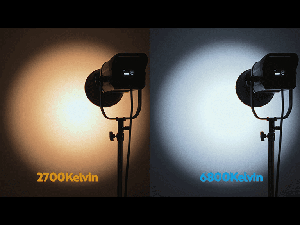
Image source: Hard Light vs Soft Light Photography - GVM Official Site
Soft light creates gentle, diffused shadows with smooth transitions between light and dark, while hard light produces sharp, well-defined shadows with high contrast. This fundamental difference completely shapes a shot’s mood, texture, and how flattering it appears. 1, 2
Key Differences at a Shot
| Aspect | Soft Light | Hard Light |
|---|---|---|
| Shadow edges | Gradual, feathered transitions 2 | Sharp, crisp boundaries 1, 3 |
| Contrast | Low contrast, even illumination 2 | High contrast, dramatic 1, 4 |
| Texture | Minimizes texture, smooths skin 1, 5 | Accentuates texture and detail 1, 2 |
| Mood | Flattering, natural, warm, friendly 6, 7 | Dramatic, tense, mysterious, intense 6, 7 |
| Typical uses | Portraits, fashion, interviews, beauty 1, 8 | Fashion, drama films, gritty urban scenes 1, 9 |
Soft light wraps around faces and objects, which is why it often feels forgiving on skin and surfaces. Hard light acts more like a cut shape, carving out cheekbones, wrinkles, fabric weave, brick walls, and smoke with much more definition. In practice, the choice is not just aesthetic: it changes how the audience reads age, geography, social class, and emotional pressure in a frame.
What Determines Hard vs. Soft?
The size of the light source relative to your subject is the key rule:
Distance matters too: A small source far away creates hard light; the same source brought close becomes softer. 8
That relationship is what matters most in cinematography. A 1-meter softbox can still feel hard if it is far enough from a full-body subject, while a bare practical lamp can feel surprisingly soft on a close-up if it is placed very near and diffused by bounce or fabric. The shadow transition tells the story: the larger the source appears from the subject’s point of view, the softer the falloff at the edge of the shadow.
How Soft and Hard Light Read on Camera
Soft light tends to produce:
- smoother skin
- gentler cheek and nose shadows
- lower apparent texture
- a broader, more even exposure across the face and background
Hard light tends to produce:
- more visible pores, wrinkles, fabric detail, and surface irregularity
- deeper shadow pockets under the brow, nose, and chin
- stronger separation between lit and unlit areas
- a more graphic, sculpted frame
This is why hard light often feels more “real” in harsh environments, while soft light feels more controlled and polished. Neither is inherently better; each supports different visual intent. A scene about tenderness, beauty, or calm often benefits from soft wrap, while conflict, isolation, heat, or danger can be amplified by hard shadow structure.
How to Create Each
Soft light techniques:
- Use softboxes, umbrellas, or diffusion cloth 9, 10
- Bounce light off a large white surface 9
- Shoot on overcast days or in shade 9
- Place a large source close to the subject 8
Hard light techniques:
- Use a bare bulb, spotlight, or direct sunlight 3, 9
- Keep the source small and undiffused 11
- Position light farther from the subject 8
- Shoot during midday sun for natural hard light 9
A useful way to think about this on set is that diffusion changes the apparent size of the source. A bare LED panel is usually harder than the same panel through heavy diffusion, because diffusion spreads the emitting area and softens the shadow edge. Bounce can go even softer than direct diffusion when the bounce surface is large and close enough to the subject to become the dominant source.
Practical Trade-Offs
Soft light is often chosen for flattering faces, but it can flatten a scene if every surface receives the same treatment. Excessive softness can erase dimensionality, especially in product work, interiors, or dramatic dialogue scenes where shape matters. Hard light gives form and contrast, but it can become unforgiving fast: shiny foreheads, under-eye shadows, and skin texture become more visible, and exposure must be managed carefully to avoid clipped highlights.
A balanced approach often works best:
- soft key with controlled hard edge detail
- hard key with bounce fill to keep faces readable
- hard sunlight tempered by diffusion for exterior dialogue
- soft ambient with a harder backlight to separate the subject from the background
That mix lets a shot keep dimensionality without losing control over the face.
When to Choose Each
Choose soft light when:
- You want flattering portraits that minimize imperfections 1
- Creating a naturalistic, welcoming look (e.g., 500 Days of Summer) 7
- Lighting interviews or commercial beauty shots 8
- You want to add youth to a subject’s face 5, 12
Choose hard light when:
- You need drama, mystery, or tension (e.g., Apocalypse Now) 7
- Emphasizing texture (architecture, gritty urban scenes) 9
- Creating strong silhouettes or highlighting contours 7
- Fashion photography requiring bold contrast 9
The lighting choice is one of the most powerful storytelling tools in cinematography—it can completely change your story’s emotional tone. 8
Common Mistakes
One common mistake is treating soft light as automatically “good” and hard light as “bad.” In reality, hard light is often the stronger storytelling choice when a scene needs tension, heat, or edge. Another mistake is placing a soft source too far away and expecting softness to survive; once the source becomes small relative to the subject, the shadows sharpen.
Color also matters. A warm soft key can feel intimate and nostalgic, while a cool hard source can feel sterile or severe. The same lighting hardness can read very differently depending on color temperature, contrast ratio, and the presence of fill.
Quick Rule of Thumb
If the goal is to flatter and smooth, make the source feel larger and closer. If the goal is to define and dramatize, make the source feel smaller and less diffused. Shadow edge is the fastest visual clue: feathered edges mean soft light, hard cut lines mean hard light.
FAQ
Can hard light ever be flattering?
Yes. On strong bone structure, fashion work, or character-driven close-ups, hard light can be striking and elegant.
Can soft light still feel dramatic?
Yes, if contrast is controlled with negative fill, careful framing, or a strong background separation strategy.
Does daylight count as soft or hard?
It depends on conditions. Overcast daylight is soft, while direct midday sun is hard.
Is softness mostly about the modifier?
The modifier matters, but source size relative to the subject matters more than the modifier name alone.
References
-
Hard light vs soft light photography: What’s the difference?
-
Hard vs Soft Light: Cinematic Lighting Tips for Film & Photography | Art of Cinematography
-
What Is Hard Light and Soft Light? | Cinematography Lighting Tutorial
-
Types of Lighting in Film: Basic Techniques to Know - 42West
-
Unlocking the Secrets of Light: A Guide to Soft and Hard Lighting in Photography