Mastering the Art of Practical Effects: A Deep Dive into Christopher Nolan's Cinematic Techniques
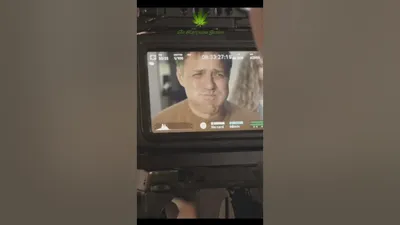
Image source: Christopher Nolan’s film making secrets Part 2 | Decoding Master Film makers film techniques
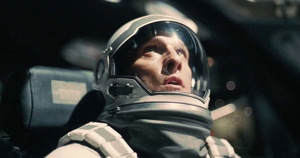
Image source: Christopher Nolan’s History With Practical Effects
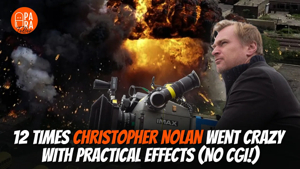
Image source: 12 Times Christopher Nolan Went Crazy with Practical Effects (No CGI!)
Short answer: Christopher Nolan favors large-format film (IMAX/70mm) and practical, in-camera effects to create tactile, high-resolution imagery and immersive scale; he combines those choices with selective VFX to preserve realism while enabling shots that would be unsafe or impossible to do purely practically. 1, 2
How he uses practical effects and large format
- Prioritize in-camera reality: Nolan shoots real sets, vehicles, and stunts whenever possible (flipping trucks, real aircraft, rotating hallway rigs, built cornfields), letting the camera record physical interactions and natural actor reactions rather than relying on full CGI. 3, 4
- Build bespoke mechanical rigs: Complex sequences are achieved by designing engineered rigs (a rotating centrifuge hallway, nitrogen pistons to flip trucks, controlled explosions and staged fuselage drops) so the effect happens on-set and in one take when needed. 4, 3
- Use large-format film for scale and detail: Nolan shoots many sequences on IMAX or 65/70mm film to capture greater resolution, dynamic range, and immersive framing; that format amplifies the impact of practical effects because the physical textures and depth are rendered at very high fidelity. 5, 1
- Co-design camera and stock choices: For specific needs (e.g., Oppenheimer’s IMAX black-and-white scenes) he and his cinematographer have worked with film manufacturers to adapt stock and camera components so large-format cameras can deliver the desired look and intimacy. 1
- Blend VFX sparingly and purposefully: Digital work is used mainly to enhance or clean up practical elements (remove rigs/wires, extend plates, or augment scale), not to replace them; this preserves the feel of reality while allowing safe, composited final frames where necessary. 6, 4
Why this approach matters (two effects)
- Physical authenticity and actor performance: Practical effects elicit genuine reactions and give actors real spatial references, which increases believability on-screen. 4
- Cinematic scale and resolution: Large-format film magnifies the tactile quality of practical sets and stunts, producing immersive images on big screens that emphasize texture, depth, and scale in ways smaller formats or pure CGI often do not. 5, 1
Condensed examples
- Tenet: a decommissioned Boeing 747 and staged fuselage drops were filmed practically to create the plane-crash visuals, with VFX limited to cleanup. 3, 4
- Inception: a full rotating corridor (centrifuge) was built so fight choreography was captured in-camera rather than simulated. 4
- Dunkirk: real ships, planes, and practical aerial staging were shot on large-format film to heighten immersion. 6
- Oppenheimer: IMAX 65/70mm (including specially manufactured black-and-white stock) and practical experiments were used to create atomic-test and period-location realism. 2, 1
Short illustration
- Imagine a close-up of an actor inside a real spinning set filmed on IMAX: the grain, shifting light, and slight motion imperfections register physically on the large negative, producing a tactile presence that CGI-rendered motion often flattens. 1, 4
References
-
12 Times Christopher Nolan Went Crazy with Practical Effects (No CGI!)
-
The unbelievable practical effects Christopher Nolan has used …
-
Christopher Nolan Directing Style & Cinematography: In-Depth Analysis
-
Christopher Nolan’s film making secrets Part 2 | Decoding Master Film makers film techniques
-
Christopher Nolan: Exploring the Use of Practical Effects Over CGI
-
Ultimate Guide to Christopher Nolan and His Directing Techniques