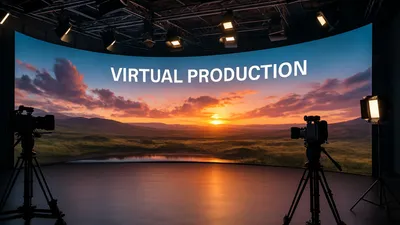
Unveiling Virtual Production: How It Revolutionises Filmmaking
Image source: What is Virtual Production & How is it Revolutionizing Film - MAGES
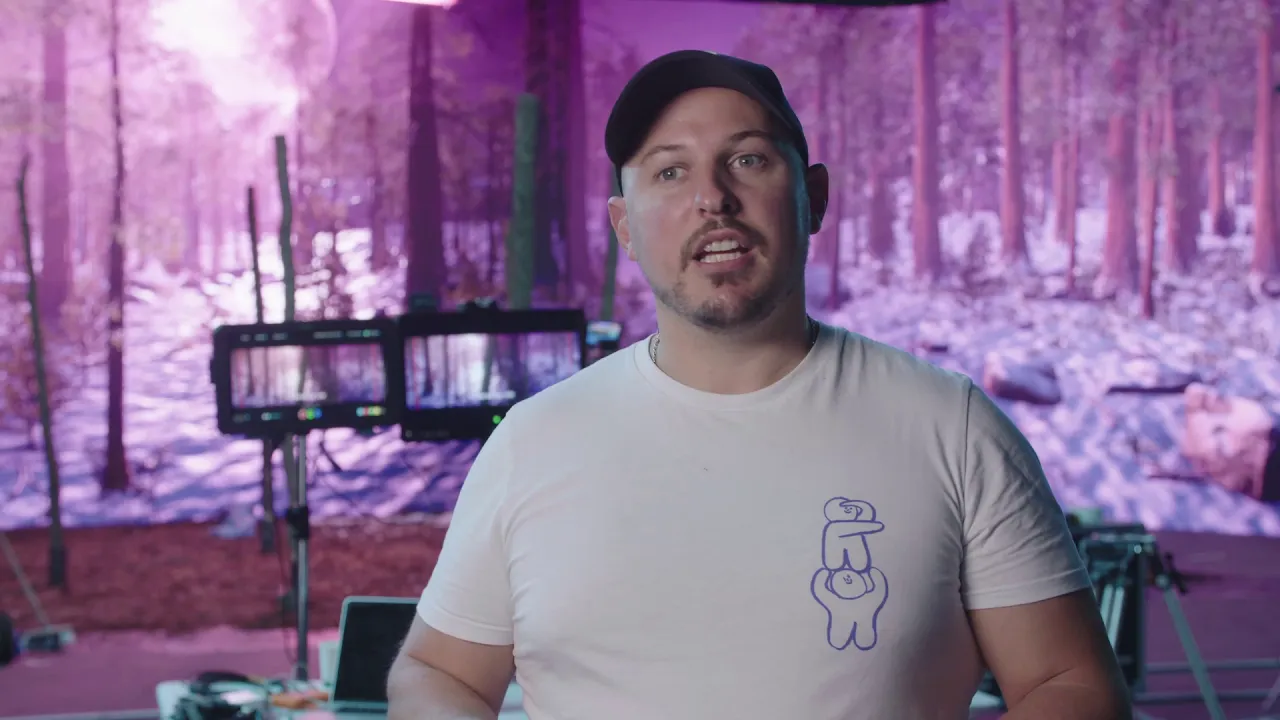
Image source: Virtual Production - Using LED Wall and Unreal Engine real-time
Image source: LED Wall for Virtual Production Studios | Refresh LED
Virtual production is a filmmaking method that merges live-action footage with real-time rendered 3D environments, allowing directors to capture physical actors and digital backgrounds simultaneously in-camera. Unlike traditional green screens where actors perform against a blank void, virtual production uses massive LED walls to display immersive environments that actors can see and interact with during filming. 1, 2, 3
How It Works
The process relies on three core technologies working together:
| Technology | Role |
|---|---|
| Real-time rendering engine (e.g., Unreal Engine) | Creates detailed 3D environments that render instantly at filming speed 1, 4 |
| Camera tracking system | Sensors track the camera’s position/movement and feed data to the engine, so the background adjusts naturally as the camera moves 5, 4 |
| LED volume (LED walls) | High-resolution curved LED screens display the 3D environment and provide real lighting that matches the scene 1, 5 |
The Workflow
- Pre-production: 3D artists design virtual sets, models, and lighting in a game engine; camera movements are planned using tracking systems 1
- Studio setup: LED walls are calibrated for color accuracy; physical lighting complements the virtual scene 5, 1
- Shooting: Actors perform in front of LED walls. As the camera moves, the background shifts in real time with correct parallax (background elements move relative to camera position), creating realistic depth 6, 5
- Real-time adjustments: Directors and VFX teams can change backgrounds, lighting, or colors instantly on set 2, 5
- Post-production: Minimal work needed—mostly color correction and minor tweaks, since most effects are captured in-camera 2, 1
Key Benefits vs. Green Screen
| Aspect | Virtual Production | Traditional Green Screen |
|---|---|---|
| Actor performance | Actors see the environment, enhancing reactions 1 | Actors perform against blank green, less natural 1 |
| Lighting | LED walls emit realistic light matching the scene 6 | Lighting added entirely in post-production 6 |
| Post-production time | Significantly reduced 1, 2 | Heavy compositing required 1 |
| Location flexibility | Switch “locations” instantly 6 | Requires physical setup changes 6 |
Virtual production was famously used in The Mandalorian and is becoming accessible for smaller projects beyond Hollywood. 6, 1
References
-
Virtual Production: what it is and how it is transforming Visual Design
-
What is Virtual Production & How is it Revolutionizing Film - MAGES
-
Virtual Production Explained — Is This The End of the Green Screen?
-
Virtual Production - Using LED Wall and Unreal Engine real-time