Depth of Field Explained: Aperture, Focal Length and Subject Distance for Cinematic Control
Image source: Depth of field - Wikipedia
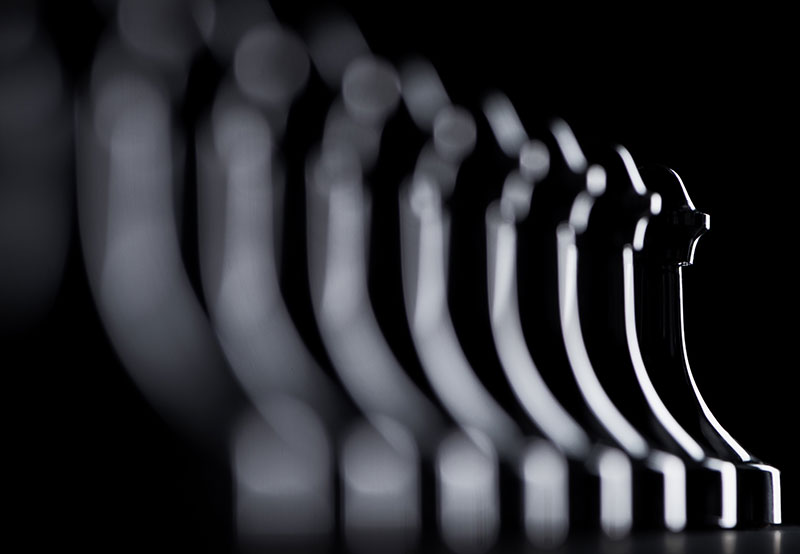
Image source: What Is Depth of Field: Exploring Visual Storytelling Through Focal …
Image source: frameandfocal.com · control-depth-of-field-in-photographyMaster Depth of Field: Aperture, Distance, and Focal Length…
Depth of field explained
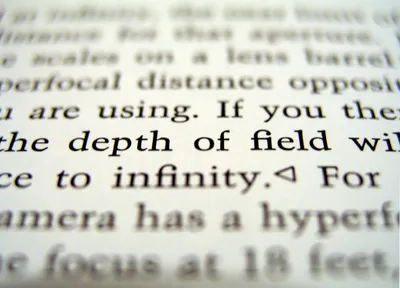
Depth of field is the range of distances in a photograph or shot that looks acceptably sharp. A camera focuses at one exact distance, but objects slightly in front of or behind that plane can still appear sharp if the blur they create is small enough to be tolerated. There is no hard edge where sharpness suddenly stops; the limit depends on how large the image is displayed and how closely it is viewed. 1, 2
For cinematography, depth of field is one of the most practical focus tools available. It controls how much attention stays on the subject, how much the background competes with the frame, and how “forgiving” focus is from take to take.
The three controls
| Control | For shallower depth of field | For deeper depth of field |
|---|---|---|
| Aperture | Use a wider opening, such as f/2.8. | Use a smaller opening, such as f/11. |
| Subject distance | Move closer and focus nearer. | Move farther away and focus farther out. |
| Focal length | From the same camera position, use a longer focal length. | From the same camera position, use a shorter focal length. |
These comparisons assume the other settings stay the same. A lower f-number means a wider aperture; a higher f-number means a smaller one. 1, 2
Why they work
A point at the focused distance forms a point on the sensor. A point at another distance forms a small blur spot instead. A wider aperture makes that spot larger; a smaller aperture makes it smaller. Depth of field is the range over which those blur spots remain small enough to appear sharp.
Focusing closer generally narrows that range, which is why close-up work can leave only a thin slice of a subject sharp. This is also why macro photography often looks extremely shallow even at moderate apertures: the camera-to-subject distance is so short that the zone of acceptable focus collapses quickly. 1, 2
flowchart LR A["Aperture, focal length and focus distance"] --> B["Size of blur spots on the sensor"] B --> C{"Small enough to look sharp?"} C -->|Yes| D["Within apparent depth of field"] C -->|No| E["Visible foreground or background blur"]Aperture: the strongest and most direct control
Aperture changes the diameter of the opening inside the lens. A wide aperture, such as f/1.8 or f/2.8, lets more light through and creates larger blur circles outside the focus plane. A small aperture, such as f/8 or f/11, reduces the blur circles and increases depth of field.
For cinematic work, aperture is often the first control used to separate a subject from the background. A face at f/2 can feel isolated and intimate; the same setup at f/8 can look more observational, with more of the set held in focus. The trade-off is exposure: closing down the aperture requires more light, a slower shutter, or more gain.
A very small aperture is not automatically better. At some point, diffraction softens the image overall, reducing fine detail even while depth of field increases. In practice, the “sharpest” aperture on many lenses is somewhere around the middle of the range, not wide open and not fully stopped down.
Subject distance: the overlooked control
Camera-to-subject distance has a major effect on depth of field. Move the camera closer and the in-focus zone gets thinner. Move it farther away and the zone gets deeper. This is why a close portrait, a tabletop insert, and a wide establishing shot can behave very differently even if the lens and aperture stay the same.
Distance also affects how forgiving focus is. A shot focused at 1 meter demands much more precision than one focused at 5 meters. That matters on set when subjects lean, marks drift, or the camera moves slightly.
A useful rule of thumb for blocking is that depth of field changes fastest at short distances. Once the subject is far from the camera, depth of field increases more gradually, which is why landscapes and wide interiors can keep a lot of the frame sharp.
Focal length: important, but often misunderstood
A longer focal length does not magically create shallow depth of field by itself. The key question is what stays fixed.
If the camera does not move, a longer lens enlarges the subject in the frame and usually makes the background look more blurred. If the camera moves back to keep the subject the same size, the increased subject distance offsets much of the focal-length change, and depth of field at the subject can be very similar at the same f-number. What still changes is perspective and background appearance: the background often seems closer and more compressed with the longer lens. 1, 3
That is the classic “focal-length catch.” Many filmmakers say a longer lens gives shallower depth of field, but that shorthand only works in the common case where the framing changes too. For matched framing, subject distance matters as much as focal length.
Same framing, different lens
When two shots keep the subject the same size:
- A wider lens usually requires the camera to move closer.
- A longer lens usually requires the camera to move farther away.
- The different distances alter depth of field, perspective, and how large the background appears.
This is why a 50 mm and a 100 mm lens can be used for the same portrait composition but produce different background renderings. The longer lens may feel more compressed, but the actual depth of field depends heavily on the new camera position.
Circle of confusion: the technical idea behind “acceptably sharp”
Depth of field is based on a simple practical threshold: a blur circle must be small enough to look like a point. That threshold is called the circle of confusion. It is not a single universal value; it depends on viewing conditions and acceptable sharpness standards.
That is why depth of field tables and calculators are always estimates. A shot can look acceptably sharp on a phone and look less sharp on a large projection or close inspection. In other words, depth of field is not an absolute optical cliff; it is a viewing judgment built on blur size.
Practical cinematography use cases
Portraits and dialogue close-ups
A wide aperture, moderate telephoto focal length, and generous separation between subject and background create strong subject isolation. This is the classic look for close-ups where the eyes must dominate the frame.
Product and tabletop shots
Smaller objects often need more depth of field than faces because the front and back of the subject sit on different planes. Stopping down helps keep labels, edges, and textures legible.
Landscapes and wide establishing shots
A narrower aperture and longer focus distance are common when the goal is to keep foreground, middle ground, and background all readable. The benefit is broad sharpness; the cost is slower exposure and possible diffraction if the aperture is closed too far.
Moving shots
In dolly, gimbal, and handheld work, a deeper depth of field can make focus management easier. A very shallow setting may look beautiful but can become risky if the camera or actor shifts even slightly.
Common mistakes
- Assuming focal length alone controls depth of field. Camera position and framing matter just as much.
- Confusing background size with background blur. Longer lenses can make backgrounds look larger and softer, but those are different effects.
- Stopping down without checking diffraction. More depth of field can come with less micro-contrast and fine detail.
- Ignoring subject-to-background distance. Even at a wide aperture, a subject far from the background can still look well separated.
- Thinking “in focus” means one perfect plane only. In reality, sharpness falls off gradually on both sides of the focus distance.
A simple way to think about it
Depth of field is the result of three variables working together:
- Aperture controls how large the blur circles are.
- Distance to subject controls how quickly those blur circles grow as focus shifts.
- Focal length changes framing and, through camera placement, changes the practical look of the shot.
The cleanest way to predict depth of field is to treat these as a system, not isolated settings. For cinematic control, the image is shaped as much by where the camera stands as by which lens is mounted on it.
Quick rule set
- Wider aperture = shallower depth of field.
- Closer camera-to-subject distance = shallower depth of field.
- Longer focal length at the same camera position = shallower apparent depth of field.
- Same framing with a moved camera can keep depth of field surprisingly similar.
- Smaller aperture increases depth of field, but too small can soften the image through diffraction.
Depth of field is one of the most visible focus decisions in filmmaking: it determines whether a frame feels intimate, observational, expansive, or controlled.