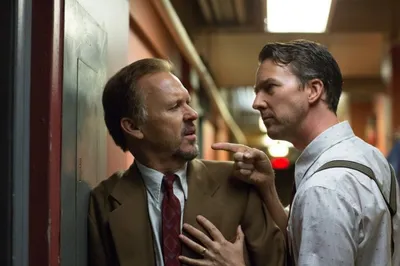
Emmanuel Lubezki Style Breakdown: Long Takes, Natural Light and Visual Storytelling
Image source: Oscar Winner Emmanuel Lubezki on Filming ‘Birdman,’ What’s Next for Iñárritu
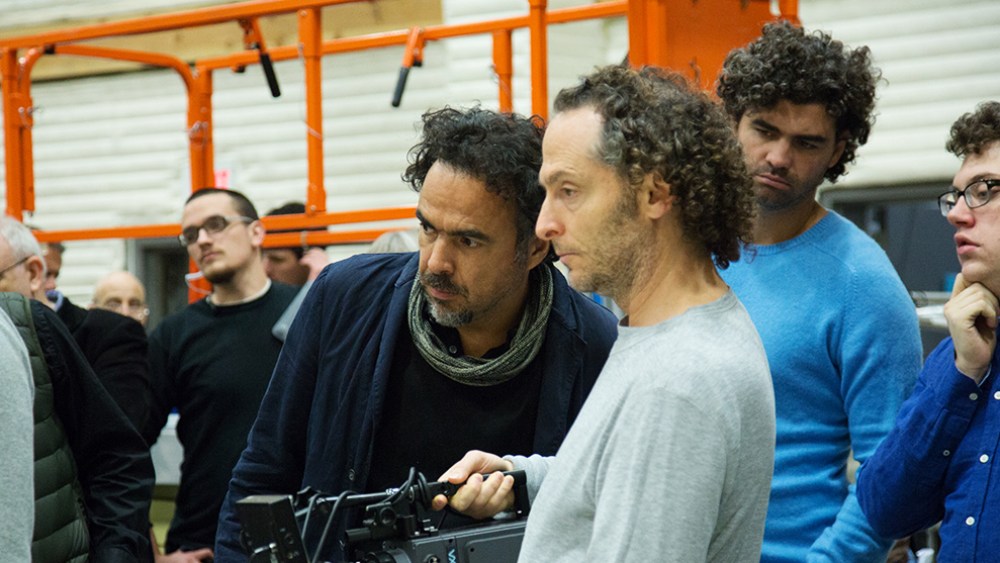
Image source: Cinematographer Emmanuel Lubezki Talks Digital, from ‘Ali’ to ‘The Revenant’
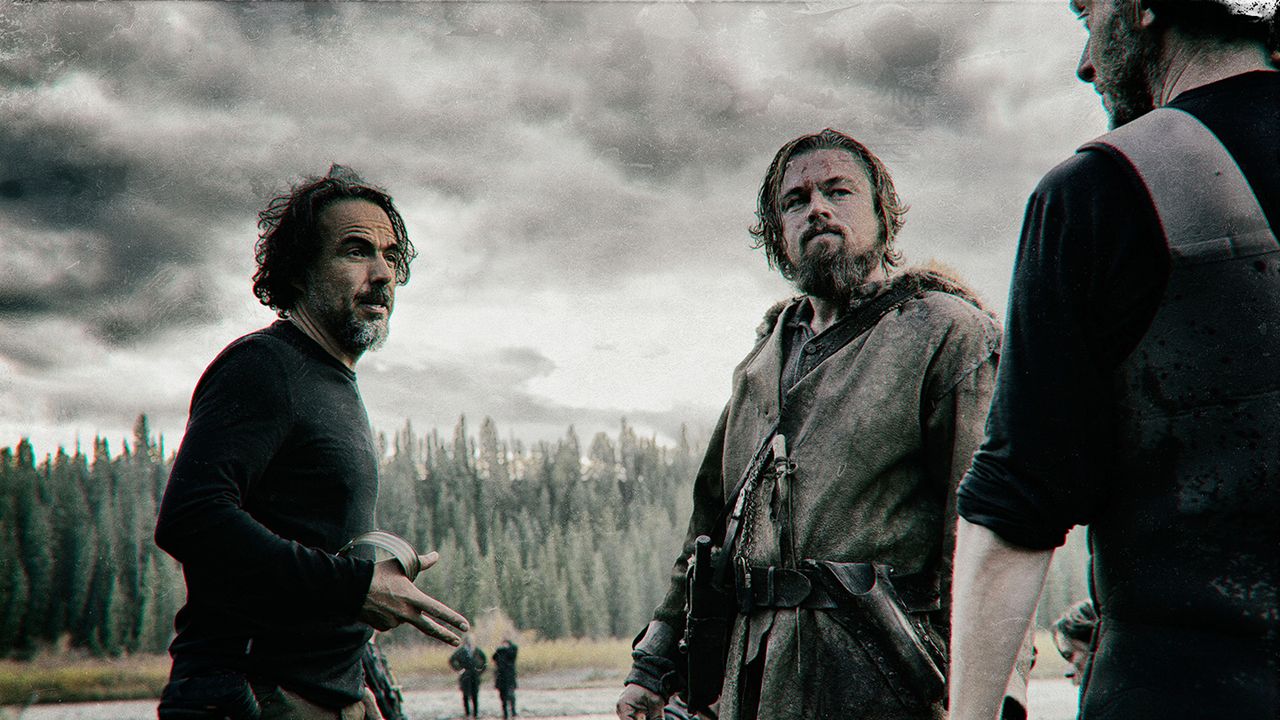
Image source: When Leonardo DiCaprio Runs Into a Freezing River, This Guy Runs After Him
Emmanuel “Chivo” Lubezki’s long takes and natural-looking light work toward the same goal: making viewers feel present in a scene rather than aware of how it was assembled. His camera can move from a face to its surroundings without a cut, while light that seems to belong to the location keeps that movement believable. He has described the combination as a way to make films more naturalistic and immersive—not as a fixed rule for every project. 1, 2
How the long takes work
A Lubezki long take often replaces conventional shot–reverse-shot coverage with blocking inside the shot. The camera follows, turns away, discovers something beyond the main character, or changes its distance from the action. In Children of Men, he and Alfonso Cuarón wanted viewers to feel they were there; Lubezki also describes moments when the camera lingers on people outside the immediate plot, giving the wider scene its own importance. 3
The wide lens is crucial. In Children of Men, Lubezki says they shot most of the film on an 18mm lens, generally keeping some distance from the actors. In The Revenant, wide views helped hold a character’s inner struggle and the surrounding wilderness in the same image. The effect is not simply “more background”: the environment remains an active part of the drama even when attention rests on a face. 3, 4
His films use continuity differently. Children of Men has sustained shots, though even its celebrated car sequence contains seamless cuts. Birdman joins long takes to create the impression of a nearly continuous film; its rhythm had to be worked out through months of blocking and rehearsal, rather than found later through ordinary coverage and editing. Lubezki says he resisted the approach until he felt it served Riggan’s experience of being trapped in the theater’s corridors. 2, 3, 5
A useful way to think about the style is as a three-part system:
- Lens: wide enough to hold body language, foreground action, and the room or landscape.
- Blocking: performers and camera move as one choreographed unit.
- Duration: the shot stays alive long enough for space to become part of the storytelling.
When those three parts align, the shot does not merely show action. It stages attention, guiding the eye through a physical world in real time.
flowchart LR A["Story's point of view"] --> B["Block actors and camera together"] B --> C["Move within a sustained shot"] C --> D["Shift attention between face and surroundings"] E["Light motivated by the location"] --> D D --> F["Viewer experiences space and time with the characters"]What “natural light” means
It does not always mean no lighting equipment. On Children of Men, Lubezki used as few movie lights as possible, but lit some sets to make the light appear to come from windows or fixtures that belonged there. He accepted changing brightness and imperfect frames when those qualities made events feel less staged. 3
Birdman relied largely on visible bulbs and practical fixtures, including changes from fluorescent to greenish to tungsten light as Riggan crossed the theater. Lubezki also acknowledges an exception: a large light outside a stage window to suggest daylight. On The Revenant, daylight, firelight, moonlight, and the time of day shaped much of the palette, but he describes adding a steady light near one wind-battered campfire and making extensive adjustments in the digital grade. “Natural” describes the image’s motivation and feel more reliably than a claim of zero intervention. 2, 6
In practical terms, the look often depends on three habits:
- Motivate every source so a window, lamp, fire, or skylight explains the direction of the light.
- Accept contrast instead of flattening it; faces can fall off into shadow if that suits the scene.
- Use the environment as the key light whenever possible, then shape it subtly rather than overriding it.
This is why Lubezki’s work can feel observational even when it is highly constructed. The lighting rarely announces itself as lighting. Instead, it behaves like weather, architecture, or time of day.
Why the choices reinforce each other
A roaming, wide-angle camera can reveal much more of a room or landscape, leaving fewer places to conceal lights. Location-based illumination makes that roaming camera feel plausible—but forces the crew to plan around windows, weather, exposure changes, and where performers will move. In Children of Men, Lubezki recalls changing the aperture repeatedly as an actor crossed a room; on Birdman, lighting and camera paths were planned together so the long moves could work. 2, 3
For The Revenant, digital cameras helped him capture low-light conditions and lengthy moving shots, but did not eliminate hard choices: he sometimes had to favor an actor’s face over detail in a much brighter sky. That trade-off is characteristic of the style. The image feels immediate partly because it allows the world’s light and space to place real limits on what the camera can show. 1, 6
There is also a storytelling advantage to this restraint. When the frame is not overloaded with artificial fill, the audience reads distance, isolation, and risk more clearly. In The Revenant, that meant the landscape could feel indifferent and dangerous rather than prettified. In Birdman, the same principle turned hallways, dressing rooms, and stairwells into emotional pressure points.
Signature traits to look for
Lubezki’s films tend to share a few recognizable traits even when the stories and settings are very different:
- Long, moving setups that let action unfold without cutting away.
- Wide lenses that keep bodies, architecture, and terrain in the same frame.
- Practical or motivated sources that make light feel found rather than added.
- Shallow but not isolating perspective: close enough to feel intimate, wide enough to preserve context.
- Choreographed camera awareness: the camera is not hidden, but it is integrated into performance.
The result is not “invisible cinematography.” It is cinematography that stays physically legible. The viewer feels the camera’s movement, but does not feel it as a technical interruption.
Common mistakes when imitating the look
The style is often copied in ways that miss its core logic. A few errors show up repeatedly:
- Using a wide lens without blocking for it. A wide focal length only works if actors and camera move with purpose through the space.
- Lighting too flat. The naturalistic feel depends on directional light and strong shape, not evenly lit coverage.
- Chasing the long take for its own sake. In Lubezki’s work, duration is tied to emotional perspective, not spectacle.
- Ignoring production design. Since the camera roams, walls, windows, practical fixtures, and exits become part of the shot design.
- Over-correcting in post. The image can lose its lived-in quality if every exposure change and shadow edge is polished away.
Why the approach matters for visual storytelling
Lubezki’s style works because it treats the camera as a witness moving through a real space, not a machine assembling coverage. The long take creates continuity of experience; the natural light preserves the logic of the world; the wide frame lets character and environment influence each other in the same instant.
That combination is especially powerful when a story depends on vulnerability, confusion, or physical endurance. The audience does not merely watch events happen. It experiences distance, weather, architecture, and motion as part of the drama itself.
In practice: what defines a Lubezki-style setup
A scene aiming for this language usually starts with the following decisions:
- Choose a wide enough lens to keep the world present.
- Map the actor’s movement before the camera move.
- Place light where the location would plausibly justify it.
- Let exposure and shadow retain some roughness.
- Use the shot’s duration to reveal information gradually.
That method is less about a single “look” than about a discipline: every visual choice serves the sensation of being inside the moment.
References
-
Emmanuel Lubezki: “Digital gave me something I could … - DPReview
-
Children of Men: Humanity’s Last Hope - American Cinematographer
-
Oscar Winner Emmanuel Lubezki on Filming ‘Birdman,’ What’s Next for Iñárritu