Extreme Close-Ups: Using Detail Shots to Maximise Emphasis
Image source: Analyzing Cinematic Shot Types: E. C. U. and Its Impact on Visual …
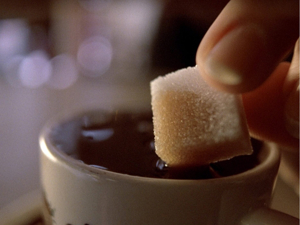
Image source: www.studiobinder.com · shot-size · extreme-close-up-shotThe Extreme Close Up Shot — Ultimate Guide - StudioBinder

Image source: What is a Close-Up Shot? A Guide for Filmmakers and Actors
Extreme close-ups: using detail shots for emphasis
An extreme close-up (ECU) fills the frame with a small part of a subject—an eye, a fingertip, a key turning in a lock. By removing the surrounding context, it tells viewers to pay attention to that detail. It can make a tiny action legible, reveal an emotion, or suggest that an object matters to the story. 1, 2
In practice, the strongest ECUs are not just “tight shots.” They are precise story beats. A detail shot becomes powerful when it changes what the audience understands, feels, or expects in that moment.
What the detail does
A detail shot works best when it has a clear job:
- Reveal information: Show the cracked seal on an envelope that appeared unopened in a wider shot.
- Intensify emotion: Isolate a character’s eyes as they recognize someone across the room.
- Build suspense: Hold on a hand hovering over a switch before showing whether it moves.
- Give an object weight: Return to a small prop at the moment its significance becomes clear. 1, 2
An ECU describes framing—how tightly the subject appears. An insert shot describes a shot’s role in the edit: it singles out information or an action within a scene. A close detail of a hand turning a doorknob can be both. 1, 3
That overlap matters. Some ECUs exist mainly to show texture, while others are functional inserts that clarify continuity: a thumb pressing a phone screen, a match striking, a keycard sliding through a reader, a finger smudging wet paint. The frame size is the same idea in both cases, but the dramatic purpose is different.
When to use an extreme close-up
ECUs work best when the story needs a focused visual beat rather than general coverage. Common uses include:
- Discovery: A detail reveals a clue the wider shot cannot communicate.
- Reaction: A small facial movement carries more meaning than a full face in context.
- Mechanical action: The audience needs to understand how something works.
- Escalation: A repeated object or gesture becomes more important each time it appears.
- Subjective emphasis: The shot momentarily places the viewer inside a character’s attention.
A useful test is whether the shot can be described as “the one thing that matters right now.” If the answer is yes, an ECU is often the cleanest way to present it. If the answer is no, a close-up or medium close-up may preserve more context and still keep the scene readable.
Make the emphasis count
Start by asking, “What must the viewer notice, and why now?” Give the audience enough context to recognize the detail, then cut close when noticing it changes their understanding. Returning to a wider view can show the consequence. For example, a wide shot establishes someone opening a letter; an ECU reveals that its seal has already been broken; the next shot lets us see their reaction. Varying tight and wide framing helps the detail stand out without losing the scene’s geography. 1, 2
Keep the crucial feature visible and in focus, especially if the shot is brief. Use ECUs selectively: when every detail receives the same emphasis, the viewer has less guidance about which ones matter most. 1, 2
The edit is where the shot earns its place. An ECU usually lands best as a punctuation mark: just long enough to register, not so long that it becomes decorative. In suspense, a short hold can feel tense because the audience is waiting for movement. In drama, a slightly longer hold can let a micro-expression or trembling hand carry the beat.
Composition and camera choices
Because an ECU removes so much surrounding information, small framing errors become obvious. Edges matter, and negative space becomes a design choice rather than a background accident.
Keep the subject legible
- Frame the most important texture or gesture cleanly.
- Avoid cutting through the exact point the audience needs to read.
- Let the subject fill the frame, but not so tightly that focus breathing, camera shake, or slight movement causes the image to feel unstable.
- Watch for reflections, out-of-focus foregrounds, or stray highlights that steal attention from the detail.
Choose the lens with care
Longer focal lengths are common for detail work because they compress perspective and allow a tighter frame from farther back. That distance can be useful with actors, since it leaves room for performance and lighting instruments. Macro lenses are especially effective for objects, hands, and surfaces because they can focus very close and preserve detail without distortion.
Very wide lenses can also be used for ECUs, but they change the feeling of the image. The perspective becomes more dramatic, and small movements look larger. That can be useful for unease or stylization, but it can also make an otherwise simple insert feel exaggerated.
Protect focus
Shallow depth of field is common in ECUs, which makes focus placement critical. If the eye, fingertip, or prop edge is the story point, focus has to land there precisely. On very close shots, even small shifts in subject distance can pull the image soft. A focus pull should be treated as part of the performance, especially when a hand moves toward camera or an actor leans in.
Lighting detail shots for clarity
ECUs live or die on readability. Since the frame contains so little, lighting should shape the subject without flattening it.
- Use direction to reveal texture: Side light or a soft raking angle makes skin texture, fabric weave, scratches, condensation, or dust more visible.
- Keep contrast controlled: Deep shadows can work, but only if the important detail stays legible.
- Separate the subject from the background: Even a blurred background can distract if it is brighter or more colorful than the detail.
- Match the scene: An ECU should feel like part of the same lighting environment unless the story clearly calls for an isolated or heightened look.
For skin, hands, and faces, soft sources are often kinder and more flattering, but a little shape is still needed. Completely frontal lighting can make an ECU feel flat and clinical. A slightly angled key often gives the shot more dimension while keeping the subject natural.
For objects, specular highlights can be useful if they indicate material—metal, glass, liquid, polished plastic—but reflections should be controlled. A highlight on the wrong edge can hide the detail the audience needs to read.
Editing with detail shots
ECUs are most effective when they are motivated by the surrounding scene. Cutting to detail without setup can feel arbitrary; cutting to detail at the exact moment of story change makes the image feel inevitable.
A typical pattern is:
- Establish the situation in a wider shot.
- Cut to the ECU for the key action, clue, or reaction.
- Return to a wider or medium shot to show the result.
That structure works because the audience can first orient themselves, then receive the important detail, then interpret its impact. In a dialogue scene, the ECU might land on a twitch, a swallowed breath, a wedding ring, or a phone screen. In a thriller, it might be a fingerprint, a bloodstain, or a hand slowing before a choice is made.
ECUs also work well as rhythmic punctuation in montages. A repeated series of close details—hands, tools, indicators, textures—can create momentum without requiring broad camera moves or complex blocking.
Common mistakes
The most common ECU problem is overuse. If the film keeps cutting tighter without a clear reason, the frame loses hierarchy and the audience stops feeling the emphasis.
Other pitfalls include:
- Missing the story point: The shot is beautifully framed but not the detail that matters.
- Poor continuity: The insert does not match the preceding action or object state.
- Unclear geography: Too many detail shots without wider anchors make the scene hard to follow.
- Flat visual design: A close frame still needs composition, not just proximity.
- Ignoring performance: A detail shot of a face or hand still depends on timing and intention.
The rule of restraint
An extreme close-up has real force because it is selective. When used with intention, it can turn a small visual fact into a dramatic event. When used too often, it becomes background noise.
The most effective detail shots are the ones the scene truly cannot do without.