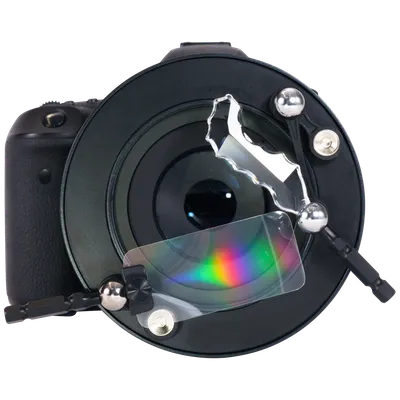
Split Diopters & Speciality Lenses: Creative In-Camera Effects for Cinematic Shots
Image source: OMNI Creative Filter System
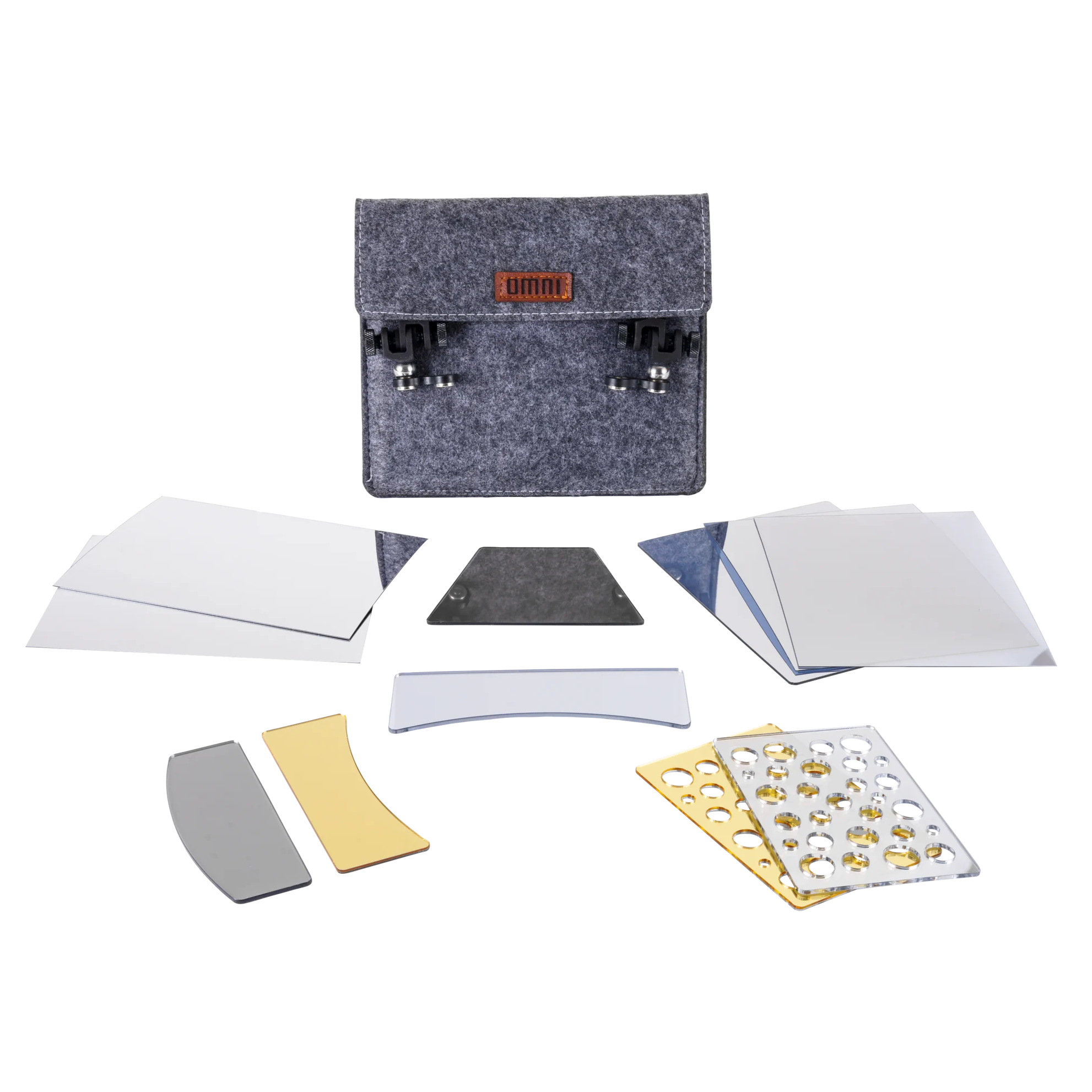
Image source: OMNI Universal Expansion Pack with Reflections
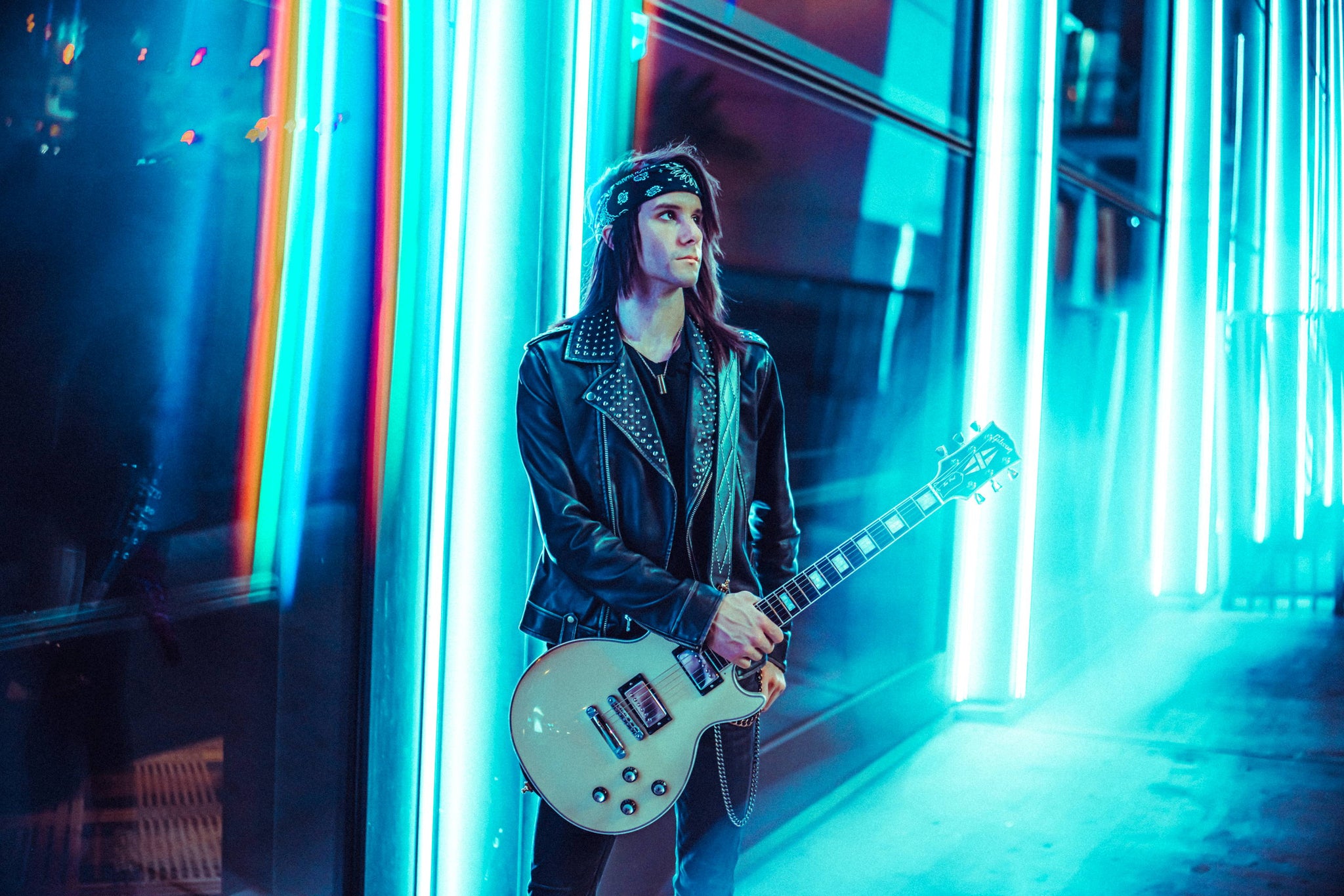
Image source: Using The NEW Flare Expansion Pack
Split diopters and specialty lenses: creative in-camera effects
A split diopter lets a very near subject and a distant subject stay sharp in the same shot without a cut. Other specialty optics change where focus falls, how highlights behave, or what the camera sees in reflection, flare, or distortion, so the effect is built into the image before it reaches post-production. 1, 2, 3
How a split diopter works
A split-field diopter is a partial close-up lens mounted in front of the taking lens. The uncovered portion records the distant subject at the lens’s normal focus setting; the glass-covered portion brings a nearby subject into focus. This creates two sharp regions, not continuous deep focus—the space between the subjects may remain soft, and the diopter’s cut edge can leave a blurred seam. 1
Because the optic affects only part of the frame, the shot works best when the boundary can be hidden in a dark area, a doorway edge, furniture, or another natural line. The seam becomes more visible when a face, hand, or bright object crosses it. Split diopters are therefore as much blocking tools as lens tools: the subject placement has to be planned around the division in the glass. 1
flowchart LR A[Near subject] --> B[Close-up glass portion] C[Far subject] --> D[Uncovered portion] B --> E[Taking lens and sensor] D --> E E --> F[One frame: near and far regions sharp]Imagine a hand holding a photograph close to camera while a person stands across the room. Put the photograph behind the diopter portion and the person behind the clear portion: both can read clearly, creating a visual relationship that an ordinary shallow-focus shot would separate. Place the seam over a low-detail area or an existing frame edge; a subject crossing it can change apparent size and sharpness abruptly. 1
The result is not just technical convenience. A split diopter creates a slightly unreal spatial logic, because the eye expects one focus plane while the frame presents two. That tension is why the effect is so common in confrontation scenes, staged revelations, and compositions where one subject must remain psychologically “linked” to another across depth.
Choose the optical effect
| Optic or attachment | What it does in camera | A useful creative purpose |
|---|---|---|
| Split diopter | Holds near and far regions sharp, separated by a potentially visible soft boundary. 1 | Link two subjects—or make their simultaneous clarity feel unsettling. |
| Tilt lens | Angles the plane of focus rather than creating two separate focus regions. 2, 4 | Keep an angled tabletop sharp, or isolate an unexpected strip of a scene. |
| Anamorphic lens | Squeezes a wide image for later desqueezing; particular designs can produce oval out-of-focus highlights and distinctive flares. 2, 5 | Give highlights and background blur a recognisable optical character. |
| Diffusion filter | Spreads light around highlights and alters contrast or fine-detail rendering; the result depends on the filter and strength. 3 | Give practical lights a glow while moderating a crisp image. |
| Prism or reflective attachment | Adds refraction, flares, doubled details, or reflections in selected parts of the frame. 6, 7 | Suggest a memory, divided viewpoint, or image within the image. |
| Streak filter | Turns point lights into directional streaks; rotating the filter changes their orientation. 8 | Add graphic light streaks without using an anamorphic lens. |
Each of these tools changes the image in a different part of the optical chain. A split diopter mainly changes focus placement. A tilt lens changes the angle of the focus plane. Anamorphic lenses reshape the image itself. Diffusion filters influence contrast and halation around bright sources. Prisms and reflective attachments re-route light to create duplication, flare, or partial abstraction. The key practical difference is that these are not generic “looks”; each one produces a specific physical behavior that can be controlled on set.
Split diopter vs. tilt lens
A split diopter gives two focus zones in one frame. A tilt lens does something else entirely: it tilts the plane of focus so that a receding tabletop, a street, or a row of objects can all fall into focus along a diagonal or angled plane. A tilt shot can feel more natural than a split diopter because the focus does not break into two sections, but it also requires more careful geometry. If the subjects are not arranged along the tilted plane, one will still fall soft.
In practice, a split diopter is best when the story requires two different depths to remain simultaneously legible, especially when they are not aligned in a continuous surface. A tilt lens is better when the scene naturally contains a plane—floor, table, bed, desk, sidewalk—that can be made sharp from near to far along that plane. The first creates tension through discontinuity; the second creates order through alignment.
Anamorphic, diffusion, prism, and streak effects
Anamorphic lenses are often chosen for their format and their character. Their squeeze factor is only part of the story; many cine anamorphics also give oval out-of-focus highlights, horizontal flares, and edge behavior that feels distinct from spherical lenses. 2, 5 The image can look elegant or gritty depending on design, coating, and stop. Anamorphic flare is not automatically “cinematic”; it becomes useful when it motivates the lighting, such as a bright streetlamp, neon sign, or headlight crossing frame.
Diffusion filters behave differently. A filter such as a Pro-Mist-style diffusion layer does not change focus placement; it softens contrast, blooms highlights, and can slightly lift the highlight edge into a subtle halo. 3 Stronger grades increase the effect, but the trade-off is reduced micro-contrast and a softer sense of texture. That makes diffusion useful for taming hard digital sharpness, especially when skin, practical bulbs, or backlights need a gentler roll-off.
Prism and reflective attachments are more experimental. A prism can split, bend, or ghost a section of the frame; a mirror or reflective piece can double faces, make a window carry two realities at once, or turn a simple light source into a layered composition. These effects are highly position-dependent: a few millimeters of movement can change the reflection from invisible to dominant.
Streak filters are the most graphic of the group. They convert point sources into long, linear streaks whose direction changes as the filter rotates. 8 The result can approximate a stylized anamorphic flare without switching to anamorphic glass, which makes them useful on projects that need a controlled sci-fi or neon-heavy light treatment but not the full workflow change of anamorphic shooting.
Build the shot
- Start with the story purpose. Decide which two subjects must be seen together, or which part of the image should feel altered. That choice should drive the optic—not the other way around.
- For a split diopter, frame first. Choose the taking lens for composition, focus its uncovered side on the far subject, then choose a diopter strength and align its glass with the near subject. Small camera-position adjustments can bring the foreground into focus. 1
- Inspect the transition at the shooting aperture. Closing the iris narrows the soft line at a split diopter’s edge; opening it widens the line. Check the seam and any movement across it on a monitor before committing to the take. 1
- Test effects with the actual lights and subjects. Diffusion is especially legible around practical or specular lights; streak filters respond to point sources; prisms and reflective pieces change with placement and rotation. Record a clean version too if a subtler pass may be needed later. 3, 7, 8, 9
- Match the optic to the blocking. A split diopter rewards a stable foreground and background relationship. Diffusion favors practicals and hard edges. Prism work favors small moves and controlled marks. Anamorphic flare needs motivated sources in frame. The most usable shot is the one whose blocking already supports the optical behavior.
A practical way to think about specialty lenses is that each one solves a different visual problem. Split diopters preserve two depths at once. Tilt lenses re-angle focus. Anamorphic lenses shape the frame and highlight behavior. Diffusion softens contrast and bloom. Prisms and reflective tools fracture or duplicate the image. Streak filters draw with light itself.
Common mistakes
- Putting the seam in a busy area. A split diopter edge becomes obvious when it cuts across faces, hands, or bright textures.
- Using the effect when blocking could solve the shot. If the subjects can be staged on the same plane, a diopter or tilt may be unnecessary.
- Overusing diffusion. Heavy diffusion can flatten texture and make practicals feel smeared rather than luminous.
- Expecting prism effects to stay constant. Reflections and ghosts shift with millimeters of movement, especially on longer lenses.
- Confusing anamorphic character with generic softness. Anamorphic gives a specific combination of squeeze, flare, and highlight shape; softness alone is not the same thing.
When the effect earns its place
The strongest in-camera effect is usually the one whose optical behavior reinforces the scene: a split diopter makes separated subjects impossible to ignore, while tilt, diffusion, or reflections can direct attention more quietly. In cinematography, the difference between an effect that looks decorative and one that feels inevitable is usually whether the lens choice is supporting the blocking, the lighting, and the narrative relationship in the frame.