Atlas
Atlas indexFractal / Mathematical-Object Cinema
The set is the equation — fly through it.
- fractal
- mandelbulb
- mandelbox
- fractal-flame
- raymarching
- distance-estimation
- infinite-zoom
- generative
What it is
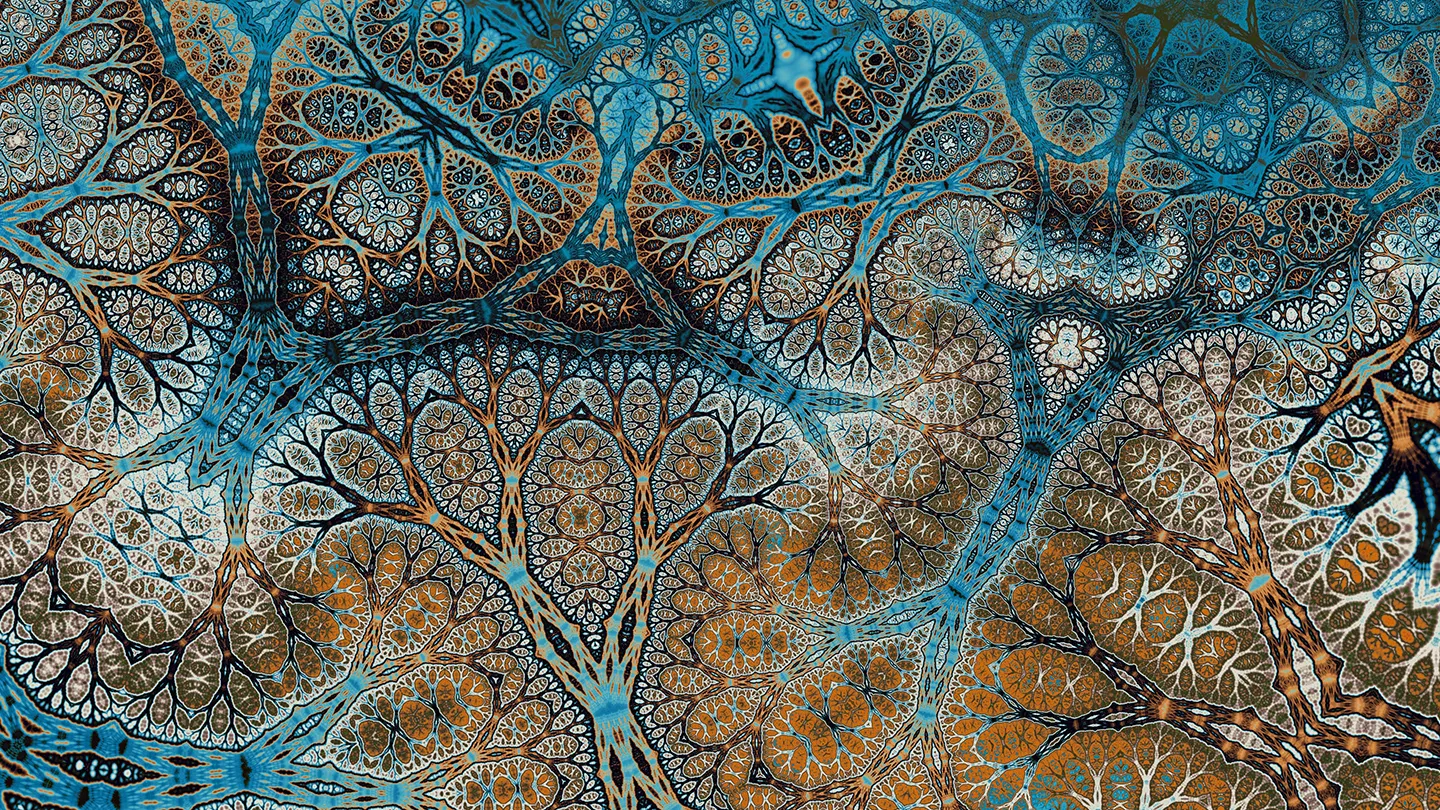
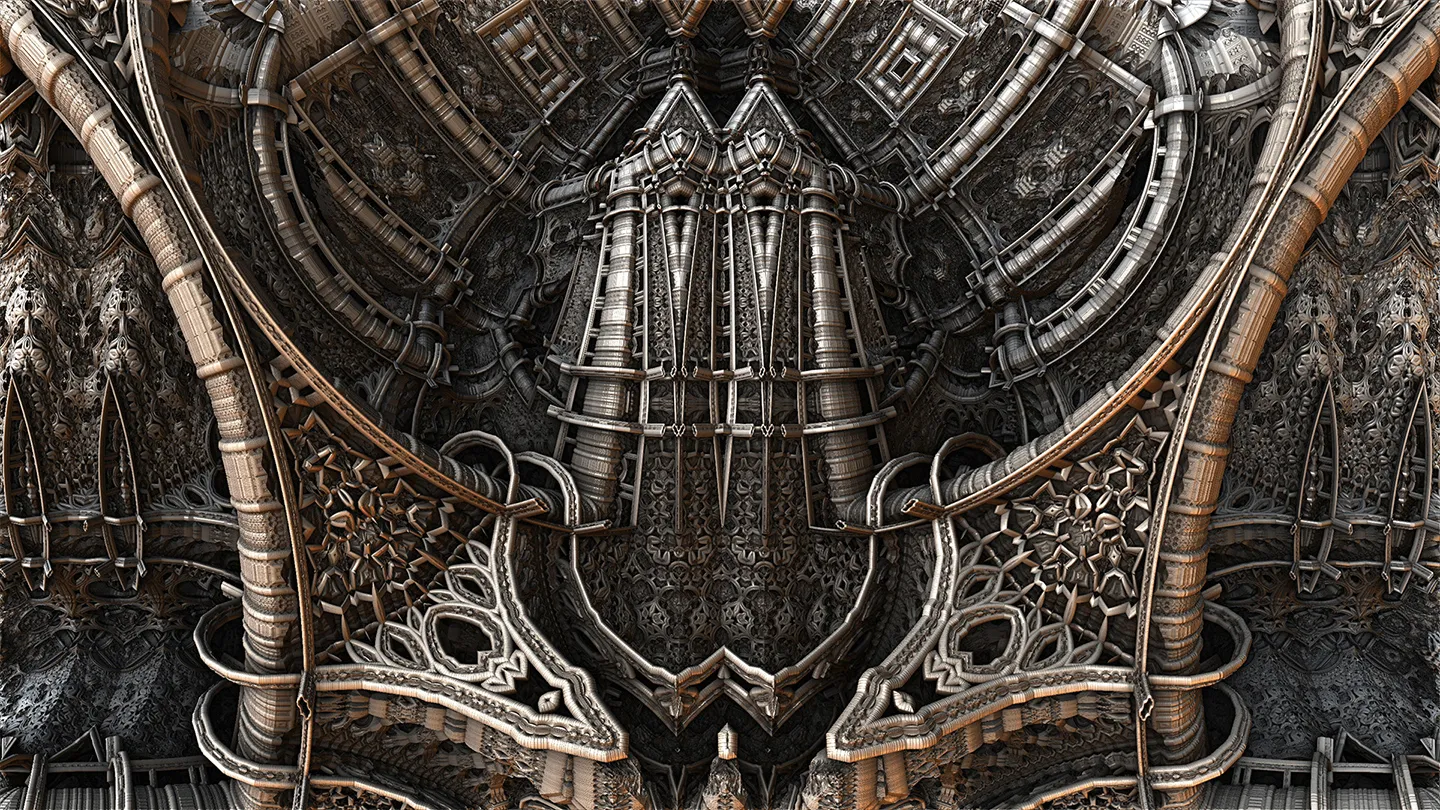
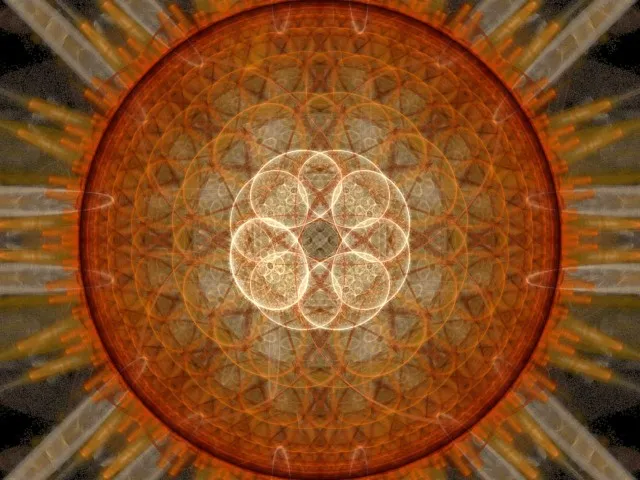
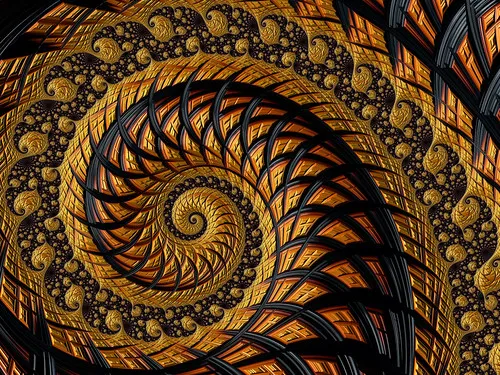
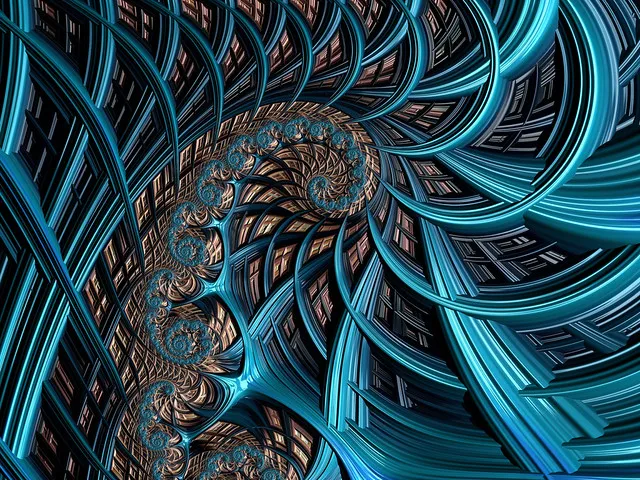
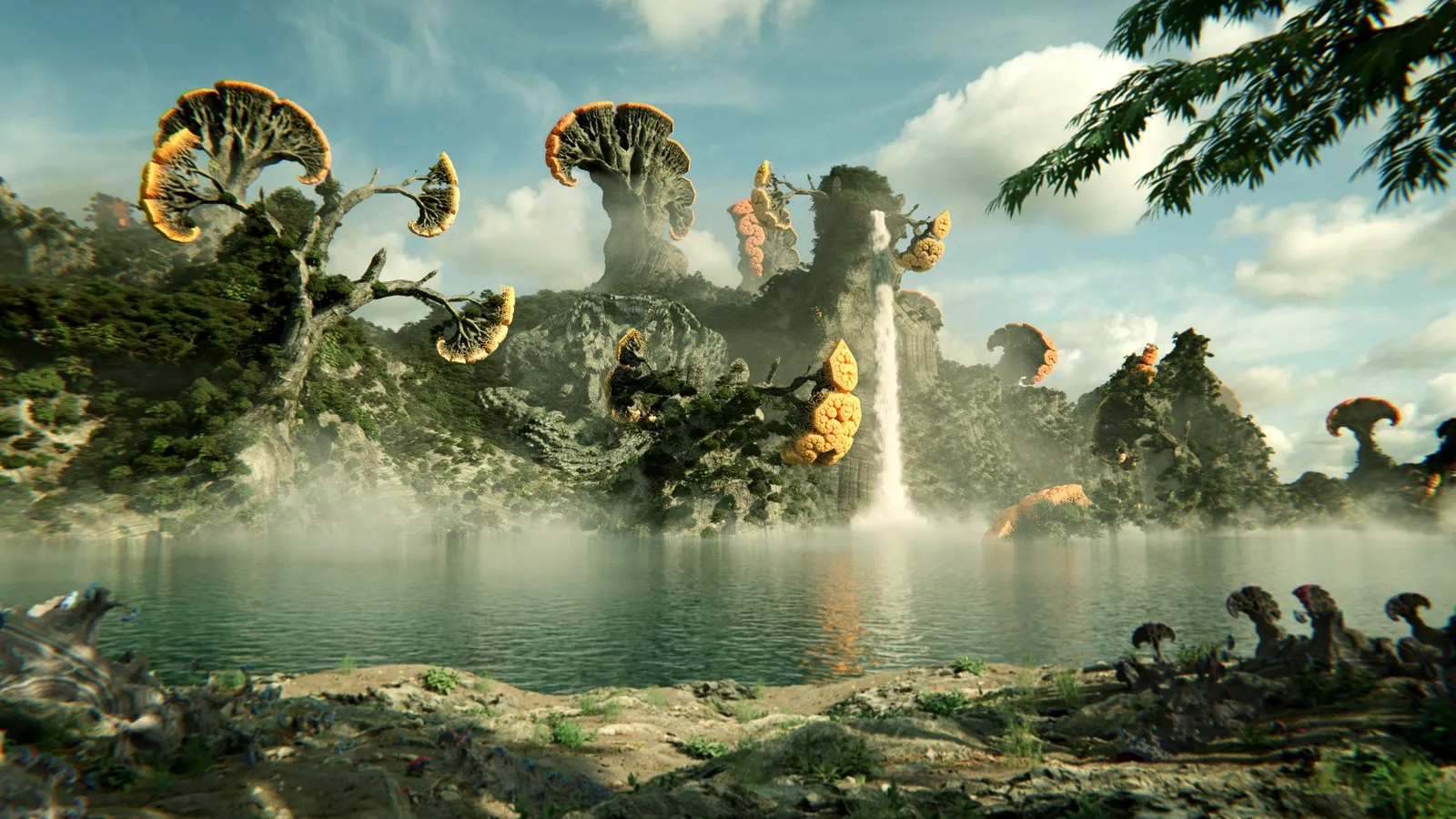
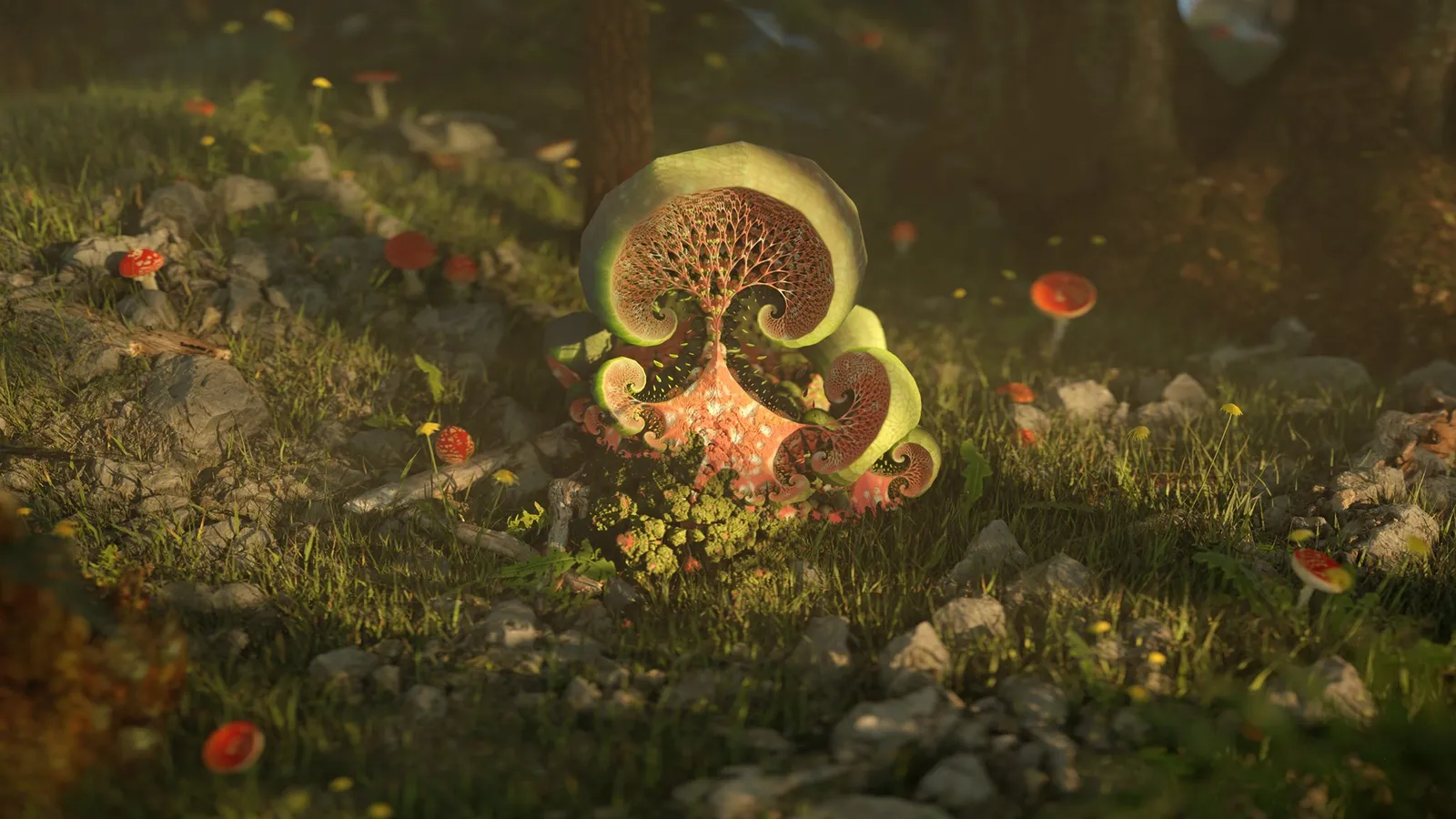
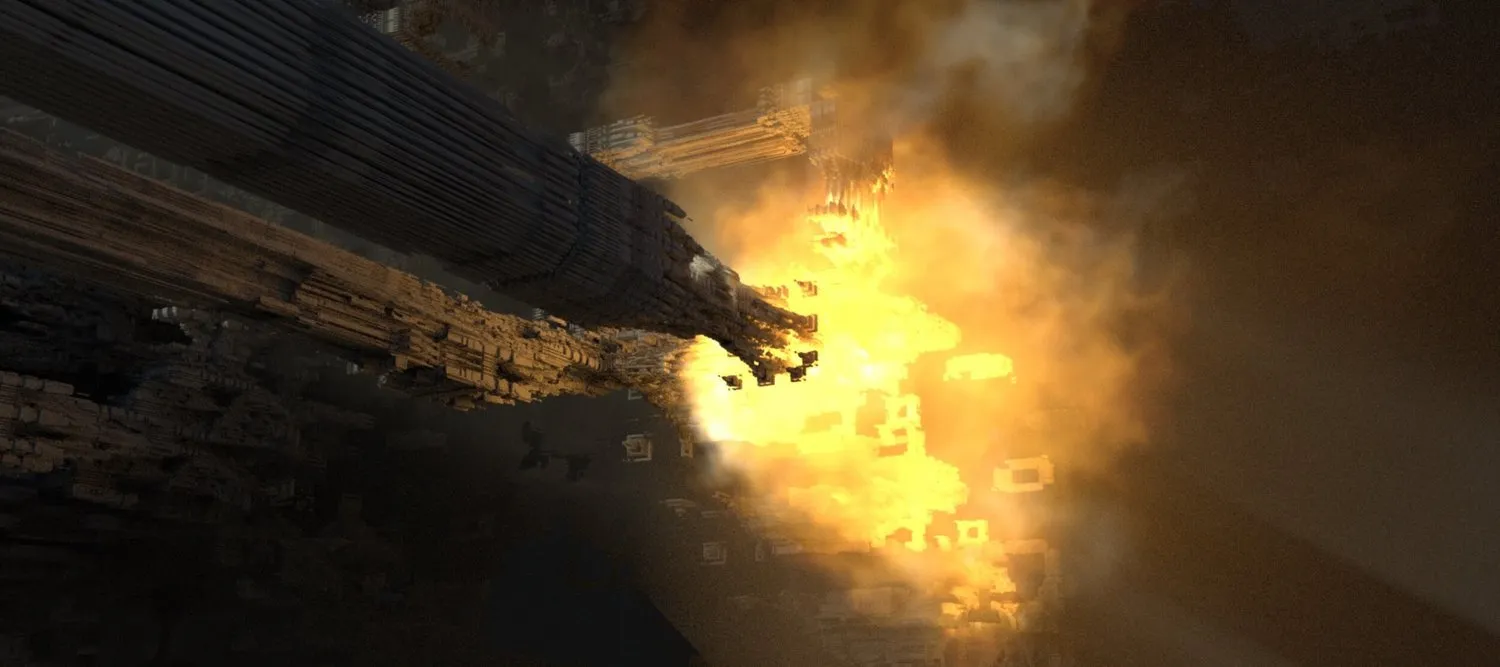
A digital-only craft where a virtual camera is keyframed through an infinite, algorithmically-discovered mathematical object — the 'set' is the equation, not a modeled scene. Forms like the Mandelbulb, Mandelbox and fractal flames are escape-time or iterated-function structures that reveal endless self-similar detail the closer the camera travels, so the artist works as explorer and cinematographer of a world that already exists in the math. This is distinct from demoscene raymarching, where a coder hand-writes a signed-distance field to author a specific effect; here the form is a found object surveyed like a landscape. Native aesthetic: alien architecture, bottomless zooms and structural 'resonances' that vanish at the smallest change of parameter.
How it is made
Iterate a formula, estimate the distance
The object is defined by a formula iterated until a point escapes to infinity; points that stay bound are the set. To render it, distance-estimation (DE) raymarching steps a ray toward the surface using a bound on how far it can safely advance, so an implicit equation becomes a shadeable surface. Ambient occlusion and soft shadows come almost free from the same iteration count, giving the eroded, stone-like look.
Fold, scale, rotate space
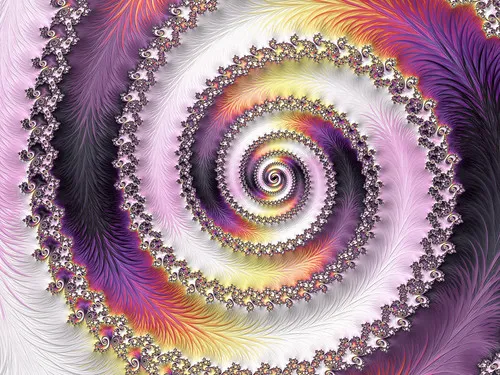
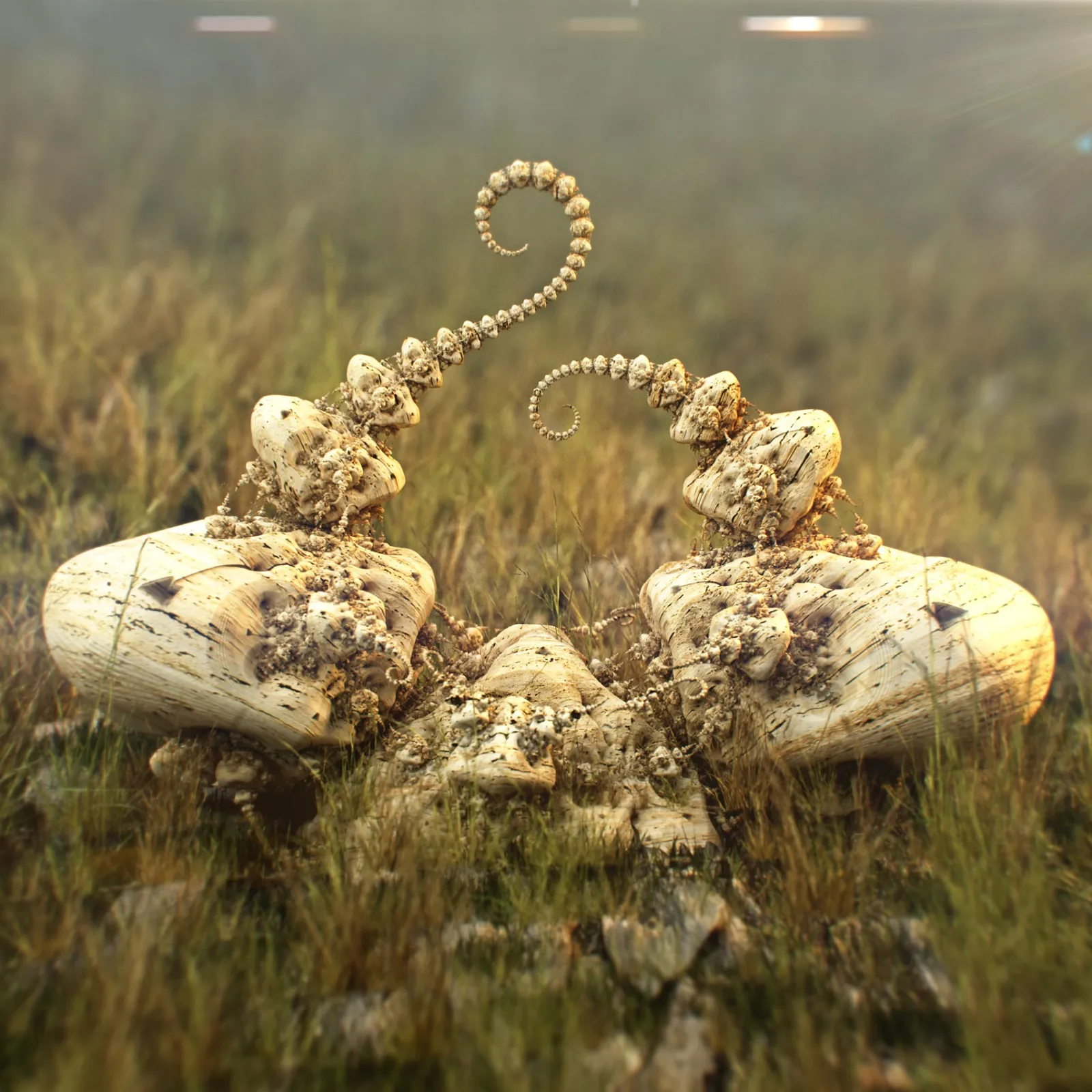
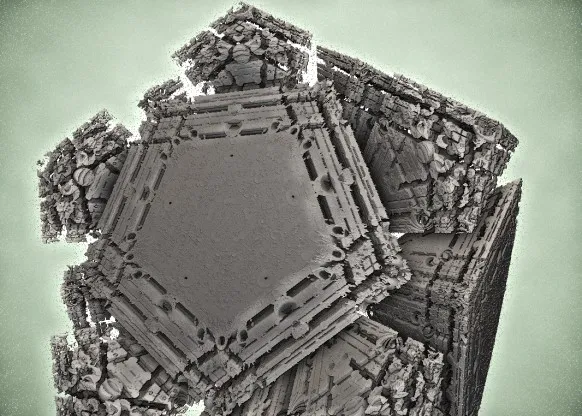
3D fractals are built from space-warping operations rather than geometry. The Mandelbulb raises vectors to a power in spherical coordinates (power 8 is the canonical lobed form); the Mandelbox applies repeated box-fold and sphere-fold operations; flame fractals iterate nonlinear 'variations' over affine transforms with log-density tone mapping and color-by-structure. Combining these as hybrids yields organic or perfectly geometric forms from a handful of numbers.
Keyframe the camera, not the object
Authorship is mostly navigation: the artist hunts parameter space for a 'resonance' worth filming, then keyframes a camera path that zooms, banks and pushes deeper as new self-similar detail unfolds. Heavy frames are rendered in dedicated explorers (Mandelbulb 3D, Mandelbulber, Chaotica) or GPU shader environments (Fragmentarium), often composited in a standard VFX pipeline with Nuke, After Effects or Octane.
Where it comes from
From flat set to flame (1980–1999)
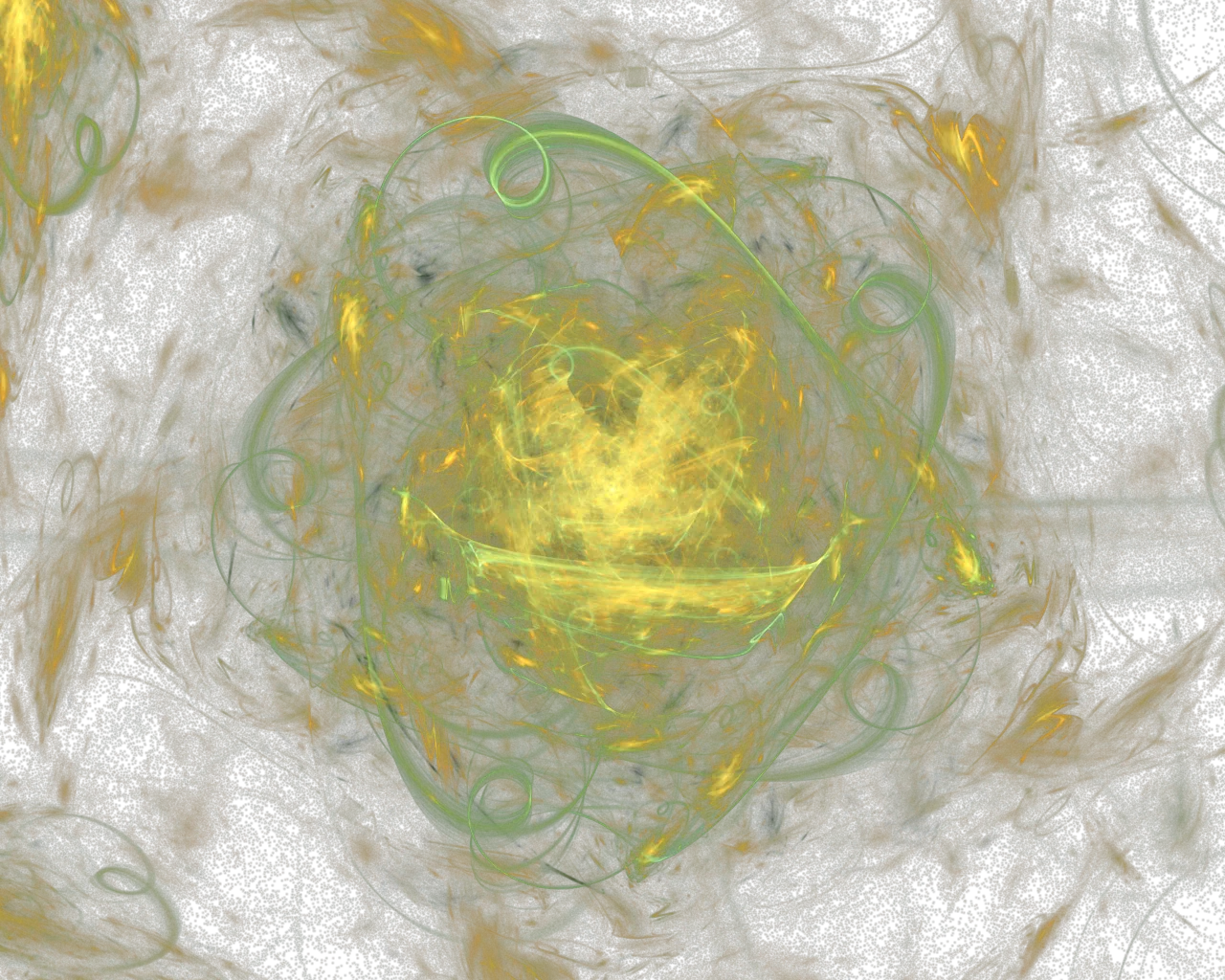
After the Mandelbrot set's first renderings around 1980, Scott Draves invented the fractal flame algorithm in 1992 — iterated function systems with nonlinear variations, log-density display and color-by-structure — then in 1999 launched Electric Sheep, a distributed screensaver that bred flame animations by genetic algorithm and crowd vote. His open FLAM3 code seeded the Apophysis editor and later JWildFire and Chaotica.
The third dimension arrives (2007–2010)
A canonical 3D Mandelbrot has no clean algebra, so it was found by experiment on the Fractal Forums community: Daniel White and Paul Nylander published the spherical-coordinate Mandelbulb in 2009, and Tom Lowe found the fold-based Mandelbox in 2010. The same community wrote the renderers — Mandelbulb 3D and Mandelbulber — turning a math curiosity into an explorable, filmable space.
Into cinema and immersion (2013–present)
Julius Horsthuis began animating Mandelbulb 3D shorts in 2013 and moved fractals into fulldome and VR; Hal Tenny's Mandelbulb concept art fed Ego's Palace and cave environments in 'Guardians of the Galaxy Vol. 2' (2017, via Animal Logic's fractal-taming pipeline), and Mandelbulb forms appeared in 'Big Hero 6' and 'Doctor Strange'. Studios like Machina Infinitum then ported fractal rendering into Octane and Unreal Engine for real-time and music-video work.
Artists
-
Our Fractal Brains; Fractalicious showreels; Nadir (fulldome); Recombination VR; Around The World In A Tea Daze
Ex-VFX supervisor turned best-known fractal filmmaker; treats Mandelbulb 3D worlds as places to explore and shoot, not design, across film, fulldome and VR.
-
Guardians of the Galaxy Vol. 2 concept art (Ego's Palace, caves, red planet); 2.1K Mandelbulb 3D deviations; MB3D tutorials
Mandelbulb 3D artist whose 300+ concept images seeded the fractal environments of a major Hollywood VFX film — a first at that scale.
-
Fractal flame algorithm (1992); Electric Sheep (1999–); FLAM3 engine; flame image on the cover of Hawking's The Grand Design
Inventor of the fractal flame algorithm and the genetic, crowd-bred Electric Sheep system — the open-source root of nearly all flame-fractal software.
-
Fractal Lab (WebGL renderer); Fabergé Fractals; Frax (iOS); Pixel Bender Mandelbulb explorer
Laser physicist turned coder-artist; built browser and GPU fractal explorers and the ornate Fabergé Fractals from fold-and-scale iterated formulas.
-
Mastodon 'Fallen Torches'; Eurovision 2019; Vectron Octane packs; Essence/Mecha/Ultima Unreal Engine fractal plugins
Matteo Scappin and Jesper Nybroe; merge pro VFX with fractal rendering, porting infinite objects into Octane and Unreal for music video and live work.
-
Mikael Hvidtfeldt Christensen (Syntopia)
Fragmentarium (GPU fractal renderer); Structure Synth; distance-estimated 3D fractals tutorial series
Physicist who built the open Fragmentarium and Structure Synth tools and documented the distance-estimation math that made 3D fractals renderable on the GPU.
-
Mandelbulb formulation (2009); skytopia.com fractal research pages
Coined and co-derived the Mandelbulb on the Fractal Forums, extending the Mandelbrot set into a filmable three-dimensional object.
-
Mandelbulber and Mandelbulber v2 (Qt rewrite); early Mandelbulb renderings
Wrote Mandelbulber, one of the two community renderers that turned the newly-discovered 3D fractals into images and animations anyone could explore.
Frames
Julius Horsthuis
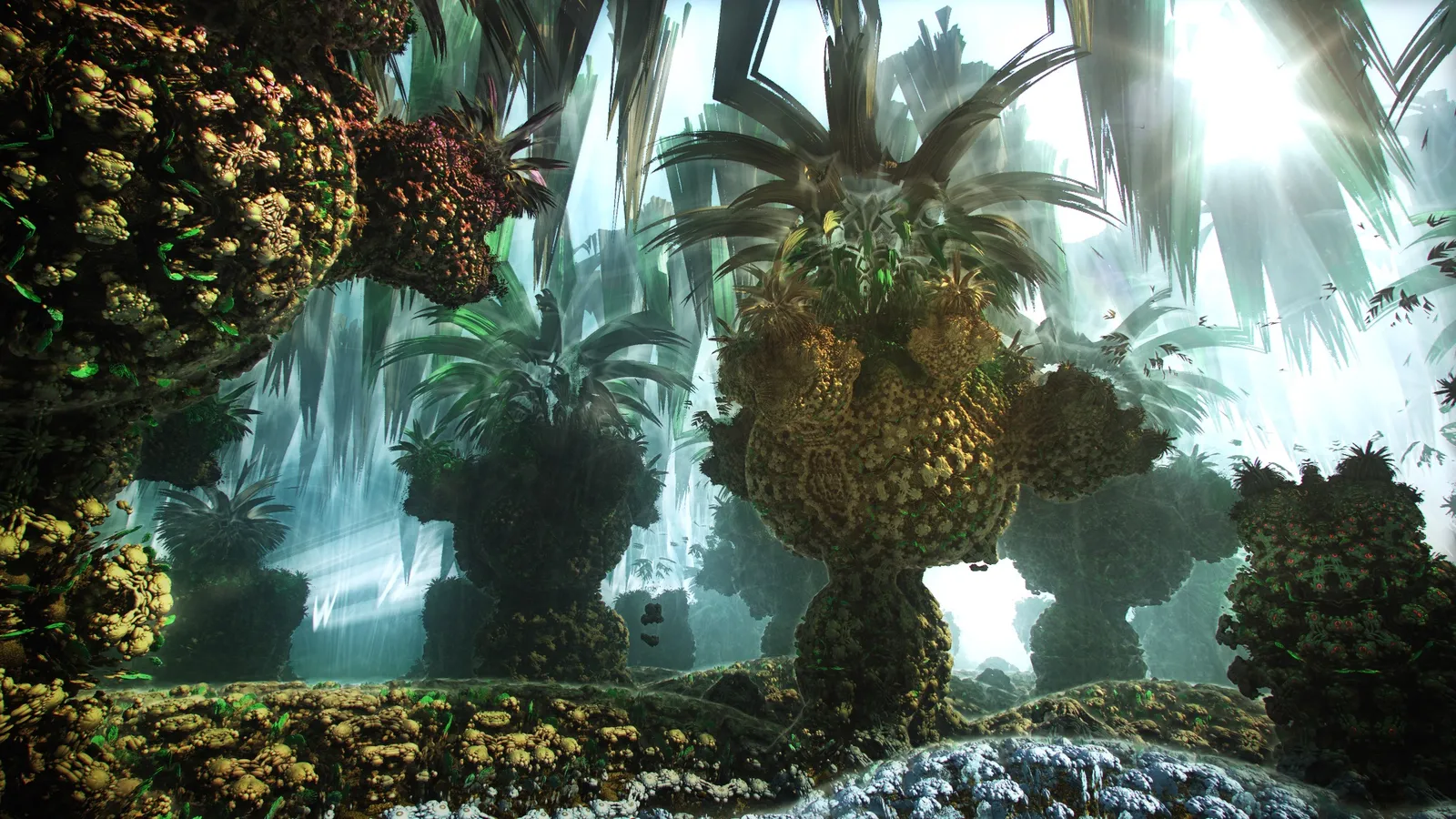
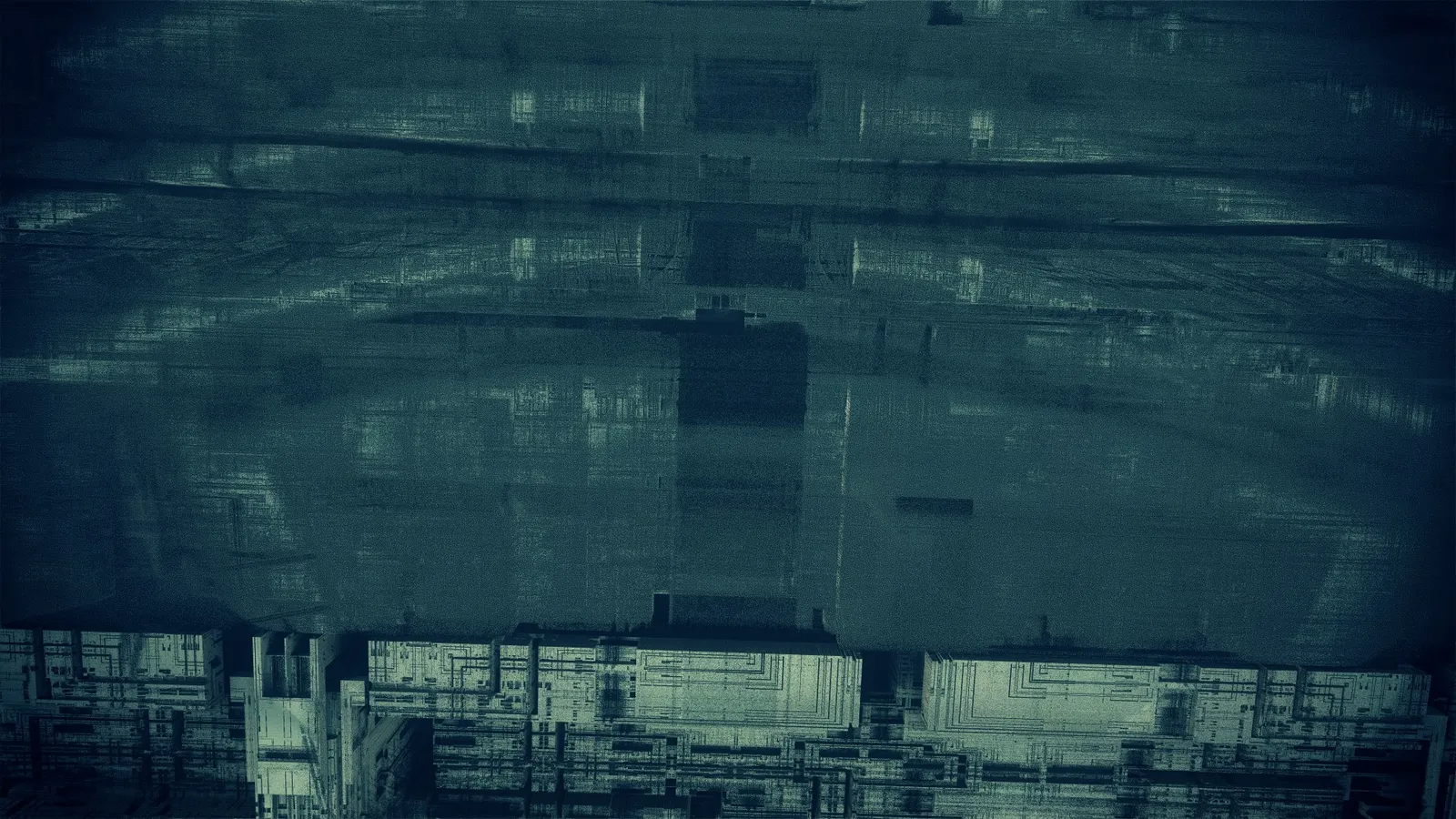
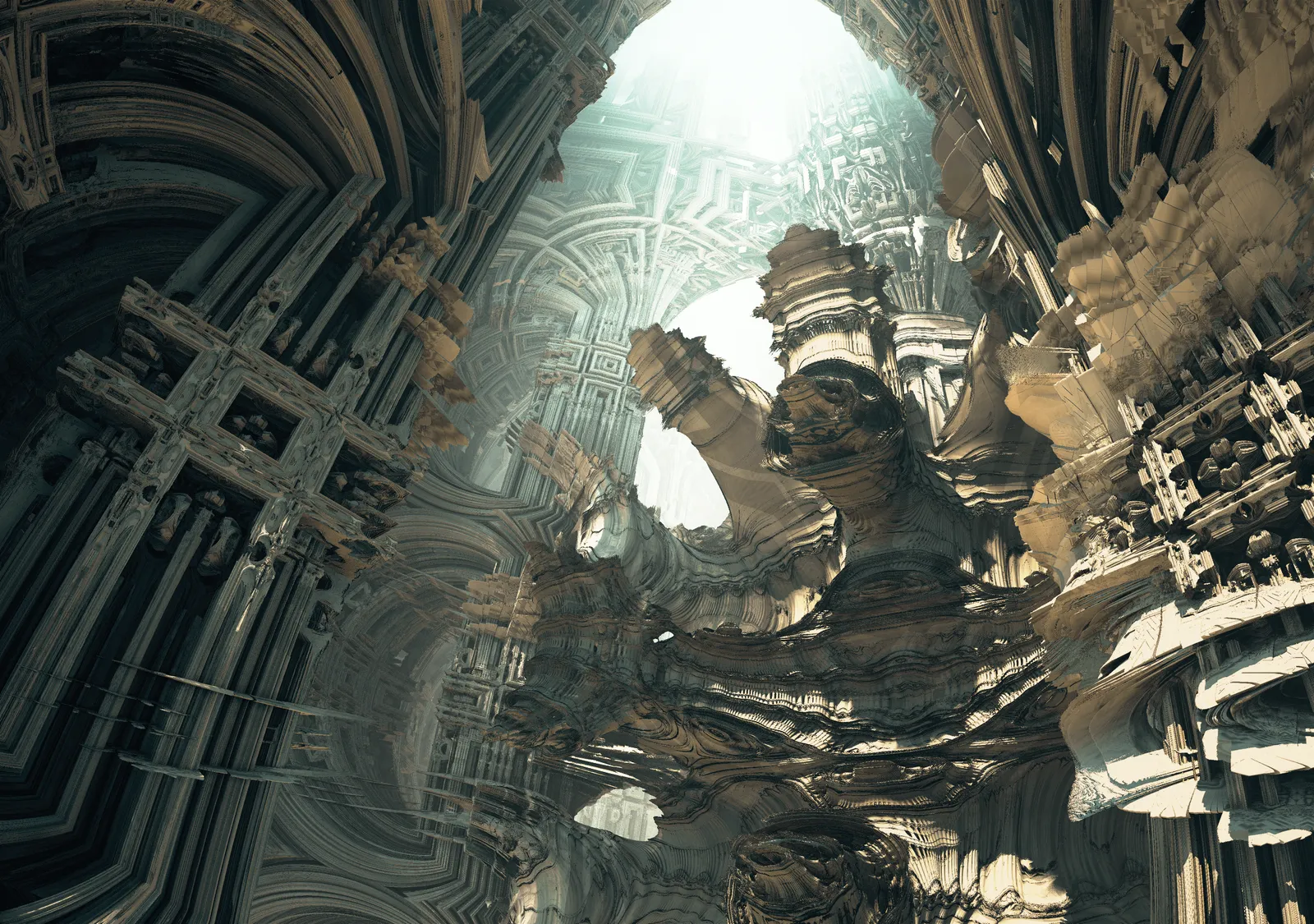
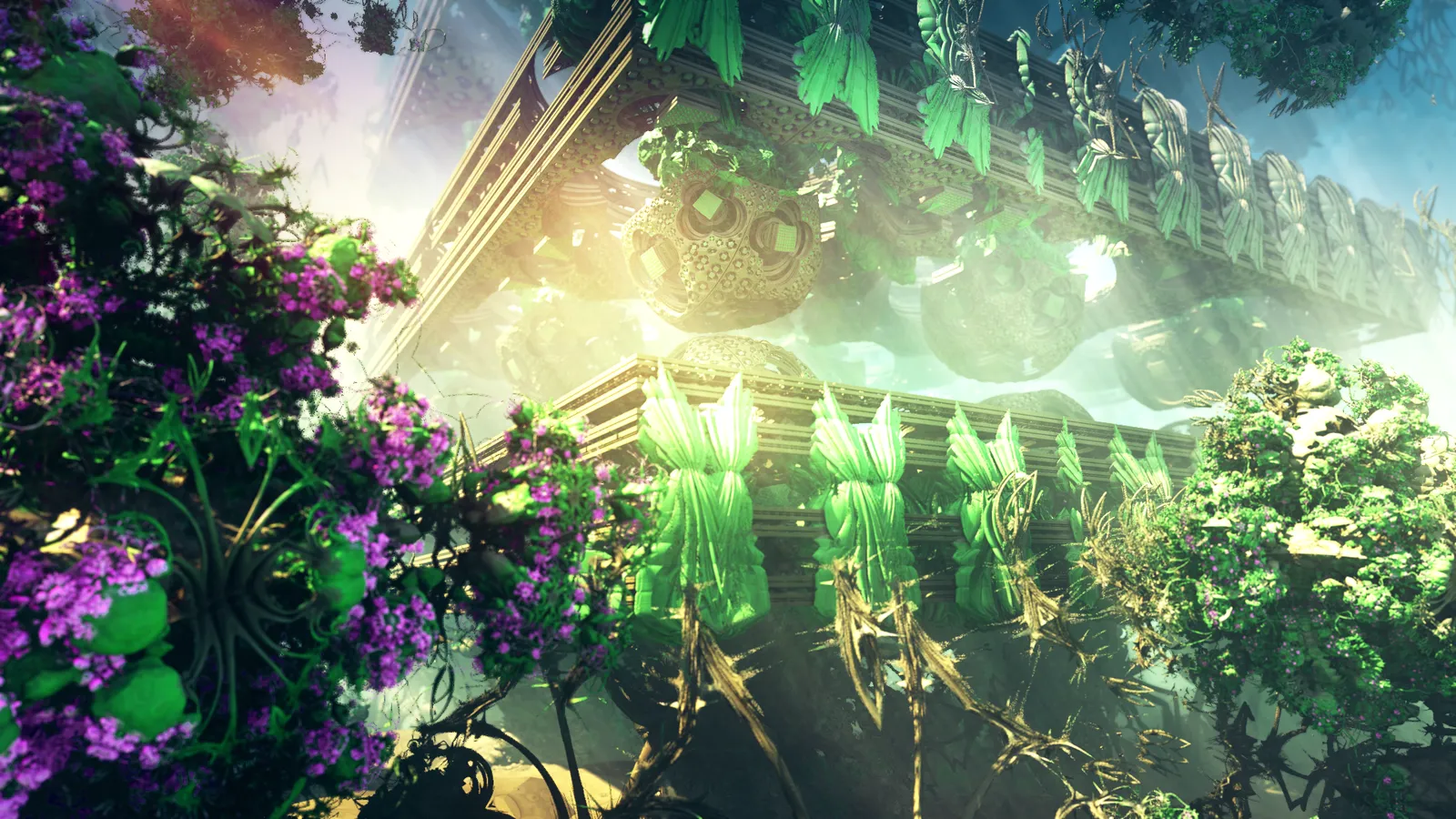
Hal Tenny
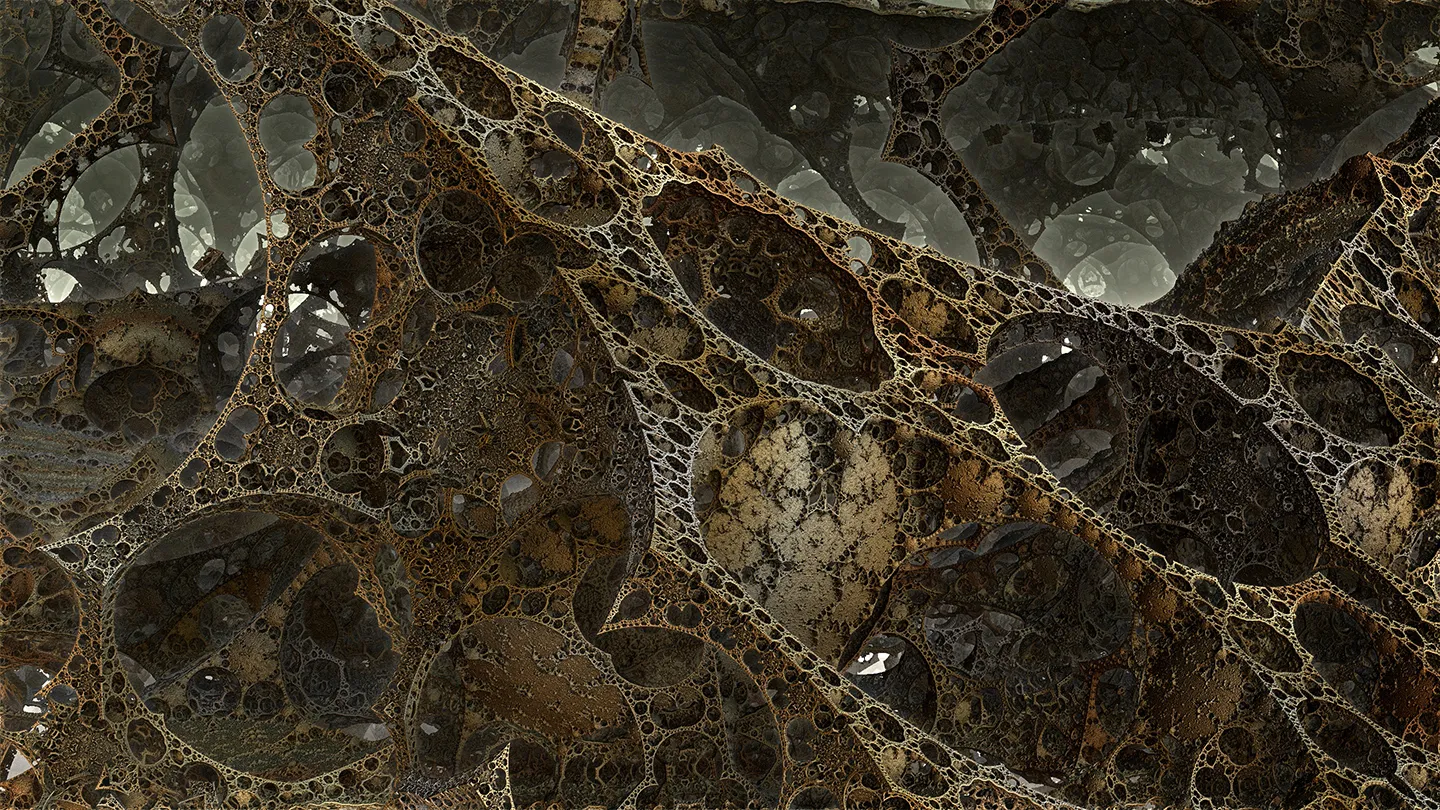
Scott Draves
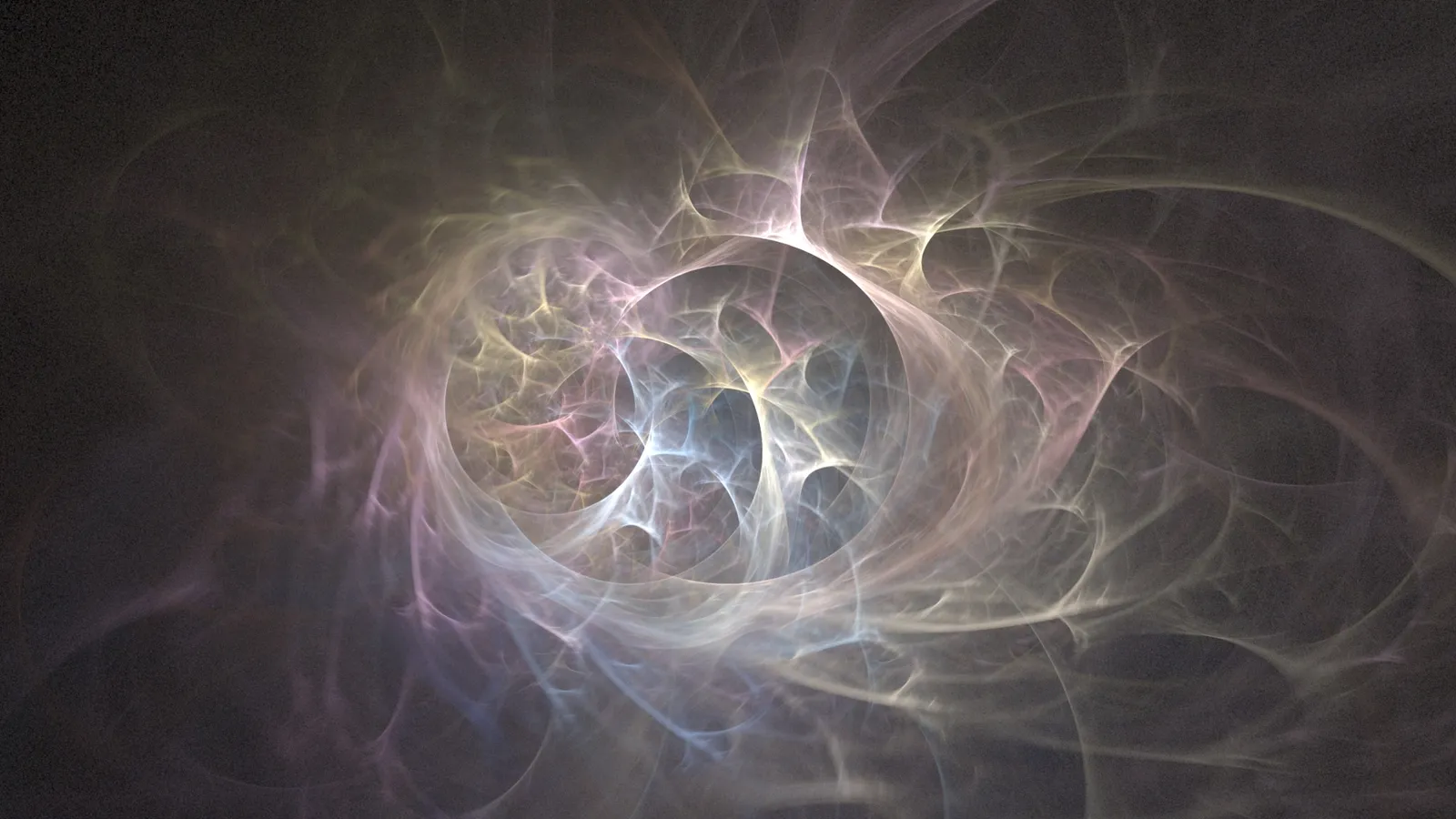
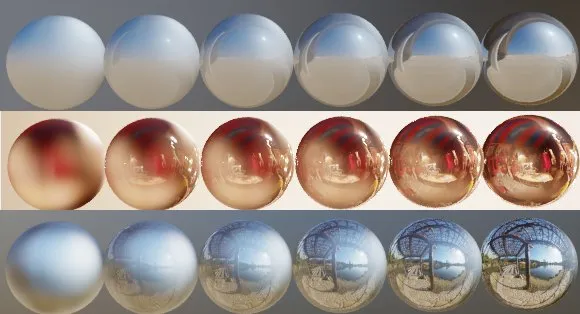
Tom Beddard (subblue)
Machina Infinitum
Mikael Hvidtfeldt Christensen (Syntopia)
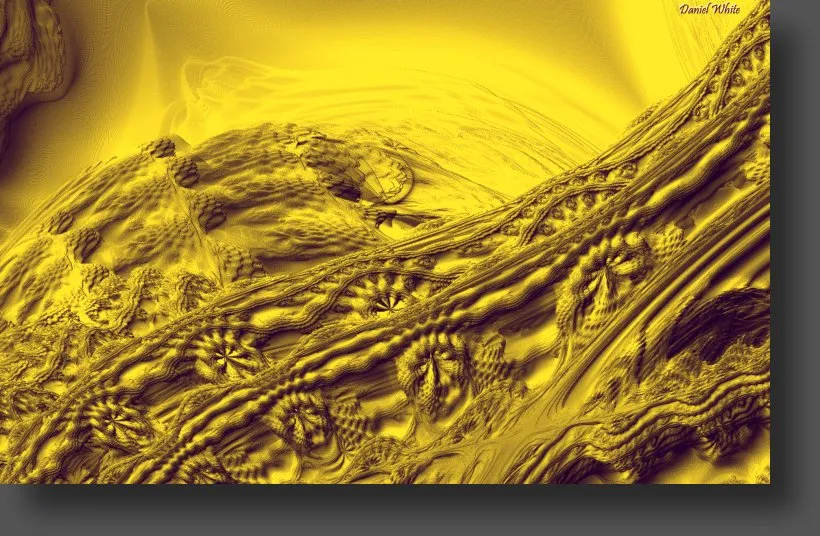
Daniel White
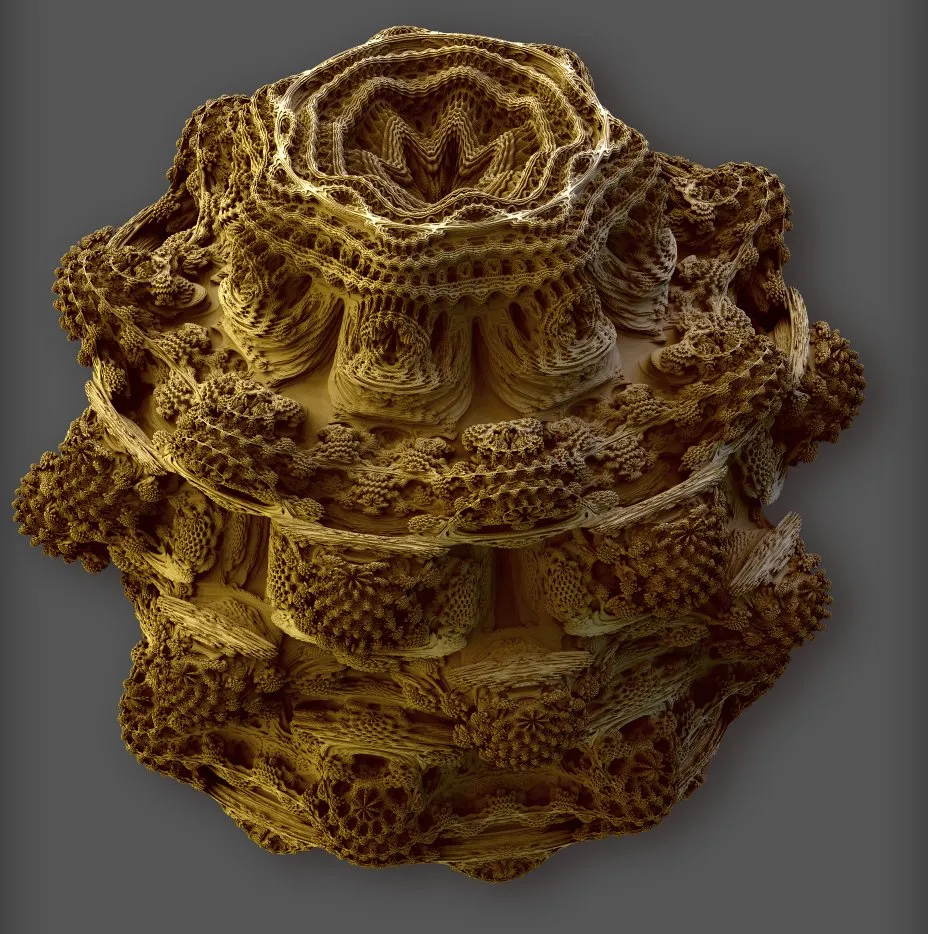
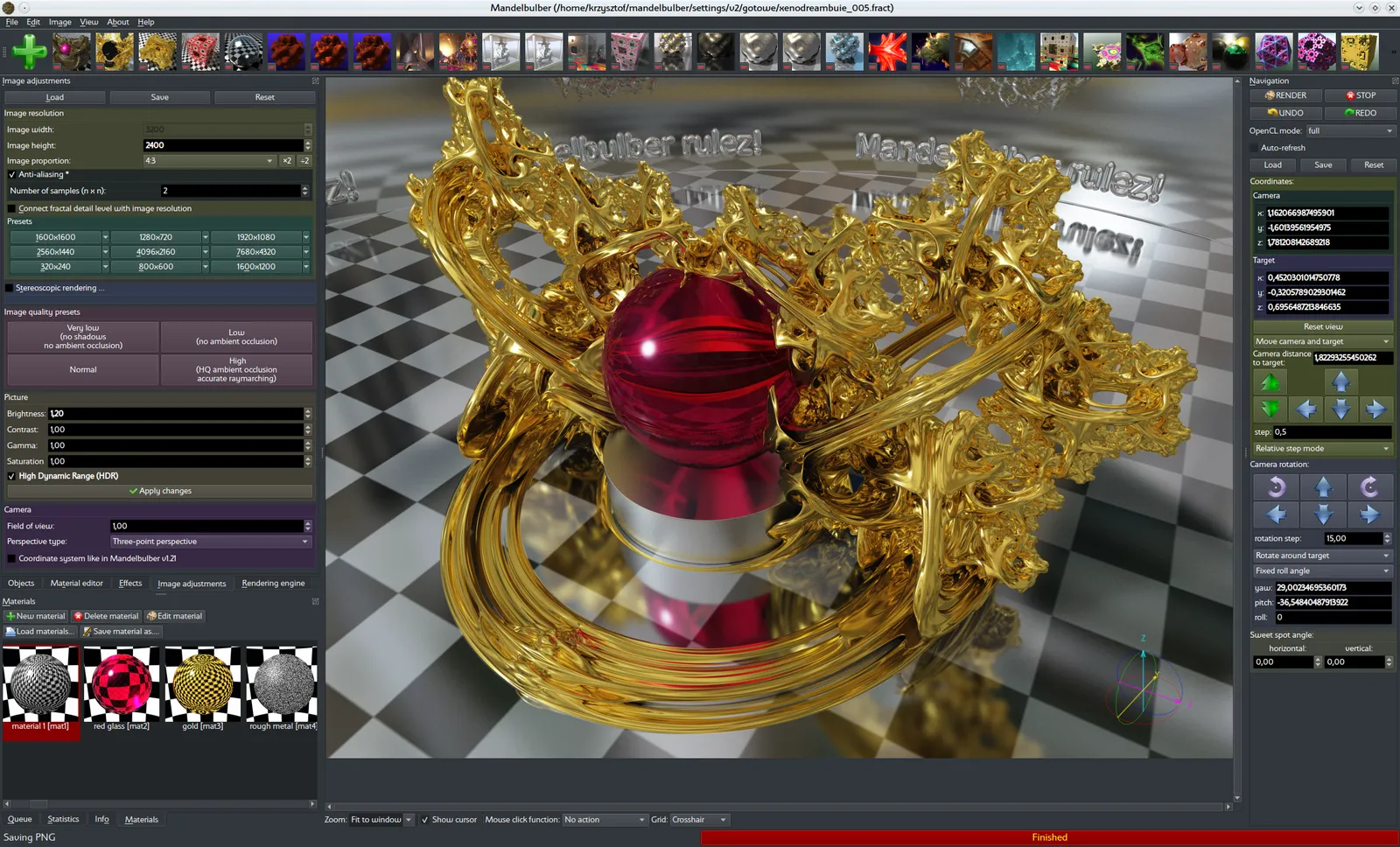
Krzysztof Marczak
-
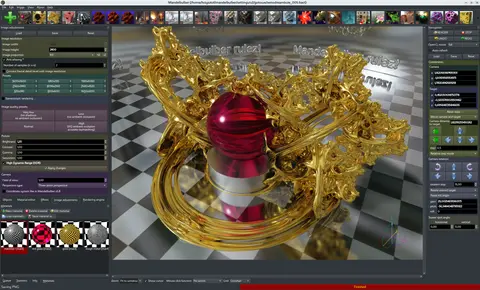
Mandelbulber render (2019) · Krzysztof Marczak · Source
Techniques
- distance-estimation raymarching
- escape-time iteration
- spherical-coordinate power (Mandelbulb)
- box-fold / sphere-fold (Mandelbox)
- iterated function systems (flame fractals)
- log-density tone mapping & color-by-structure
- hybrid fractal formula stacking
- ambient-occlusion from iteration count
- virtual-camera path keyframing
- parameter-space exploration
- infinite-zoom sequencing
Tools
- Mandelbulb 3D
- Mandelbulber
- Fragmentarium
- Apophysis / JWildFire
- Chaotica
- Ultra Fractal
- Octane
- Unreal Engine
- Nuke
What to take from it
Be the explorer, not the modeler
Don't sculpt a scene — search parameter space until the equation reveals a structure worth filming, then move the camera through it. The form already exists; your craft is finding the angle and the descent, like a cinematographer in an alien landscape.
Sell the scale with an endless zoom
The native power of these objects is self-similarity: keep pushing the camera inward and new architecture keeps unfolding at every magnitude. A slow, relentless zoom that never bottoms out is the look hand-modeled geometry cannot fake.
Hunt the resonance, then hold it
Tiny parameter changes flip the form between organic and perfectly geometric, and a 'resonance' of extraordinary detail can vanish at the smallest perturbation. Treat those rare combinations as found footage — lock the numbers and build the shot around the one that sings.