Atlas
Atlas indexArtificial Life / Evolutionary & Agent Systems
Set the rules; let forms evolve themselves.
- artificial-life
- generative
- cellular-automata
- reaction-diffusion
- genetic-algorithm
- morphogenesis
- emergence
- evolutionary
What it is
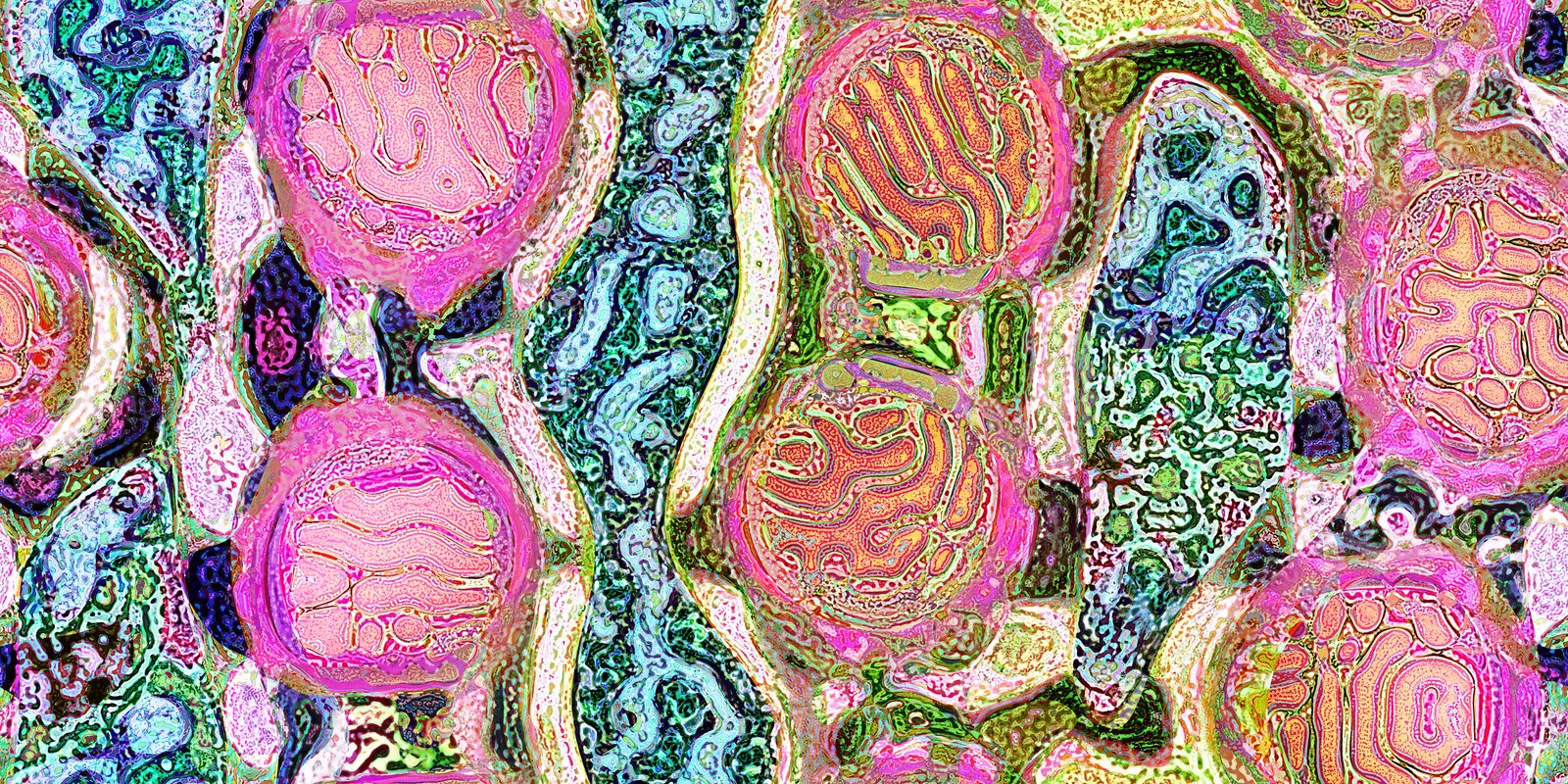
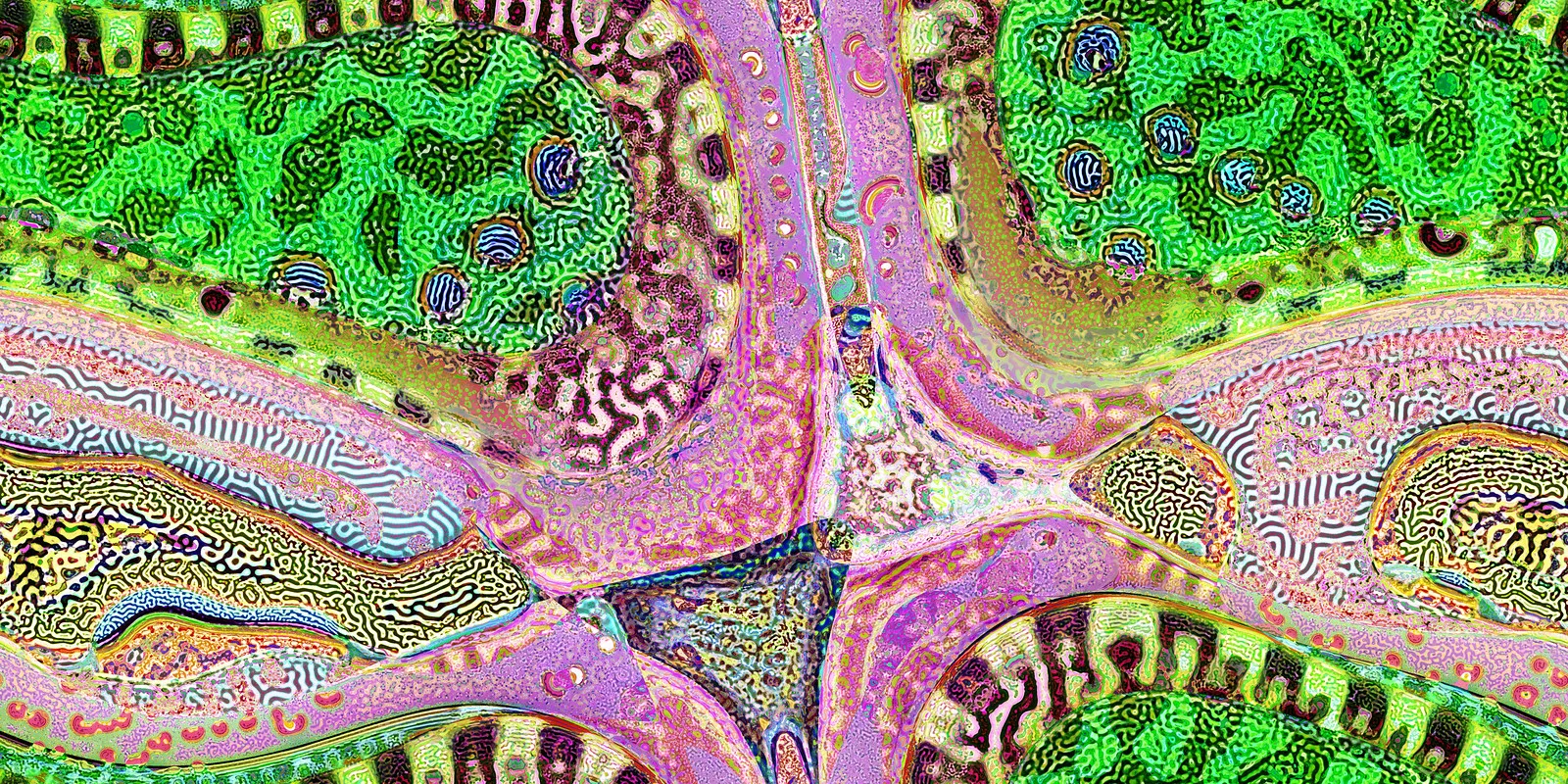
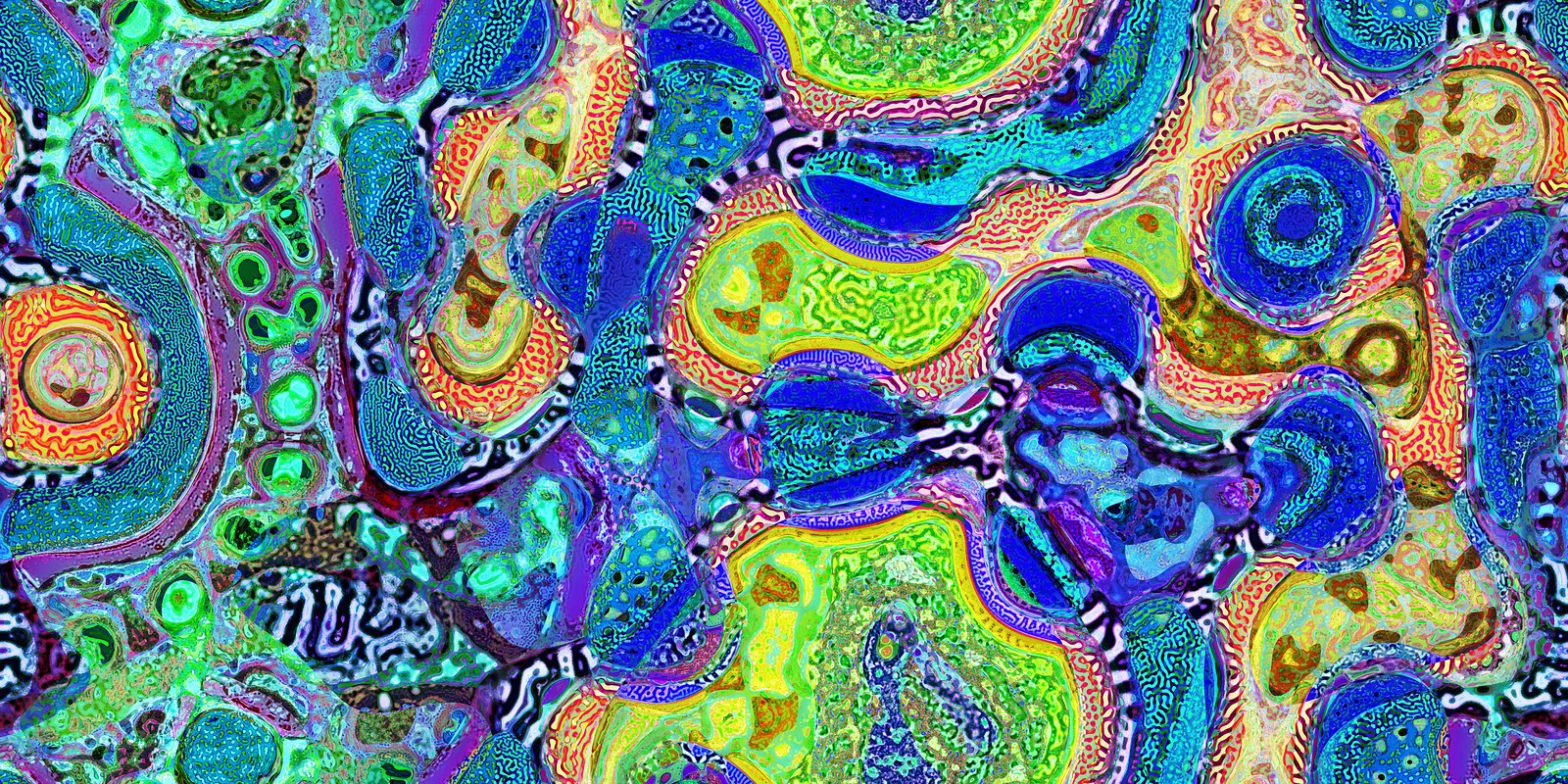
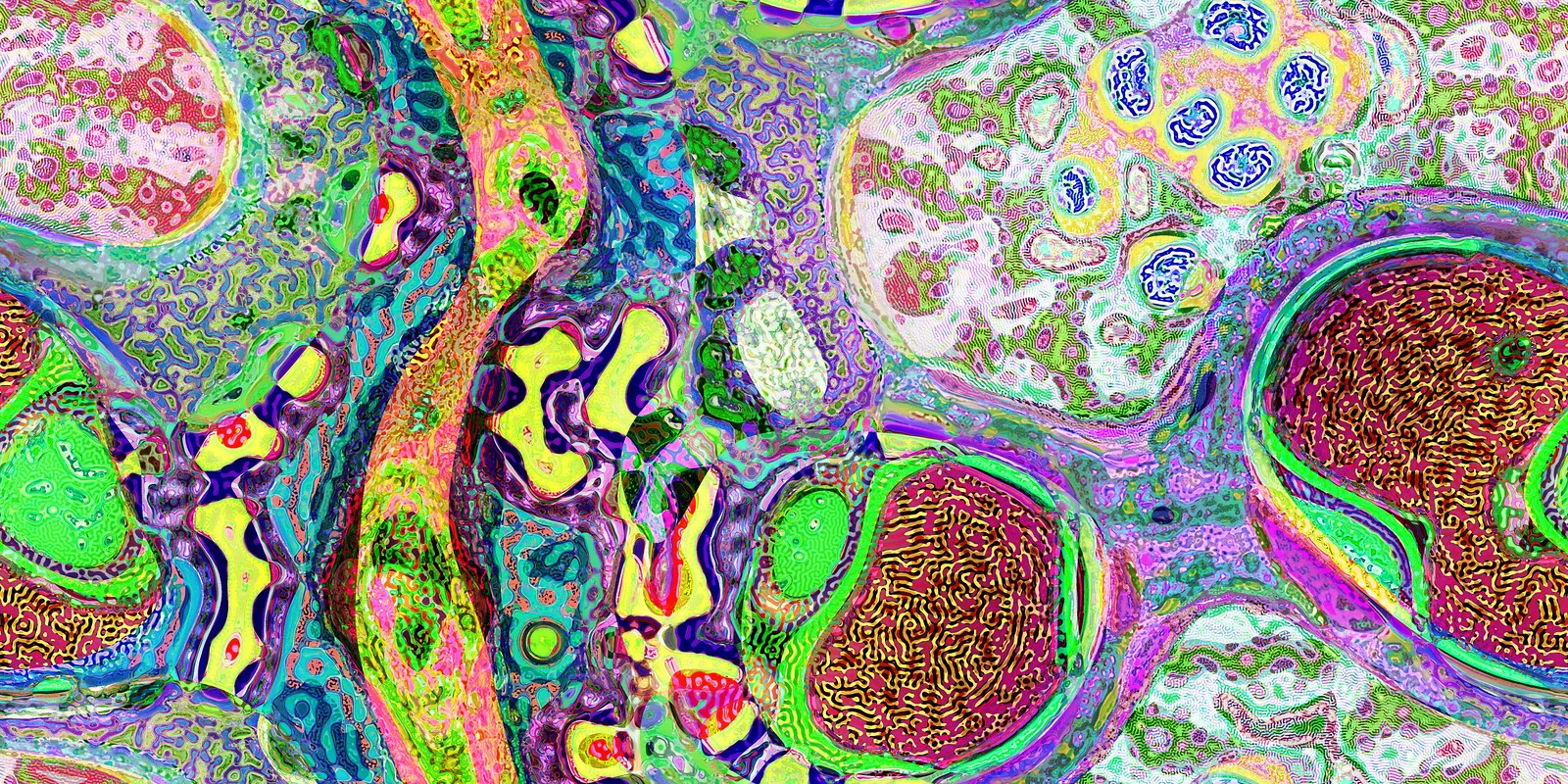
A school of digital image-making where the picture is not composed but grown: autonomous agents, evolved genomes, cellular automata and reaction-diffusion systems produce form on their own from rules and a fitness measure the artist defines. This inverts authorship found in creative coding — the maker breeds, grows or selects rather than draws, and the system's own dynamics decide the result. The native look is organic morphogenesis: cellular growth, swarm motion, Turing patterns and things that read as alive without imitating any specific organism. Outputs span evolved 3D creatures, single-cell growth simulations, multi-scale pattern fields and real-time interactive ecosystems.
How it is made
Rules and fitness, not frames
The artist writes the local rules — how a cell divides, how an agent steers, how chemicals react and diffuse — and, for evolutionary work, a fitness function that scores each candidate. The system iterates: populations are tested, the best are copied, recombined and mutated, and over generations the imagery the maker never drew emerges. Authorship sits in the rule and the selection criterion, not in the final shape.
Growth and simulation substrates
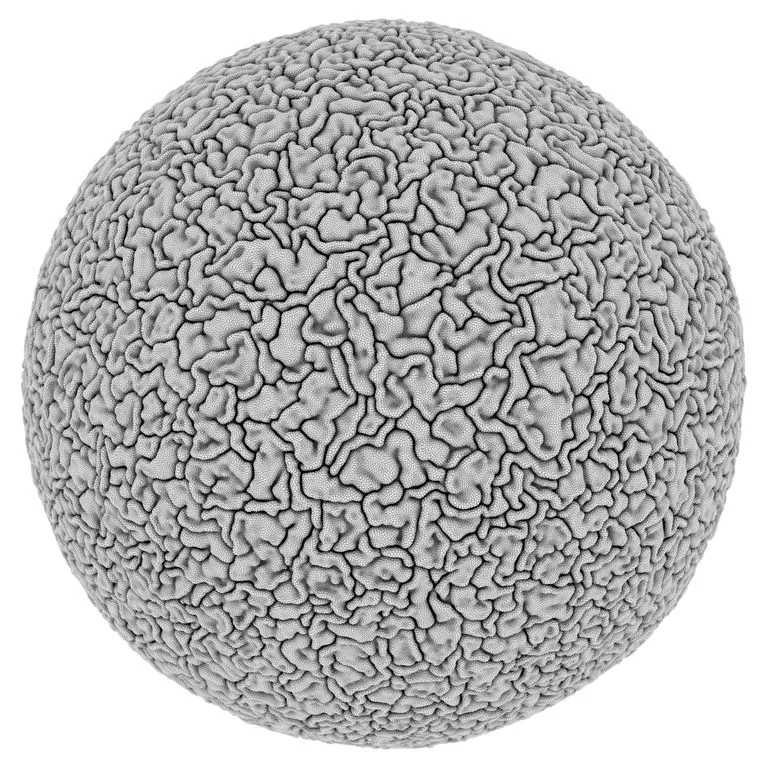
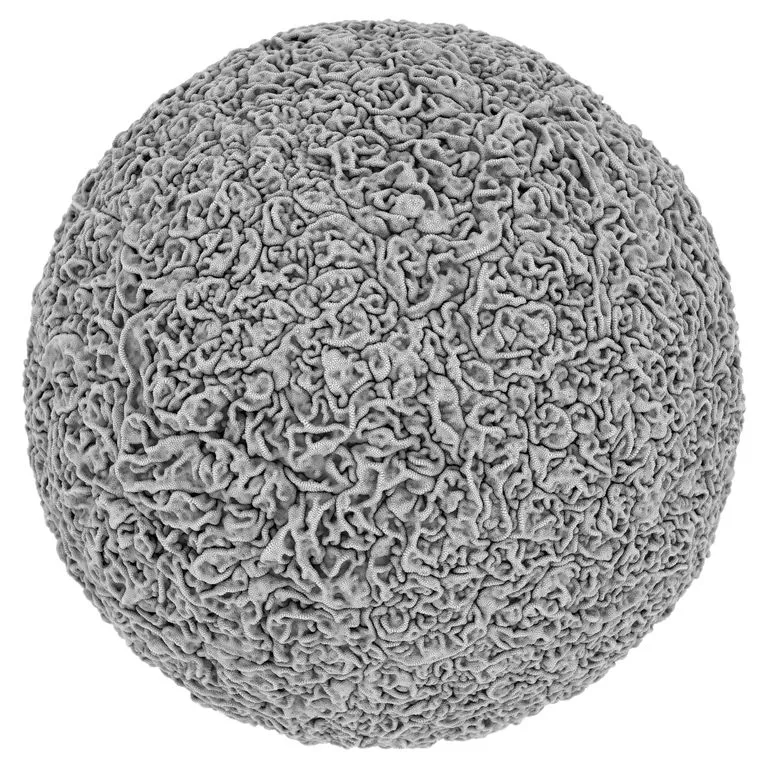
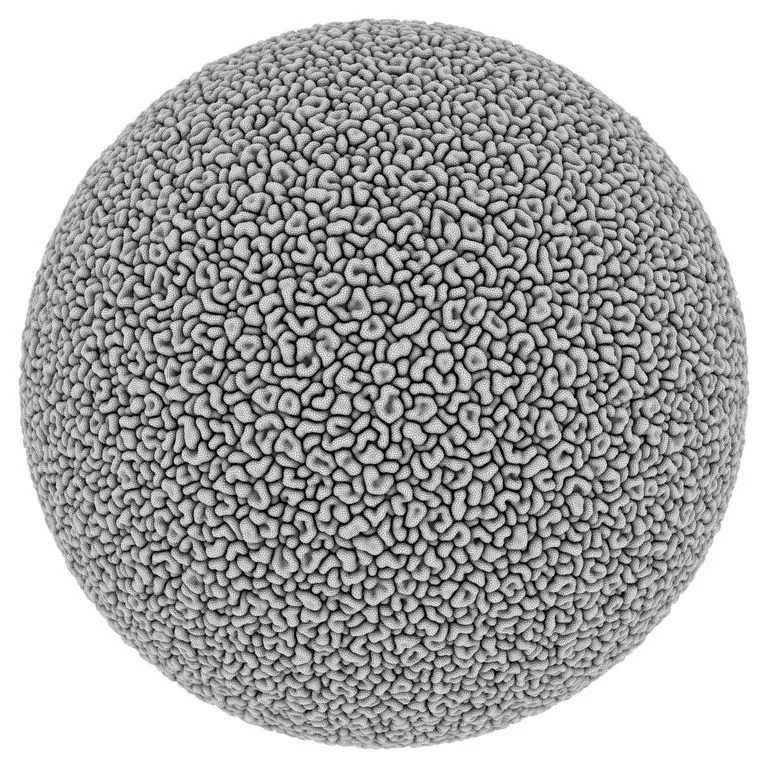
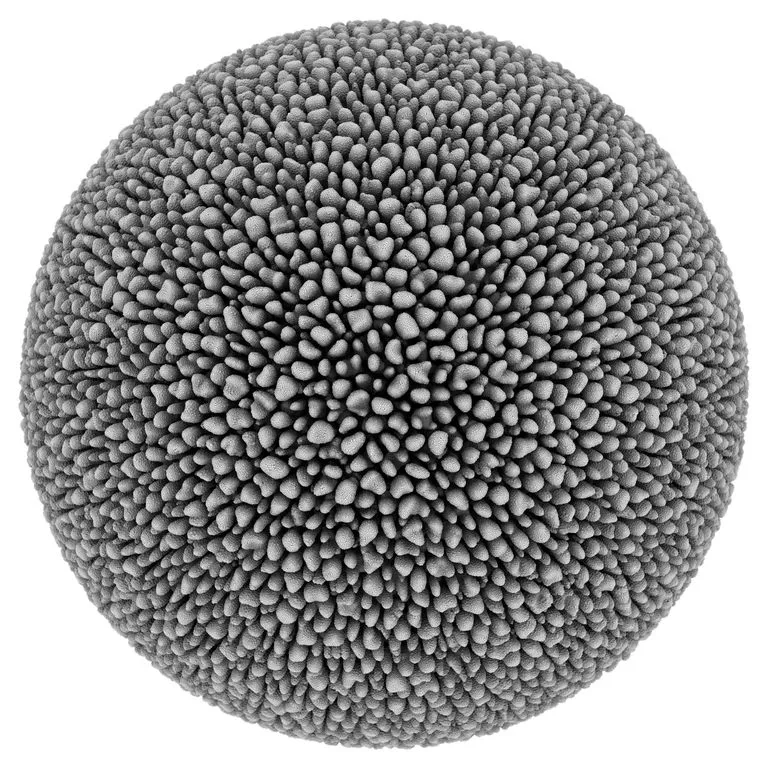
Common substrates include genetic algorithms over node-graph genotypes (Karl Sims), cellular-growth models where nutrient thresholds trigger division (Andy Lomas), Gray-Scott reaction-diffusion and layered multi-scale Turing patterns (Jonathan McCabe), Conway's Game of Life and its continuous generalization Lenia, and boids/flocking for swarm motion. Each runs many steps, accumulating complexity from simple interactions.
Compute, mesh, render
Because populations and high-resolution grids are heavy, the work leans on GPU compute — custom C/CUDA, GLSL shaders, or JAX — to run millions of cells or many parallel simulations. Results are meshed (point clouds to surfaces, VDB volumes), then rendered offline, 3D-printed, or shown live in interactive installations where visitors seed and cull the population.
Where it comes from
Boids and emergence (1986–1987)
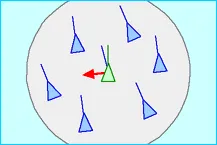
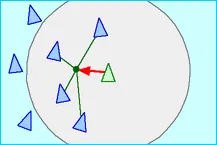
Craig Reynolds's 1986 boids model showed coordinated flocking arising from three local steering rules — separation, alignment, cohesion — with no central choreography. His 1987 SIGGRAPH paper became a founding example of artificial life in moving image: complex global motion from simple local interaction.
Evolution as a medium (1991–1997)
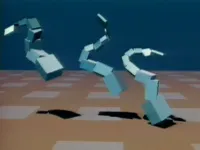
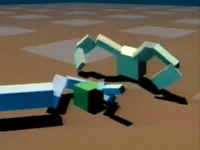
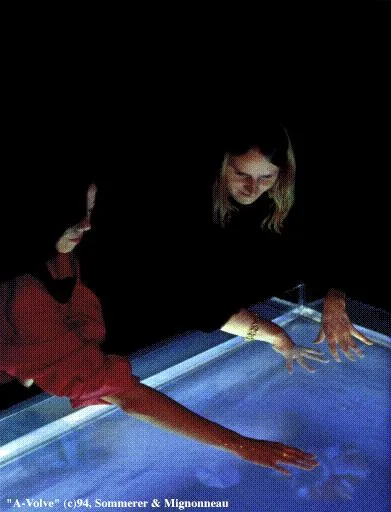
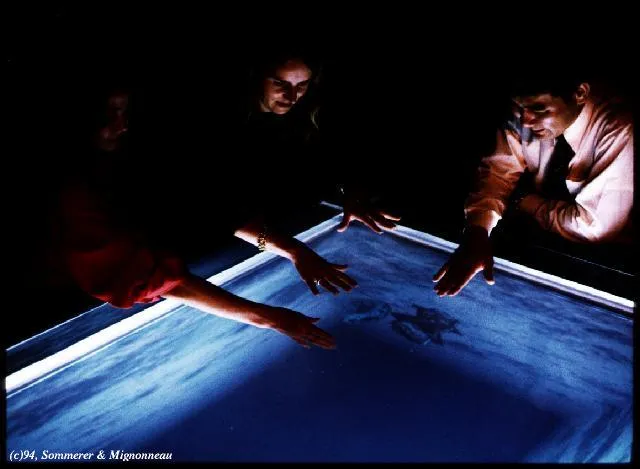
Karl Sims made evolution itself the tool: Genetic Images (1993) and Galápagos (1997) let gallery visitors select among genetically generated images, while Evolving Virtual Creatures (SIGGRAPH 1994) bred block creatures with co-evolved bodies and neural controllers on a Connection Machine CM-5. Sommerer & Mignonneau's A-Volve (1994) put real-time evolved organisms in a water pool visitors could touch and breed.
Growth, patterns and continuous life (2010s)
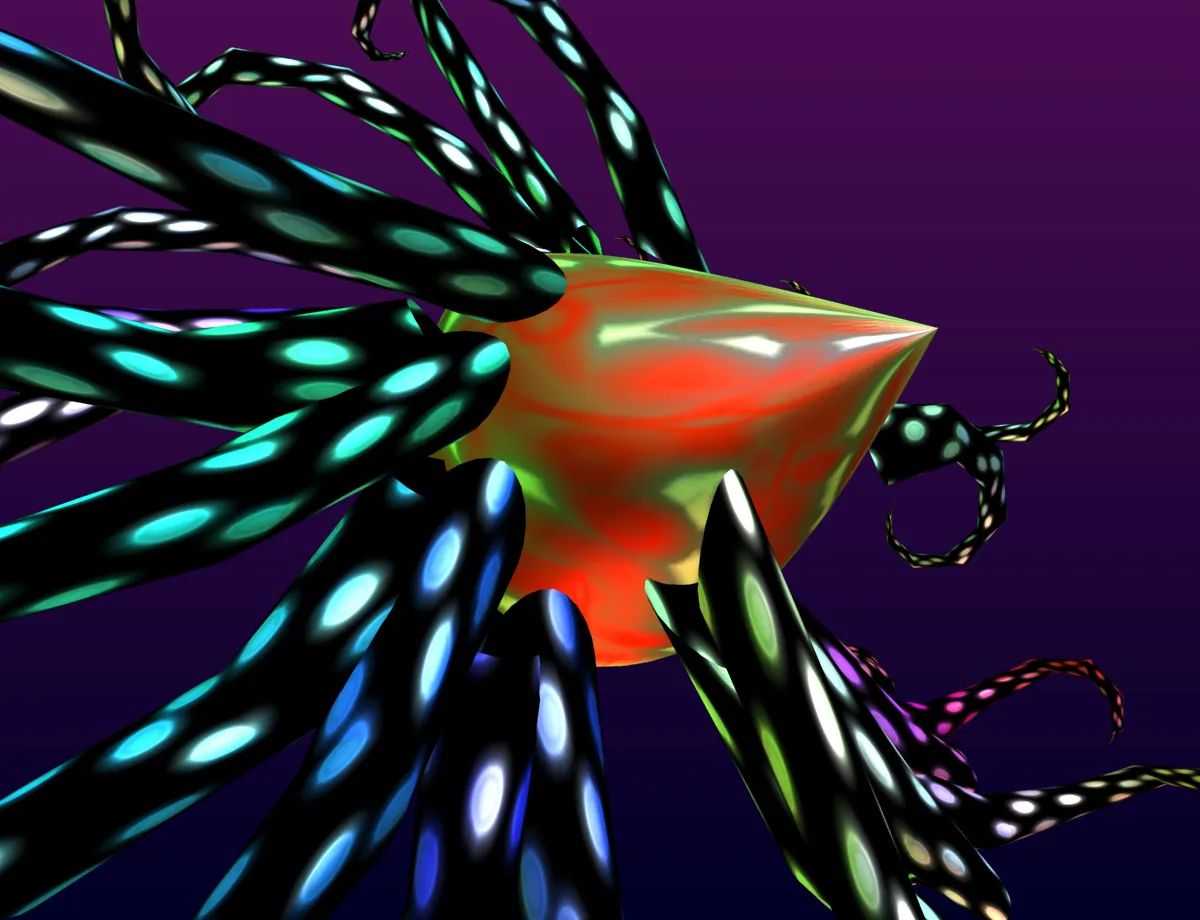
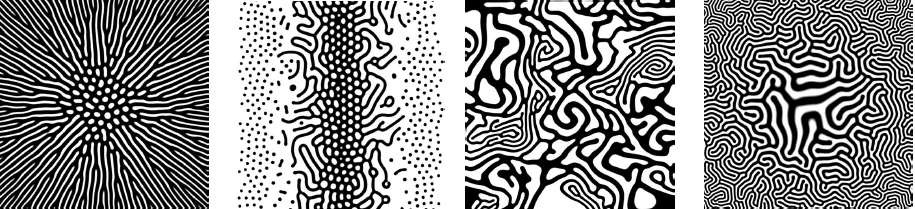
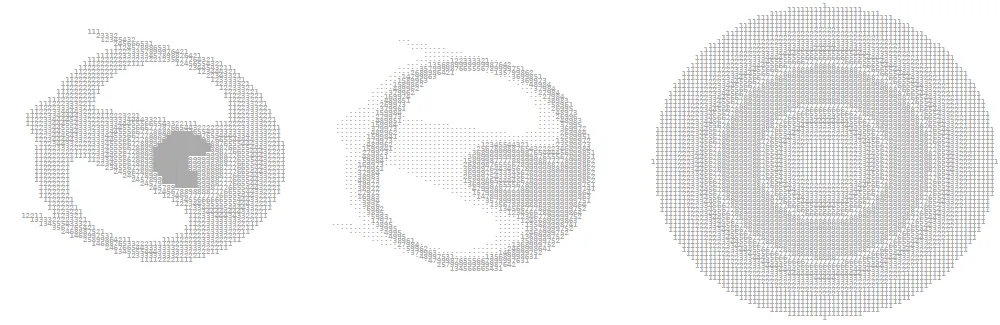
A second wave pushed A-Life toward designed imagery: Jonathan McCabe's cyclic multi-scale Turing patterns (Bridges paper, 2010), Andy Lomas's GPU Cellular Forms (Lumen Prize Gold, 2014) and Hybrid Forms (ECAL 2015), and Bert Wang-Chak Chan's Lenia (2018), a continuous cellular automaton whose 400-plus self-organizing 'species' won the 2018 Virtual Creatures Contest.
Artists
-
Evolved Virtual Creatures (1994); Galápagos (1997); Genetic Images (1993); Panspermia; Reaction-Diffusion Media Wall
The foundational figure: bred 3D creatures with co-evolved bodies and brains, and built gallery installations where visitors select among genetically generated images.
-
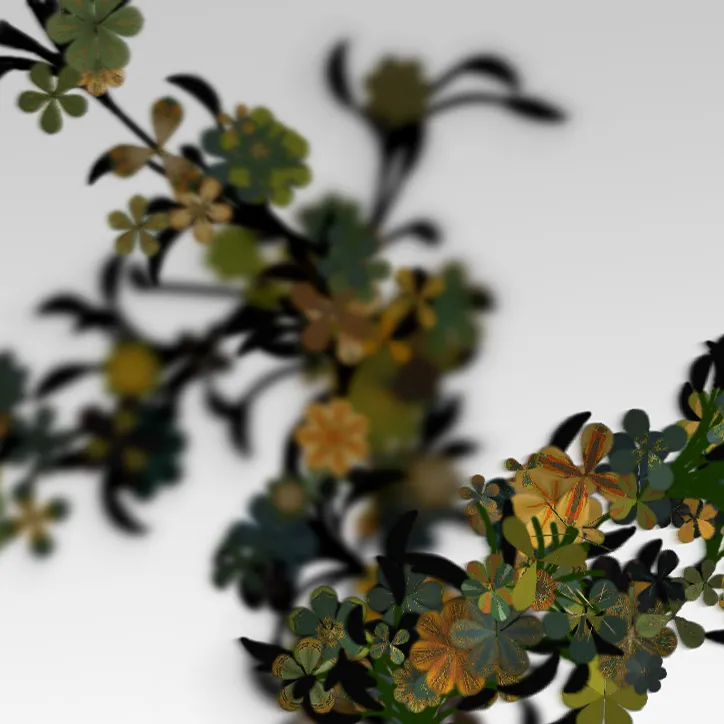
Cellular Forms (2014, Lumen Prize Gold); Hybrid Forms (2015, ECAL); Plantlike Forms; Species Explorer; Morphogenetic Creations
Digital artist and VFX supervisor who grows intricate organic structures from simulated cell division written in C++ and CUDA.
-
Multi-Scale Turing Patterns; Cyclic Symmetric Multi-Scale Turing Patterns (Bridges paper); Bone Music; Origins
Australian generative artist who layers reaction-diffusion processes at many scales into fractal-like, biologically tinged Turing-pattern fields.
-
Christa Sommerer & Laurent Mignonneau
A-Volve (1994); Interactive Plant Growing (1992); GENMA (1996); Life Spacies (1997); Life Writer
Pioneering duo whose interactive installations let visitors create and breed evolving virtual organisms in real time, blurring real and artificial life.
-
Lenia (2018); Lenia and Expanded Universe (2020); Flow-Lenia; open-ended evolution in continuous CA (JAX)
Creator of Lenia, a continuous generalization of the Game of Life whose smooth kernels yield 400-plus fuzzy, resilient, self-organizing lifeforms.
-
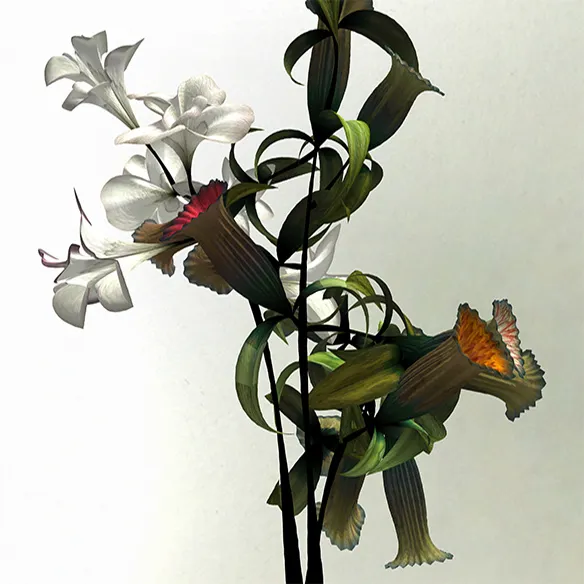
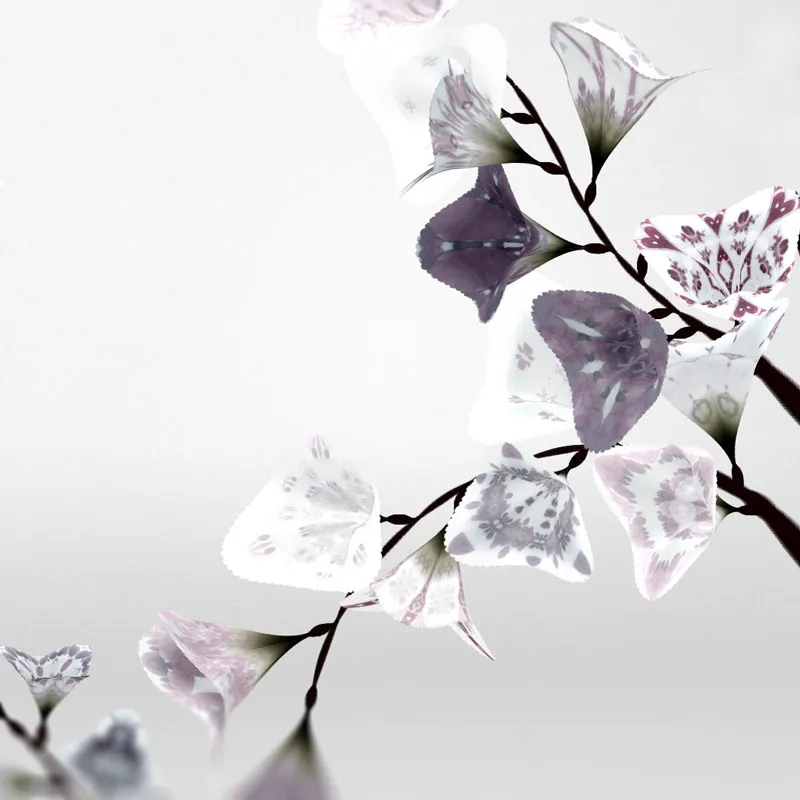
On Growth and Form (1999–ongoing); Decode (V&A, 2009); Secret Garden; Travelling by Numbers; Metamorphosis
Generative artist whose algorithmic flowers, named after D'Arcy Thompson's morphogenesis text, grow as hyper-real, never-repeating blooms.
-
Boids (1986); Steering Behaviors for Autonomous Characters (1999); OpenSteer
Originated the boids flocking model — emergent swarm motion from three local steering rules, a founding artificial-life technique for moving image.
-
Mutator (with Stephen Todd, IBM, 1987–93); FormSynth drawings; Evolutionary Art and Computers (1992 book); Mutator VR; Mutator Infinity (2022–24)
Pioneer of evolutionary art who, with mathematician Stephen Todd at IBM, bred organic 3D forms by selecting and mutating genomes — the 'artist as gardener'.
Frames
Karl Sims
Andy Lomas
Jonathan McCabe
Christa Sommerer & Laurent Mignonneau
Bert Wang-Chak Chan
Daniel Brown
Techniques
- genetic algorithms / evolutionary selection
- cellular growth simulation
- reaction-diffusion (Gray-Scott)
- multi-scale Turing patterns
- cellular automata (Game of Life, Lenia)
- boids / flocking & steering
- co-evolved morphology and neural control
- differential / curvature-driven growth
- particle-to-surface meshing
- interactive fitness selection
Tools
- C++ / CUDA
- GLSL / compute shaders
- JAX
- Processing / openFrameworks
- Houdini
- Python
- GPU simulation
What to take from it
Breed, then select
Generate a large population from a parameterized genotype and pick by eye or by a fitness score instead of hand-crafting one result. Selection over many variants finds forms you would never have drawn deliberately.
Layer rules across scales
Run the same process — reaction-diffusion, growth, noise — at several scales at once and combine them. Large structures built from small ones produce the fractal, organic density that reads as alive.
Let local rules do the global work
Specify only how a single cell or agent behaves toward its neighbors, never the whole picture. Coherent global form — flocks, growth, patterns — emerges from the interaction, and small rule tweaks yield wholly different organisms.