Atlas
Atlas indexComputational Visual Music / Algorithmic Abstract Animation
Image as music, generated by code.
- visual-music
- abstract
- audio-reactive
- generative
- algorithmic
- vector-graphics
- live-coding
- real-time
What it is
A school of digital image-making where abstract form, color and motion are computed and structured like music — sometimes synced to a soundtrack, sometimes built as silent visual rhythm. The craft treats geometry, motion curves and harmonic ratios as the raw material, generating non-representational imagery from algorithms rather than recording the world with a camera. It runs from the first machine-computed films of the 1960s–70s to today's real-time, audio-reactive and live-coded visuals. The deep claim is that moving image and music share a grammar of pattern, repetition and transformation that a program can author directly.
How it is made
Motion as parameterized math
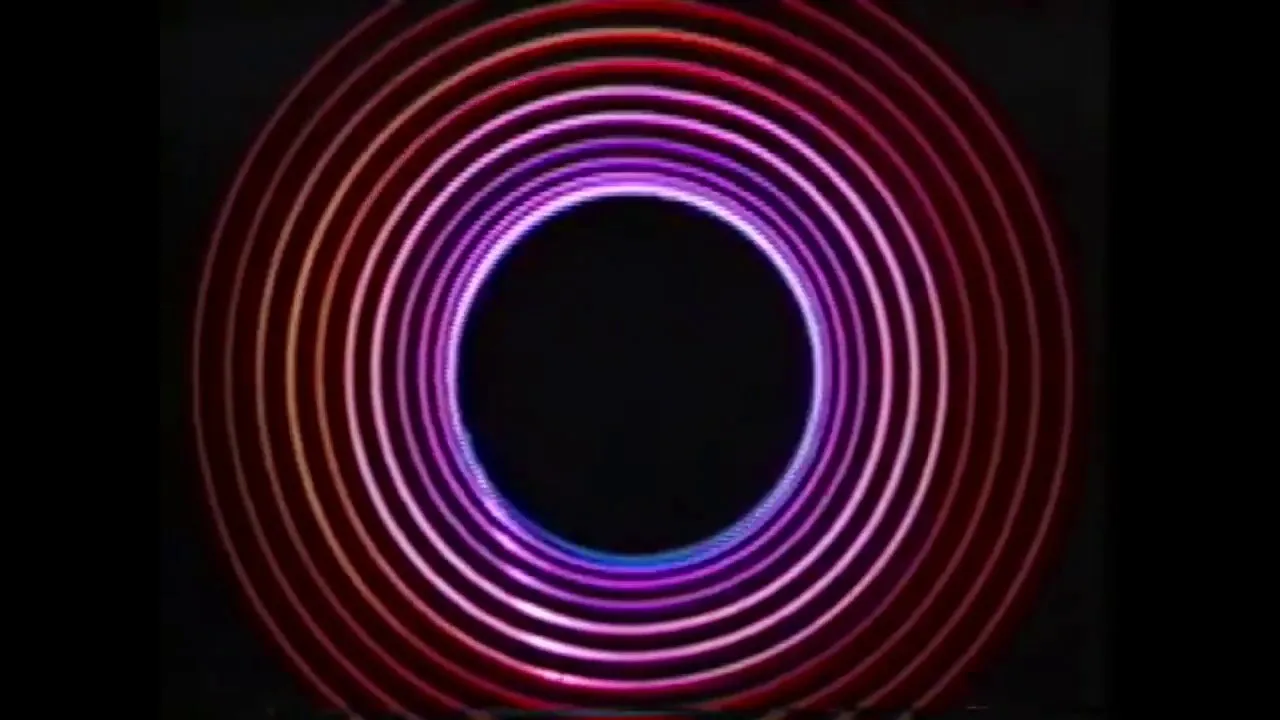
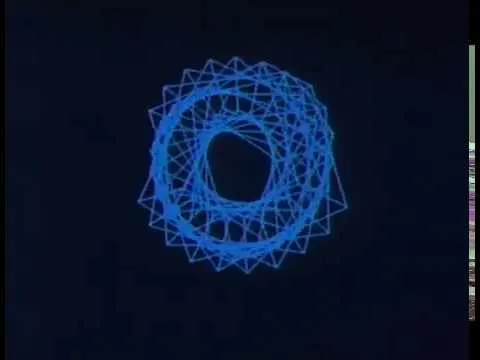
Form and movement are defined as equations and rules — harmonic series, sine sweeps, rotations, point-by-point transformations — so a few numeric parameters drive an entire sequence. Whitney called this 'harmonic progression' across visual elements; Cuba choreographed sixteen 100-point objects by writing the math that moved each one. Tuning a coefficient reshapes the whole piece.
Sound and image from one system
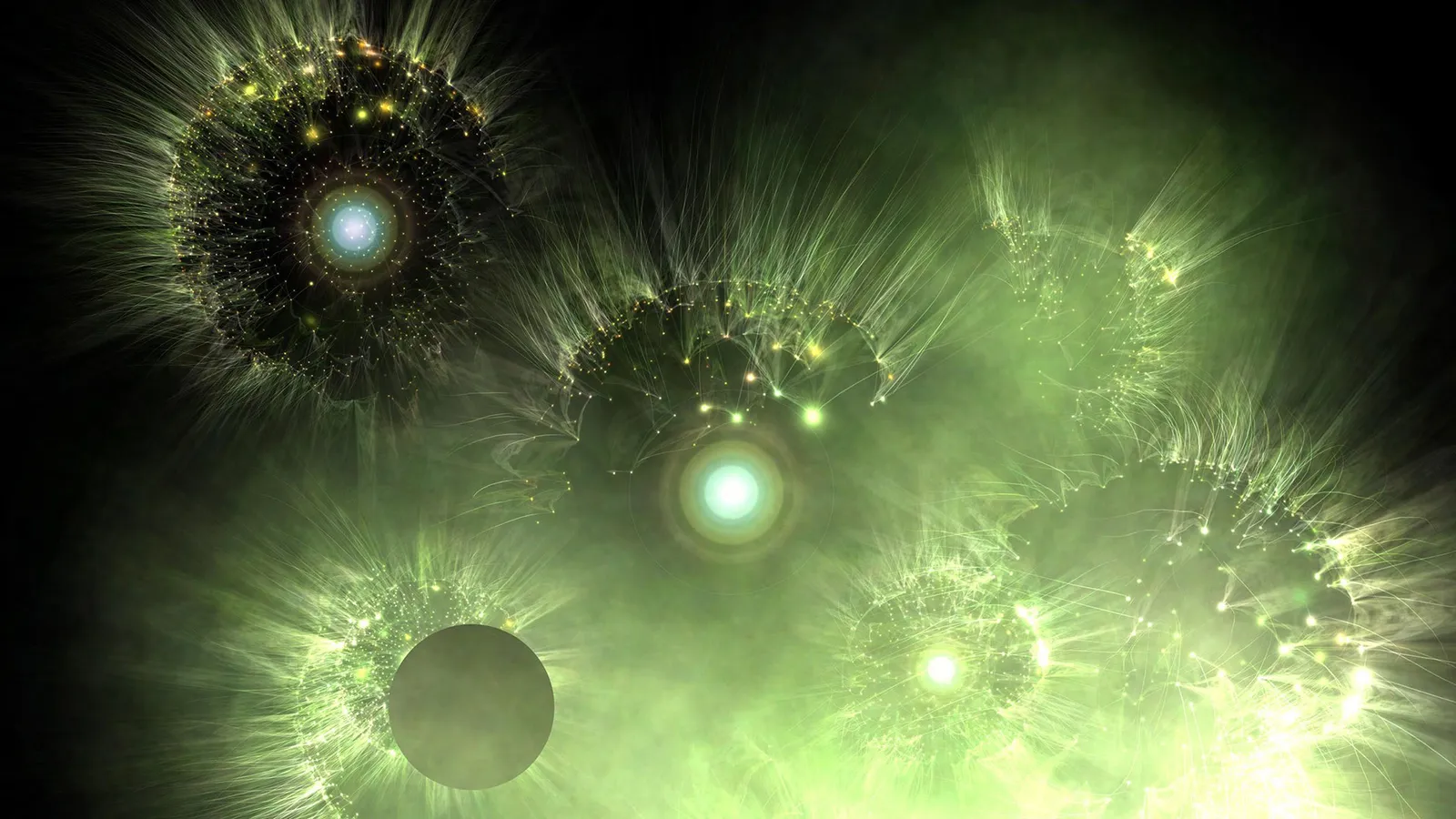
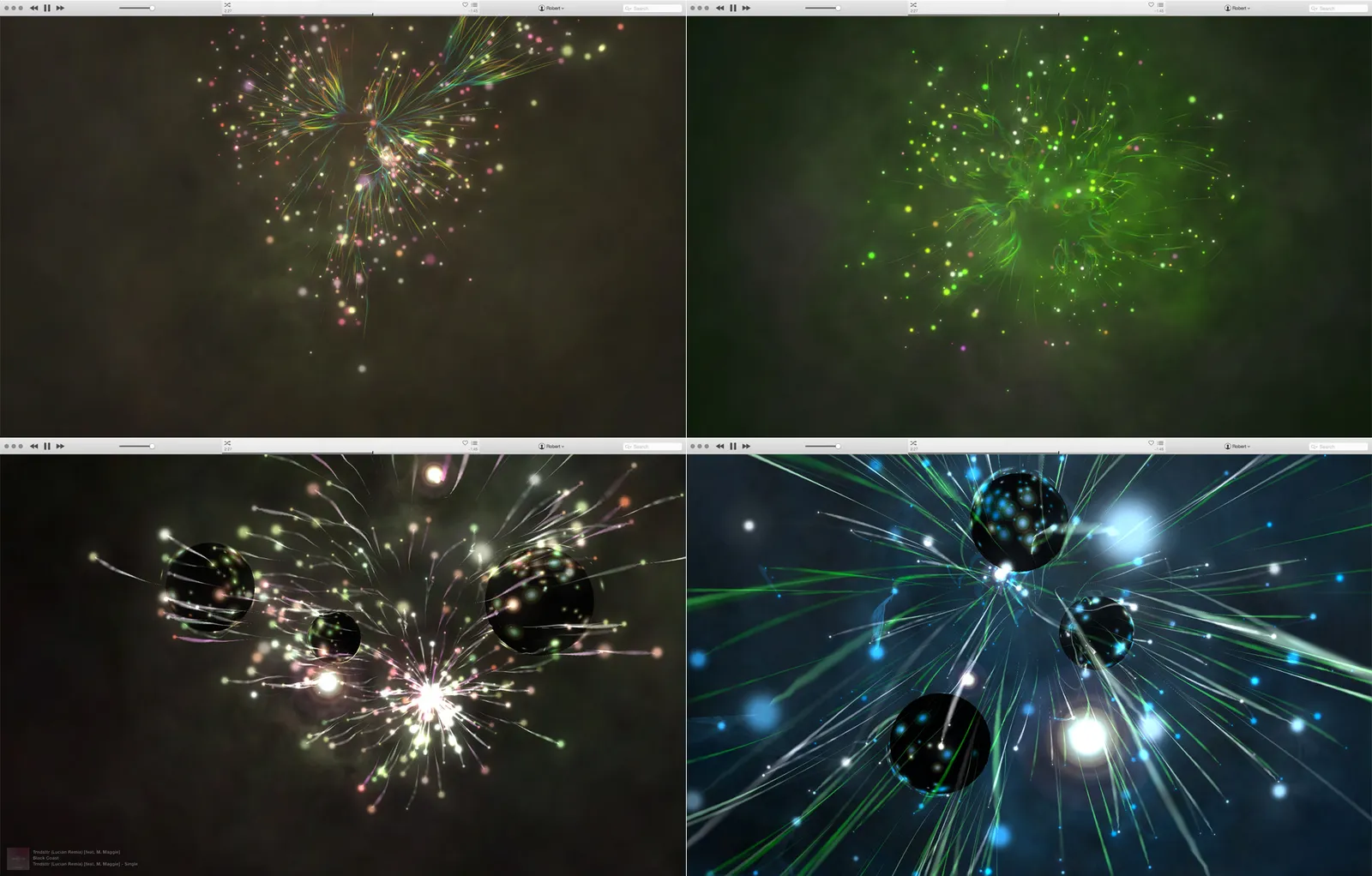
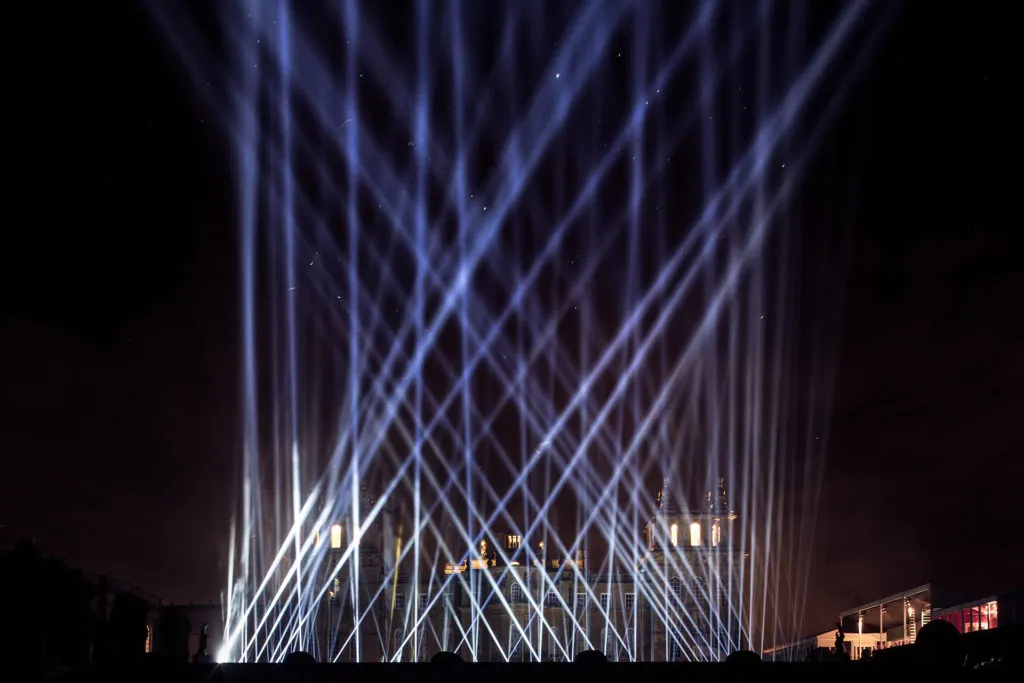
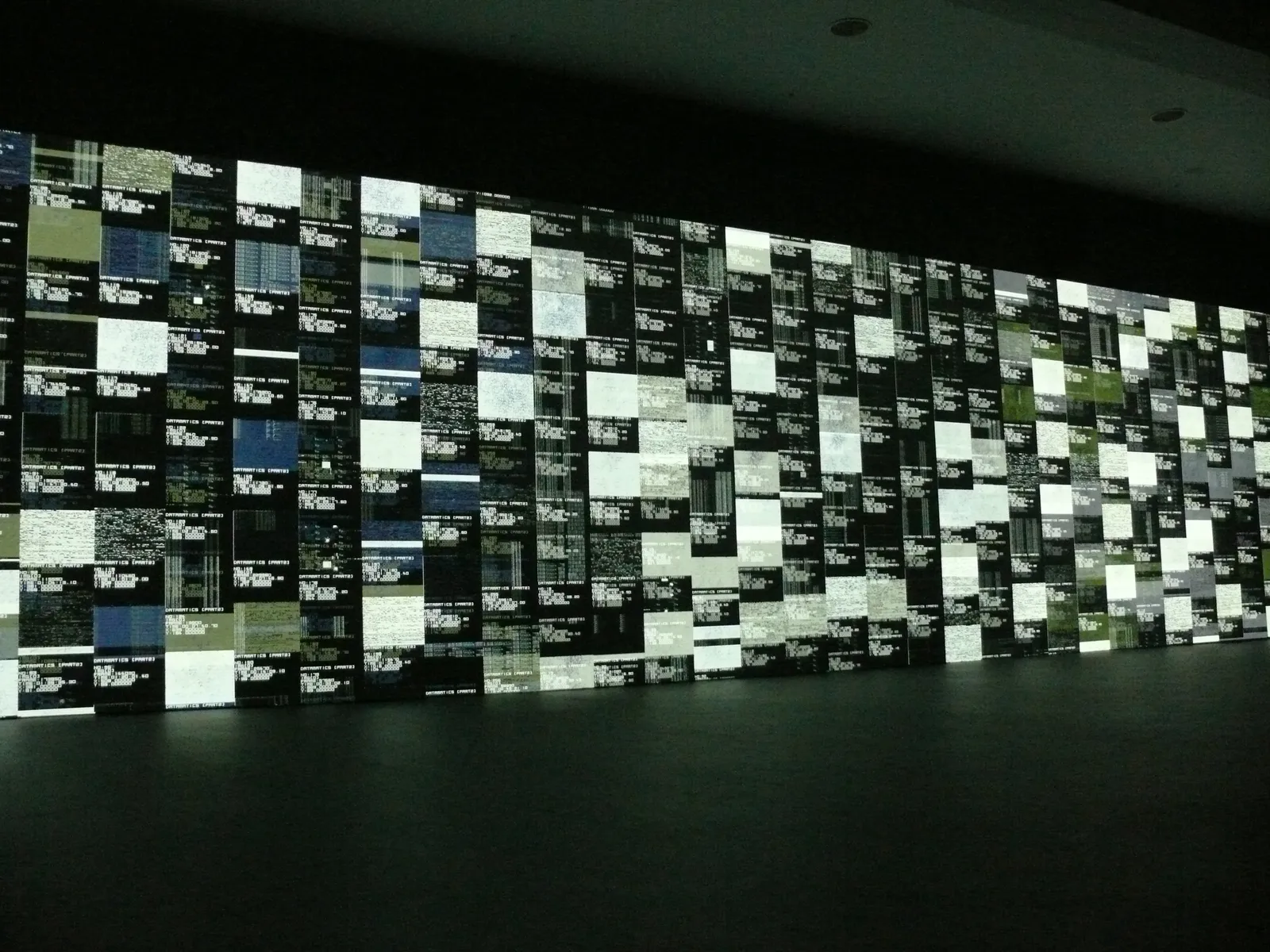
Audio drives the picture (FFT/spectral analysis maps frequency bands onto particle charge, color or scale, as in Hodgin's Magnetosphere) or both are generated from a shared data source and clock (Ikeda converts data and waveforms into synchronized barcode patterns). The link is structural, not decorative — the visual is an analogue of the sound's structure.
Real-time vs. frame-computed
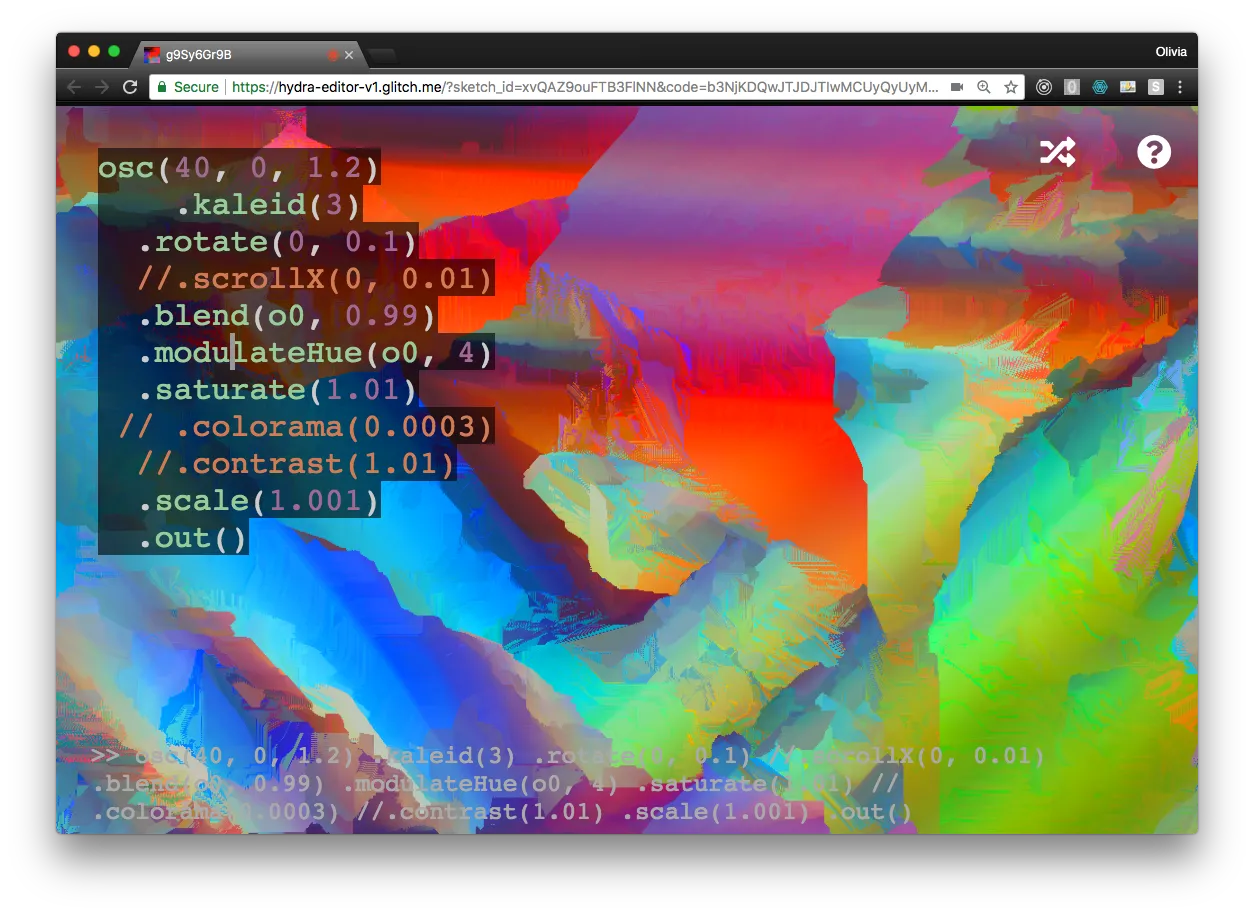
Early work was rendered offline on institutional hardware (vector displays photographed frame by frame). Modern tools run live: a GLSL shader, a Processing/openFrameworks sketch or a Hydra patch recomputes every frame at performance speed, so the artist improvises and the image responds to incoming audio or live-edited code.
Where it comes from
Analog ancestors (1920s–1960s)
The optical era set the goal but used no computation: Walther Ruttmann's and Oskar Fischinger's hand-painted abstract films, Mary Ellen Bute's oscilloscope-assisted 'seeing sound' shorts, Jordan Belson's photographed light works, and the color-organ tradition (Wilfred's Clavilux). These pioneers defined 'visual music' but predate the machine that this atlas tracks — they are origins, not part of the digital roster.
The machine enters (1958–1975)
John Whitney Sr. built a mechanical analog computer from a WWII M-5/M-7 antiaircraft gun director and used it for Catalog (1961) and Permutations, then moved to digital processes by the early 1970s. IBM made him its first artist-in-residence in 1966; Arabesque (1975), programmed by Larry Cuba, is his digital landmark. His 1980 book Digital Harmony argued music and visual art share one mathematics.
Pure code and the second generation (1975–1990)
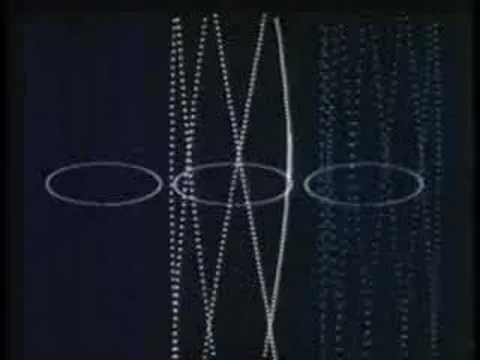
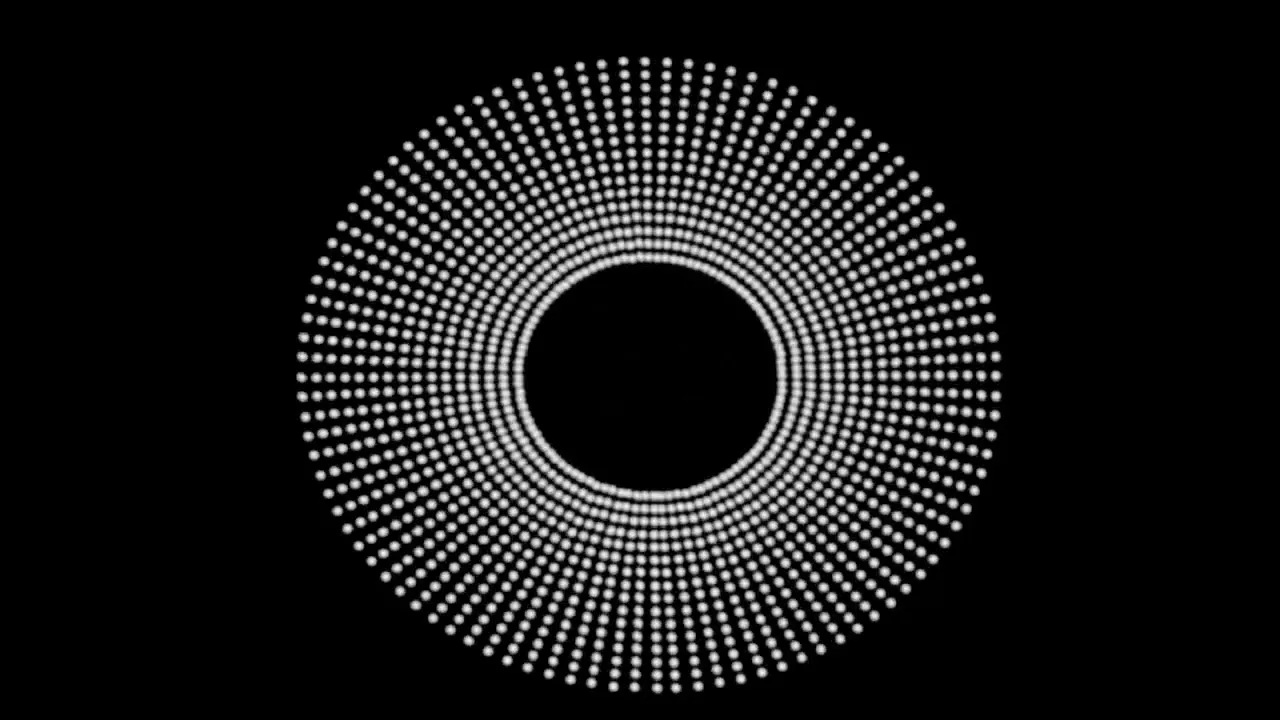
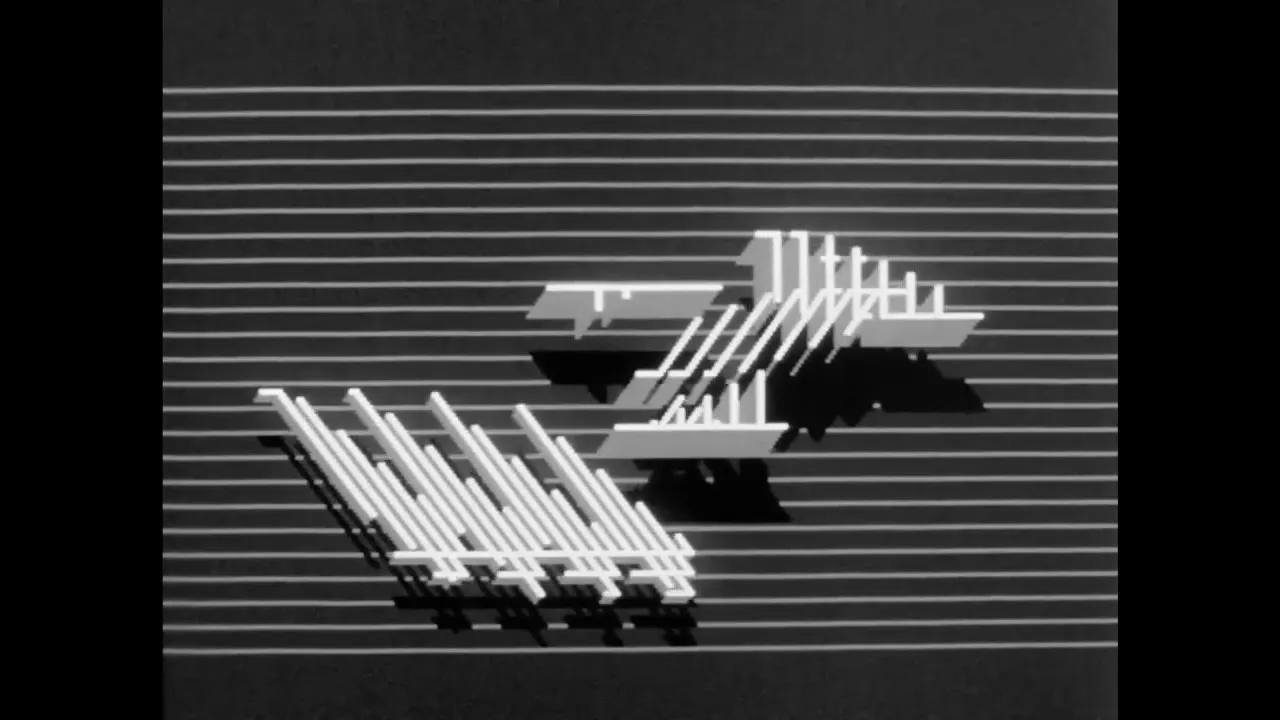
Larry Cuba — Whitney's programmer on Arabesque — went fully algorithmic: 3/78 (Objects and Transformations) (1978) and Two Space used Tom DeFanti's real-time vector language GRASS at the University of Illinois at Chicago; Calculated Movements (1985) used the Datamax UV-1 and Zgrass. He also programmed the Death Star briefing wireframe in Star Wars (1977). This established abstract animation written, not drawn.
Artists
-
Catalog (1961, mechanical analog computer); Permutations; Arabesque (1975, digital, programmed by Larry Cuba); book Digital Harmony (1980); IBM's first artist-in-residence (1966)
Widely called a father of computer animation; converted a WWII gun-director into an analog computer, then moved to digital, treating motion as harmonic progression.
-
3/78 (Objects and Transformations) (1978, GRASS); Two Space; Calculated Movements (1985, Zgrass/Datamax UV-1); Star Wars (1977) Death Star briefing graphics; programmer on Whitney's Arabesque
Pure algorithmic animator of the 'second generation' who choreographed point-of-light forms by writing the math, using DeFanti's real-time vector languages GRASS and Zgrass.
-
Magnetosphere (iTunes default visualizer, 2007; FFT-driven particle system, Processing → C++); Into the Trees (realtime A/V performance); Solar; flight404 audio-reactive works
Generative coder whose FFT-driven particle systems turn audio into real-time abstract motion; his Magnetosphere shipped as the iTunes visualizer.
-
Forms (2013, Prix Ars Electronica Golden Nica); Simple Harmonic Motion series; Body Paint; Deep Meditations; Superradiance
Artist and computer scientist who builds audiovisual works and rhythmic 'simple harmonic motion' systems from code, data and machine learning.
-
datamatics; test pattern (data/sound converted to barcode and binary patterns in real time); cyclo.; supersymmetry; spectra
Composer-artist who generates tightly synchronized sound and stark binary/barcode visuals from data, with mathematics shaping music, time and space.
-
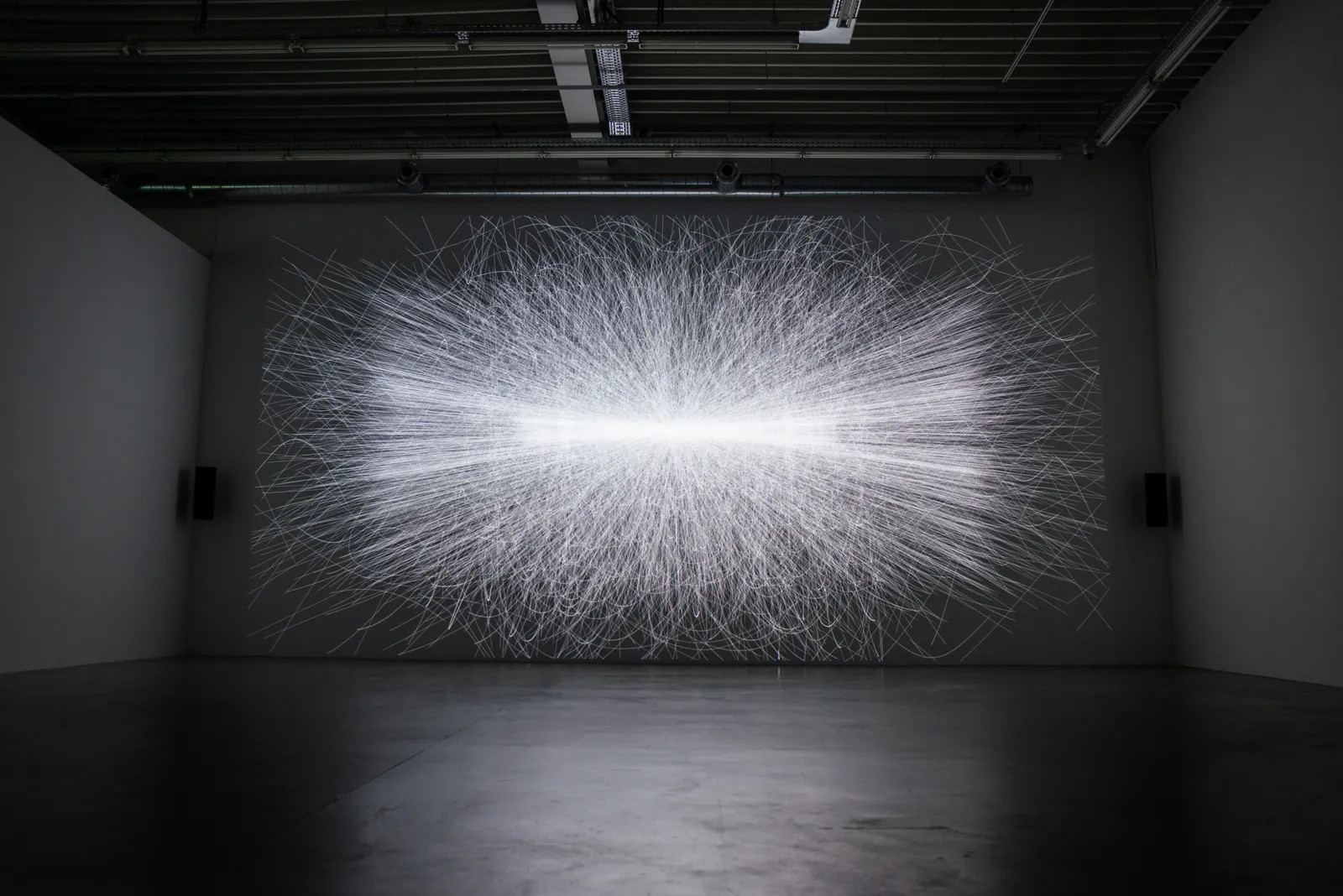
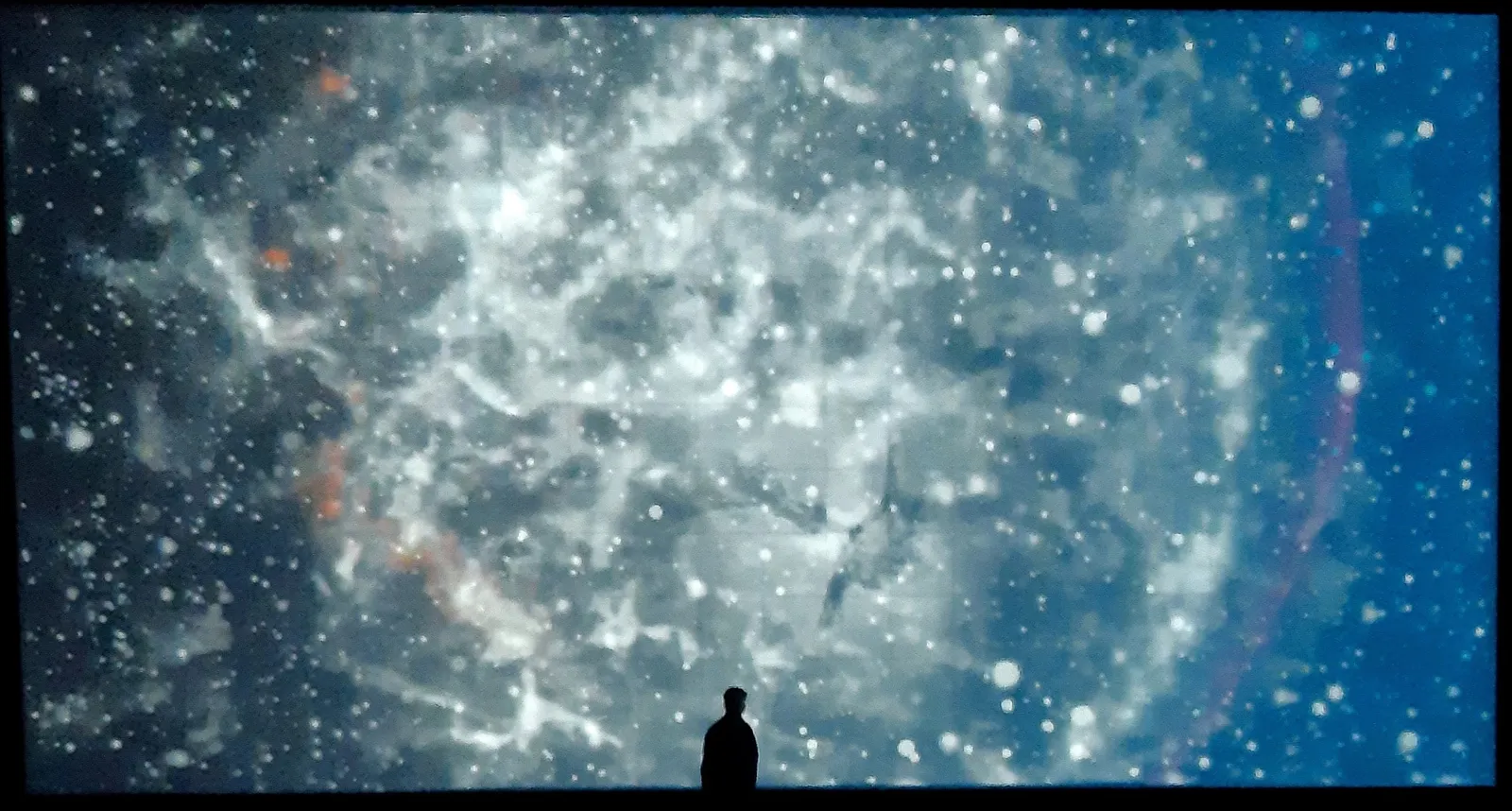
Co-creator of Processing; Process series and Process Compendium 2004–2010; Software Structures; In Silico; Compressed Cinema
Co-author of Processing whose Process works define abstract motion as short English rule-texts that software turns into endlessly varying generative imagery.
-
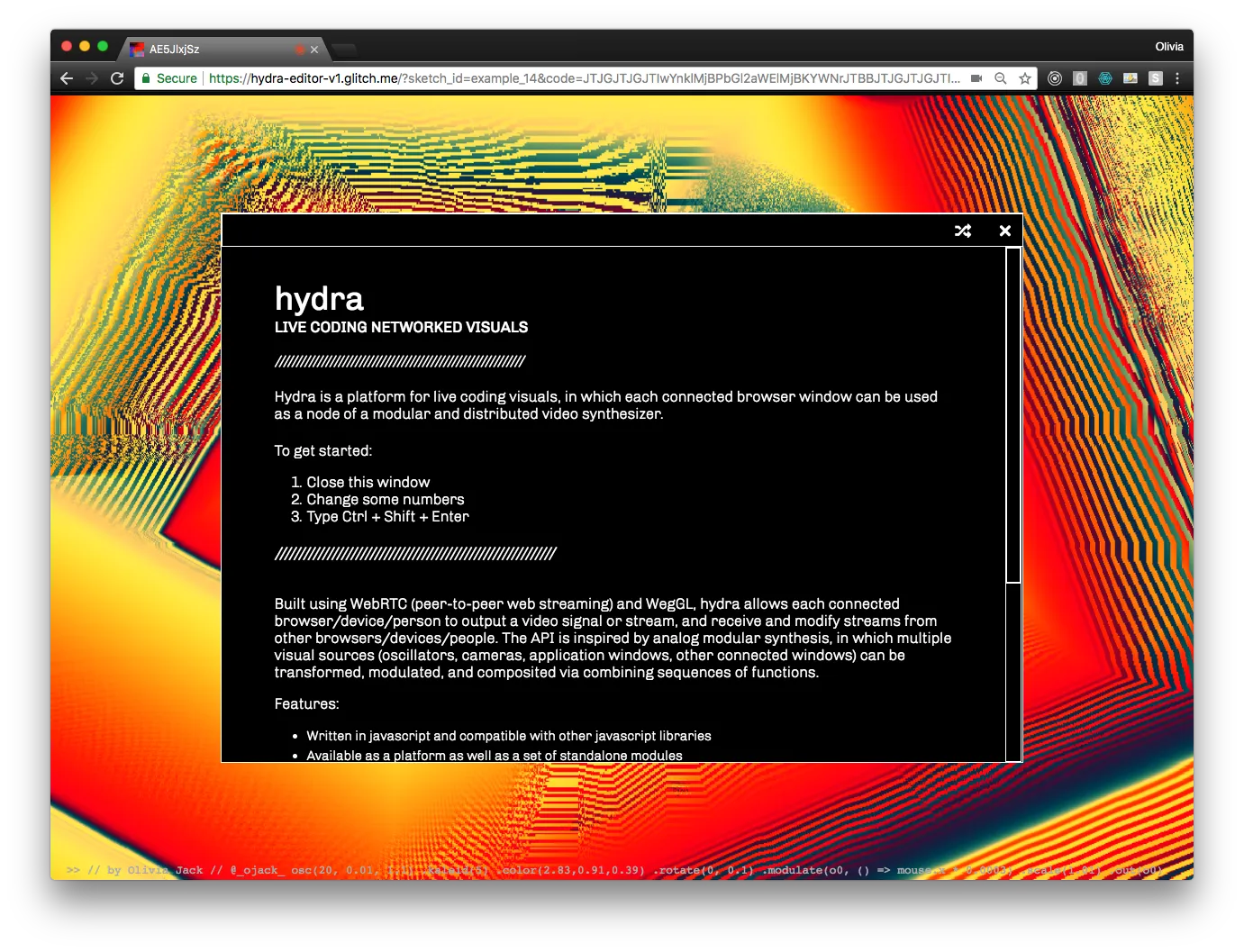
Hydra (open-source browser live-coding video synth, WebGL); PIXELSYNTH; Live Lab
Created Hydra, a browser-based modular video synthesizer for live-coding audio-reactive visuals, carrying the algorithmic-image lineage into real-time performance.
-
Versum (3D audiovisual programming environment); live A/V with Thom Yorke and Nicolas Jaar; 27 (with Robert Henke)
Dutch audiovisual artist who built Versum, a navigable 3D space where sound and image are one system, performed live as real-time visual music.
Frames
John Whitney Sr.
Larry Cuba
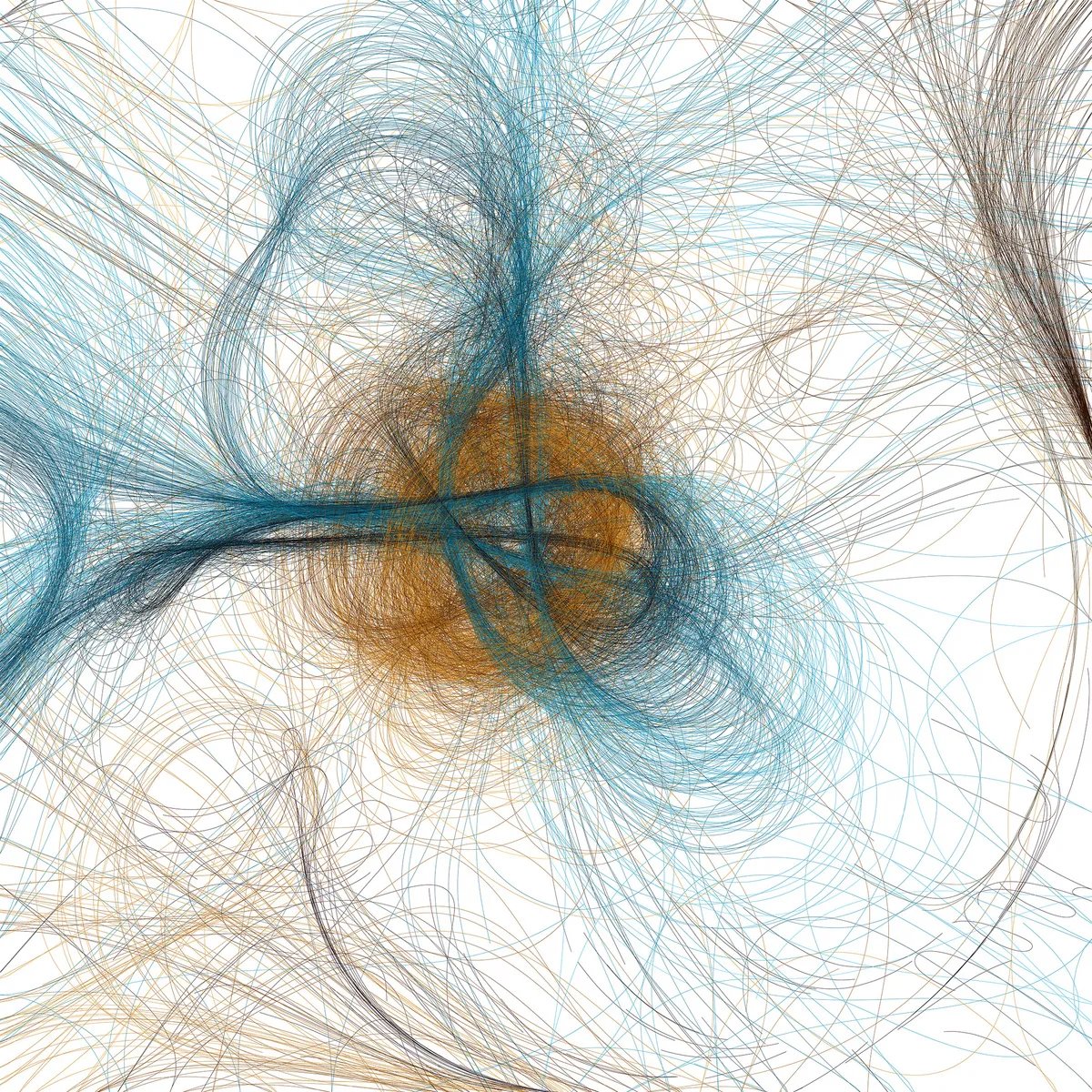
Robert Hodgin
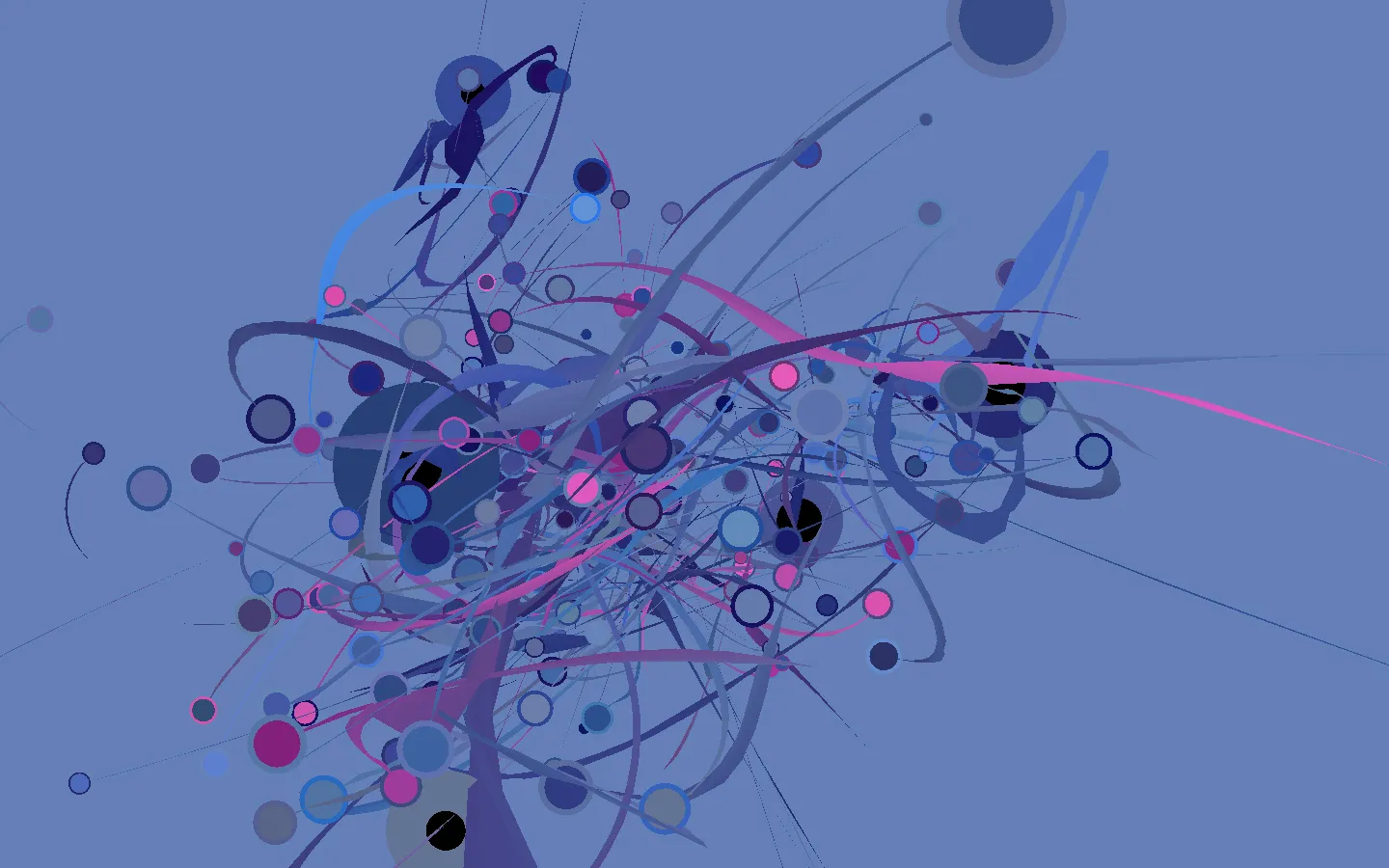
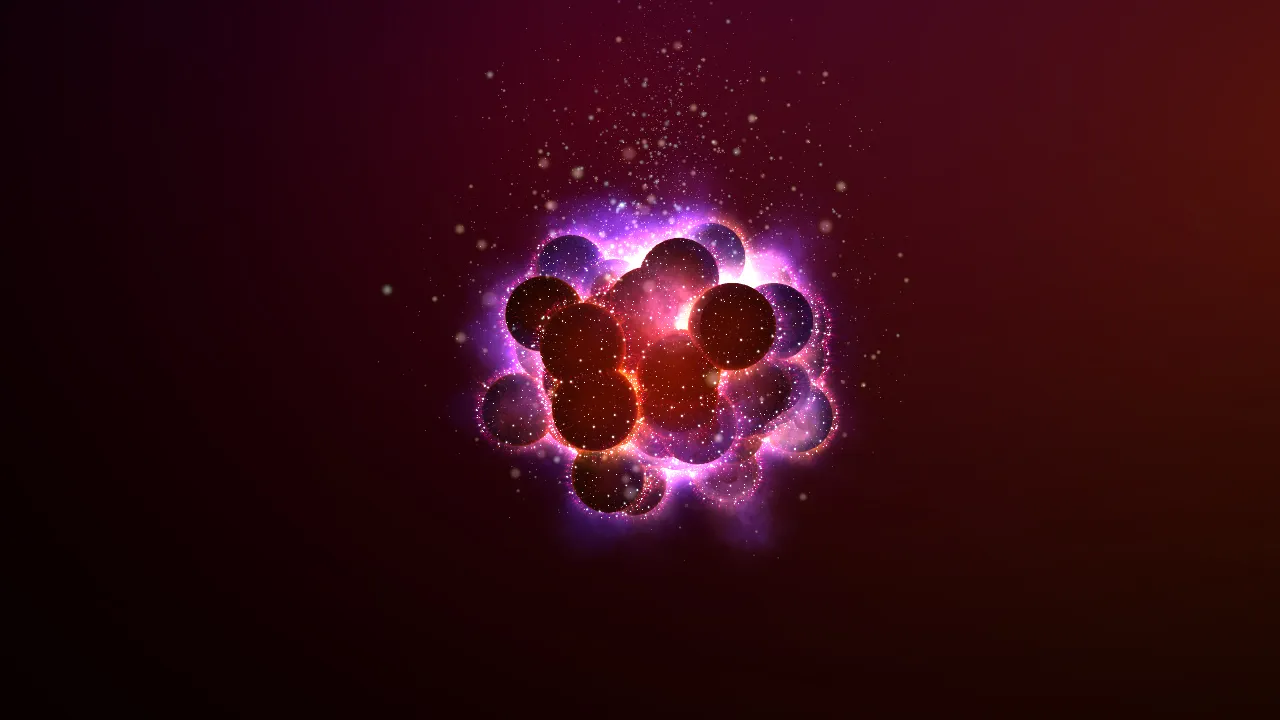
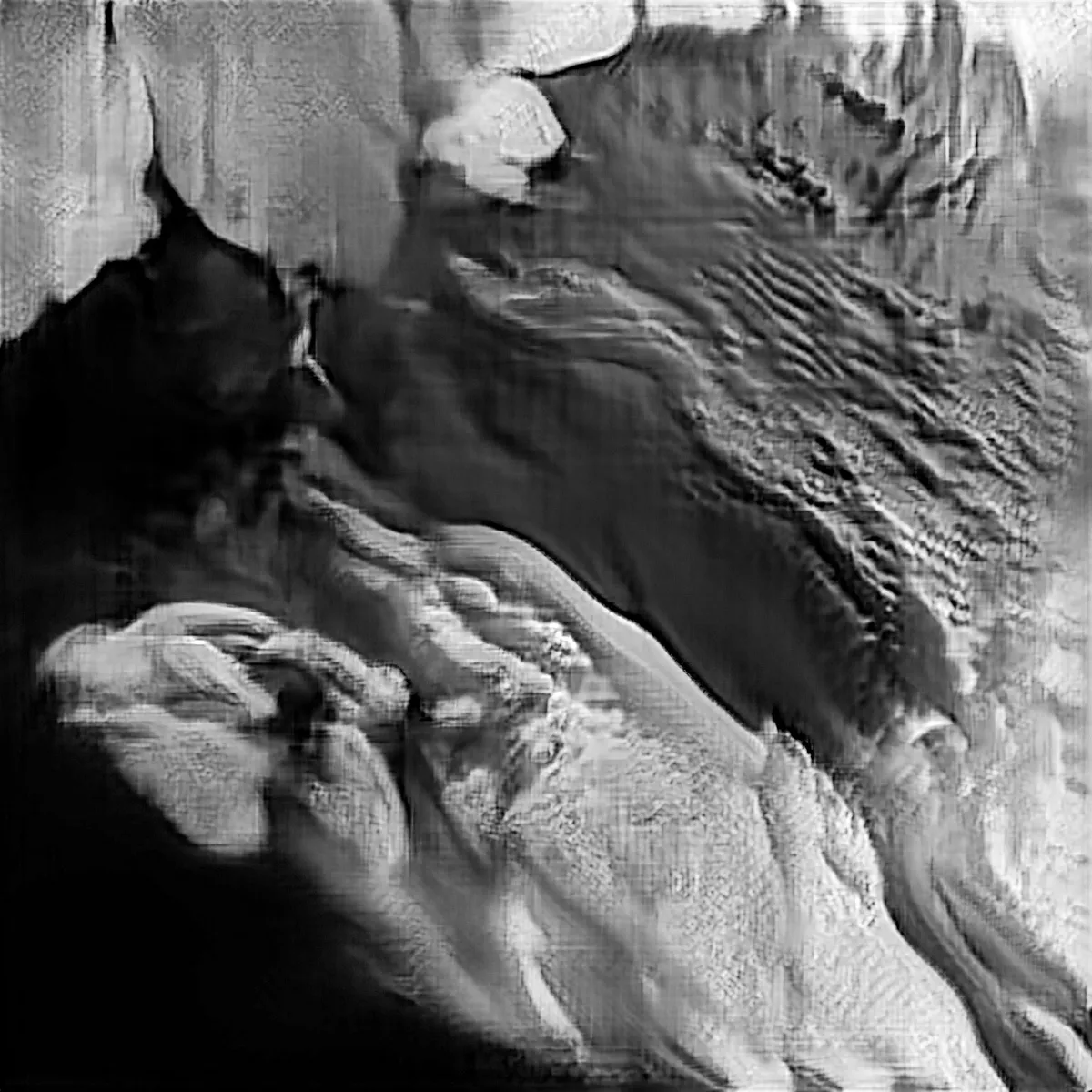
Memo Akten
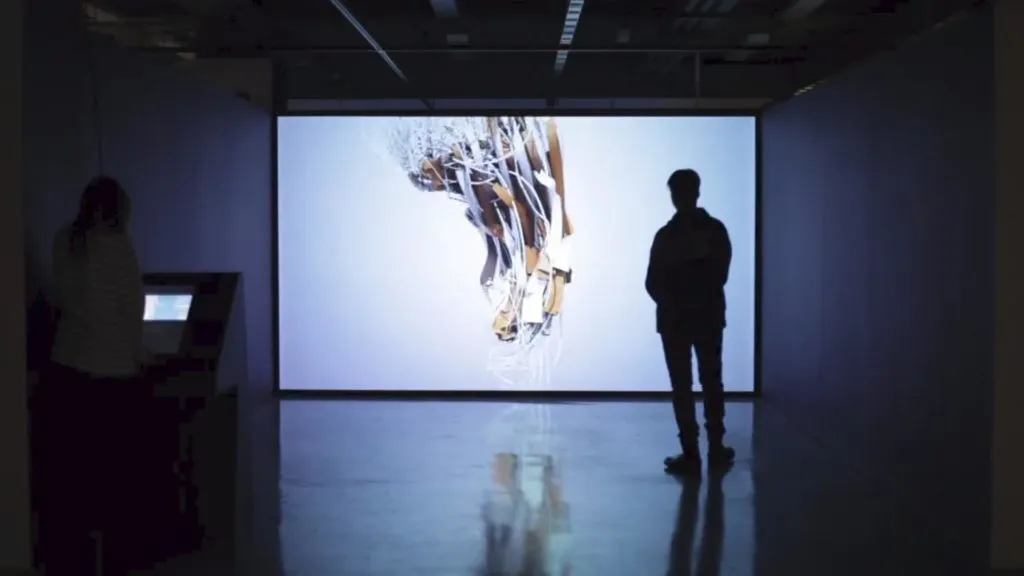
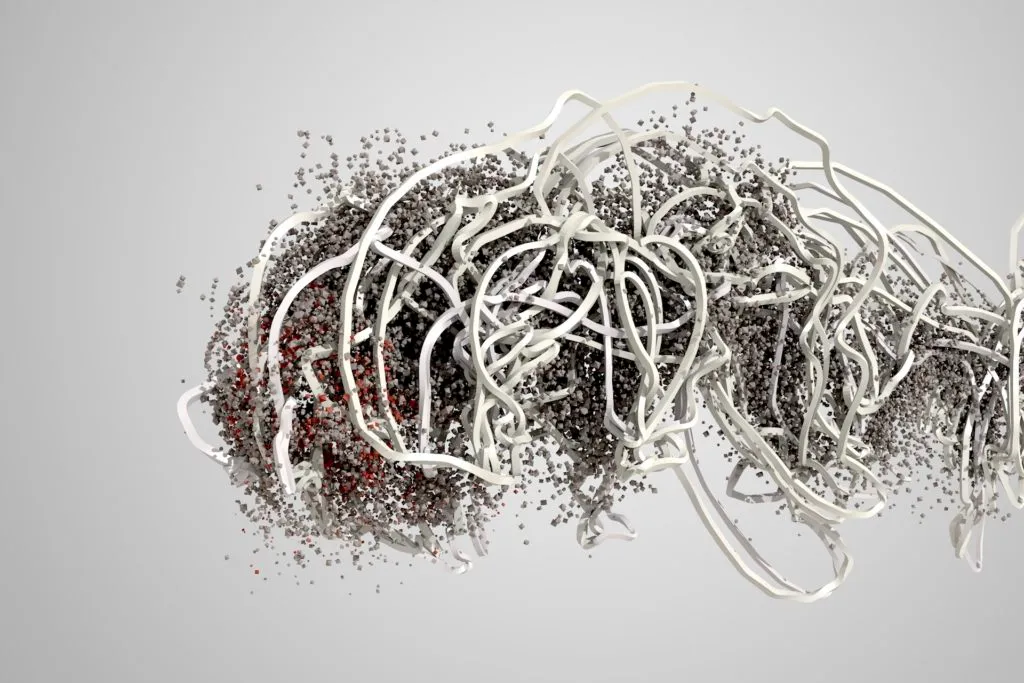
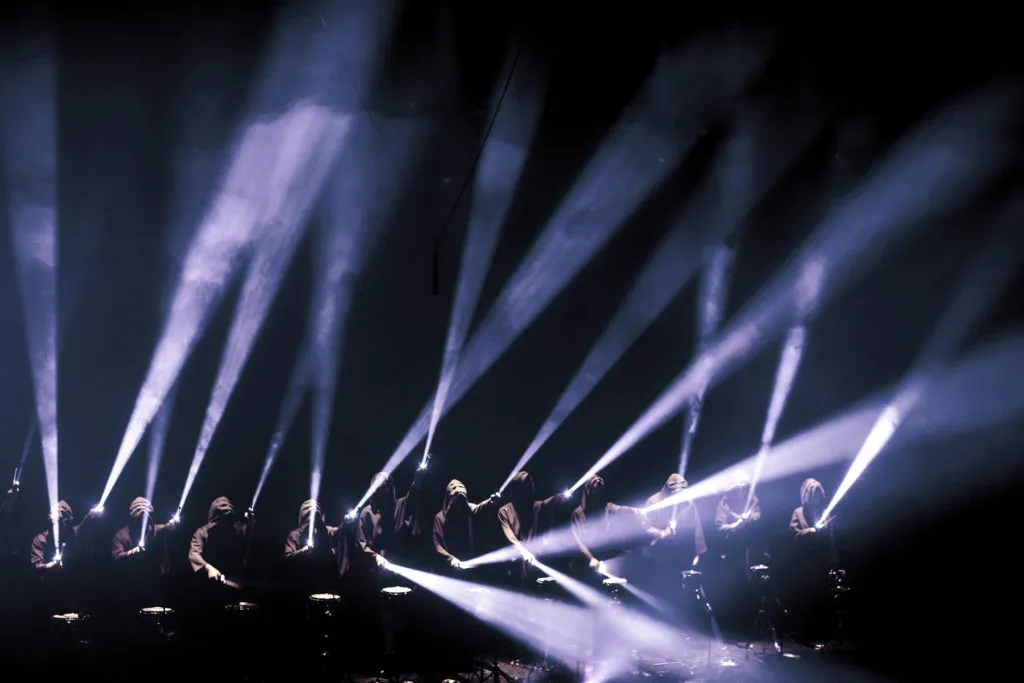
Ryoji Ikeda
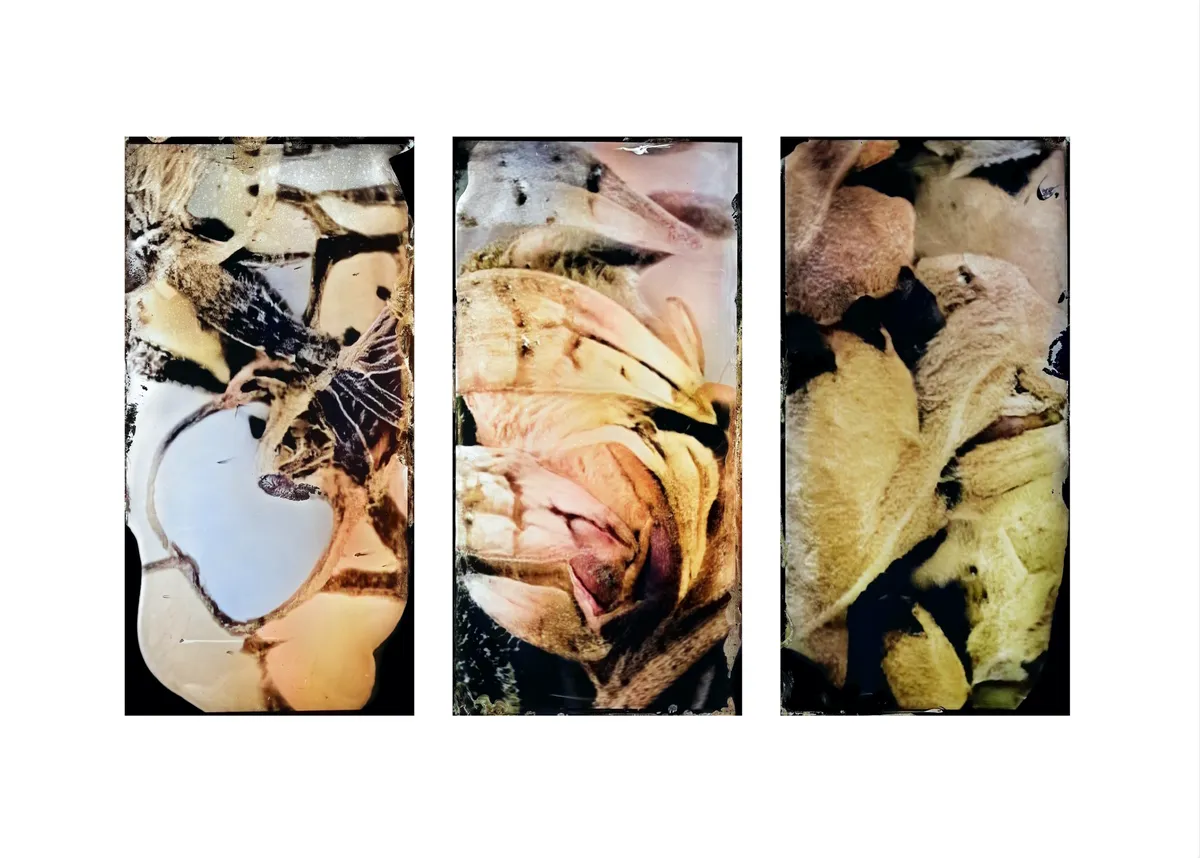
Casey Reas

Techniques
- harmonic-progression-of-motion
- fft-audio-reactive-mapping
- point-and-vector-choreography
- real-time-shader-rendering
- live-coding-performance
- parameter-driven-variation
- data-to-pattern-conversion
- frame-by-frame-vector-capture
- particle-force-systems
- rule-text-generative-systems
Tools
- mechanical-analog-computer
- GRASS / Zgrass (DeFanti)
- vector-display-hardware
- Processing / p5.js
- openFrameworks
- GLSL
- Hydra
- TouchDesigner
- Max/MSP
- custom-code
What to take from it
Bind the picture to the math of the sound
Don't cut to the beat by hand — analyze the audio (FFT bands, amplitude envelope) and route those numbers into scale, color, charge or rotation. The sync reads as structural because it literally is the sound's structure driving the form.
Compose with harmonic ratios, not keyframes
Whitney's principle: drive many elements with related frequencies/phase offsets so they drift in and out of alignment like a chord resolving. A handful of ratio parameters yields motion that feels musical rather than arbitrary.
Few primitives, many transformations
Cuba's 100-point objects and Reas's Elements show that a tiny vocabulary (points, a form, a behavior) plus rules of transformation generates rich sequences. Start from the simplest mark and let the algorithm vary it.
Make it live to find it
Run the system in real time (Hydra, a shader, a sketch) and improvise against audio or edit the code mid-performance. Watching parameters respond instantly surfaces the good states a frame-by-frame render would never stumble onto.