Atlas
Atlas indexCreative Coding / Generative
Artists who write the algorithm, then let it draw.
- generative-art
- creative-coding
- Processing
- p5.js
- openFrameworks
- flow-fields
- algorithmic-randomness
- GAN-and-AI
What it is
A practice where the artwork is software: the maker authors rules, randomness, and feedback loops in code, and the computer renders the output. It spans plotter drawings, real-time installations, gesture-driven performance, GAN data sculptures, and long-form blockchain editions. The medium is the system itself; any single rendered frame is one sample of an infinite field.
How it is made
Author a system, not a picture
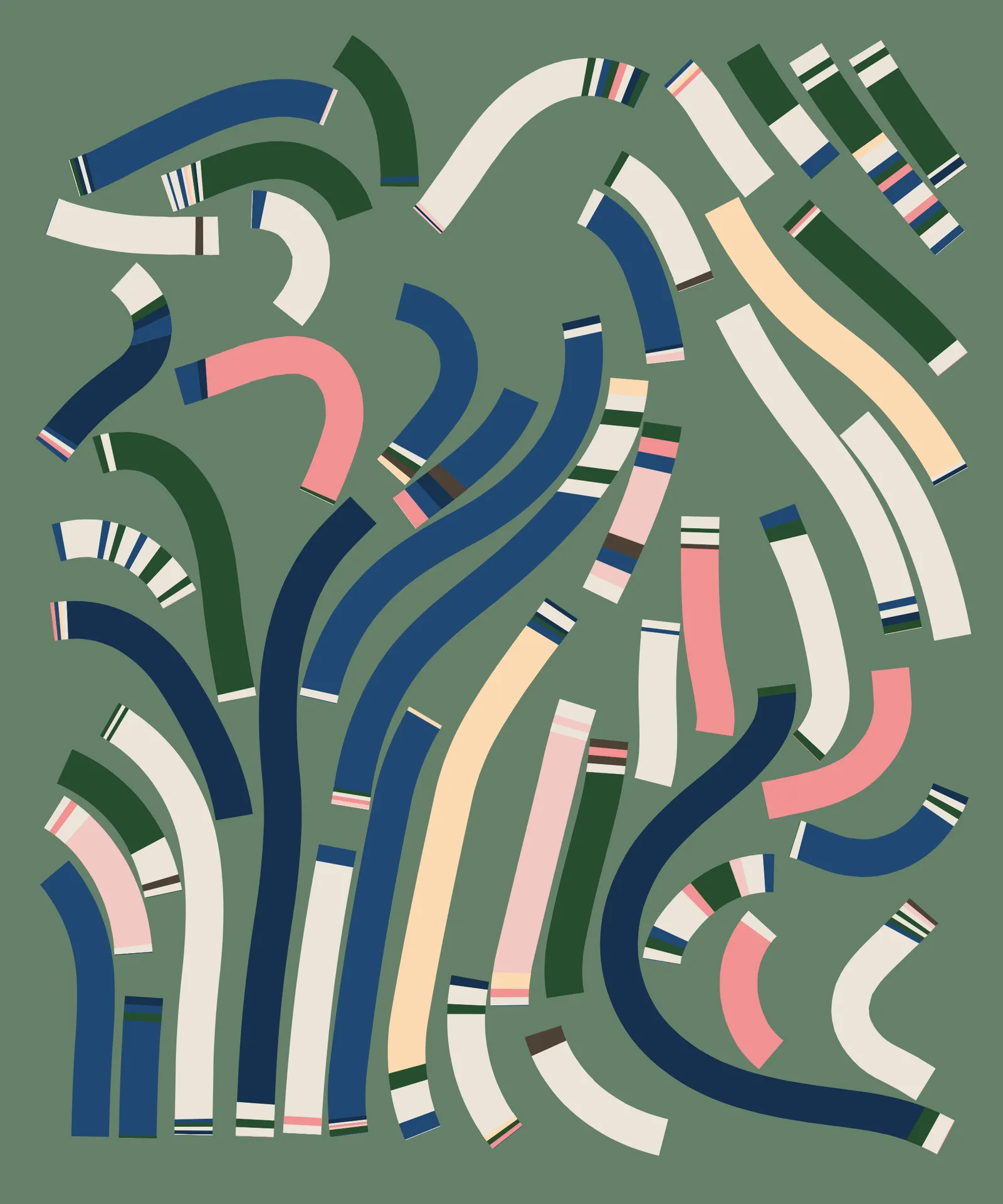
You define primitives (forms, fields, agents) plus the rules that relate them, then run the program. A single short text or sketch becomes a 'kinetic drawing machine with a beginning but no defined end' (Reas's Process series), so each run is one realization from an infinite field.
Controlled randomness and emergence
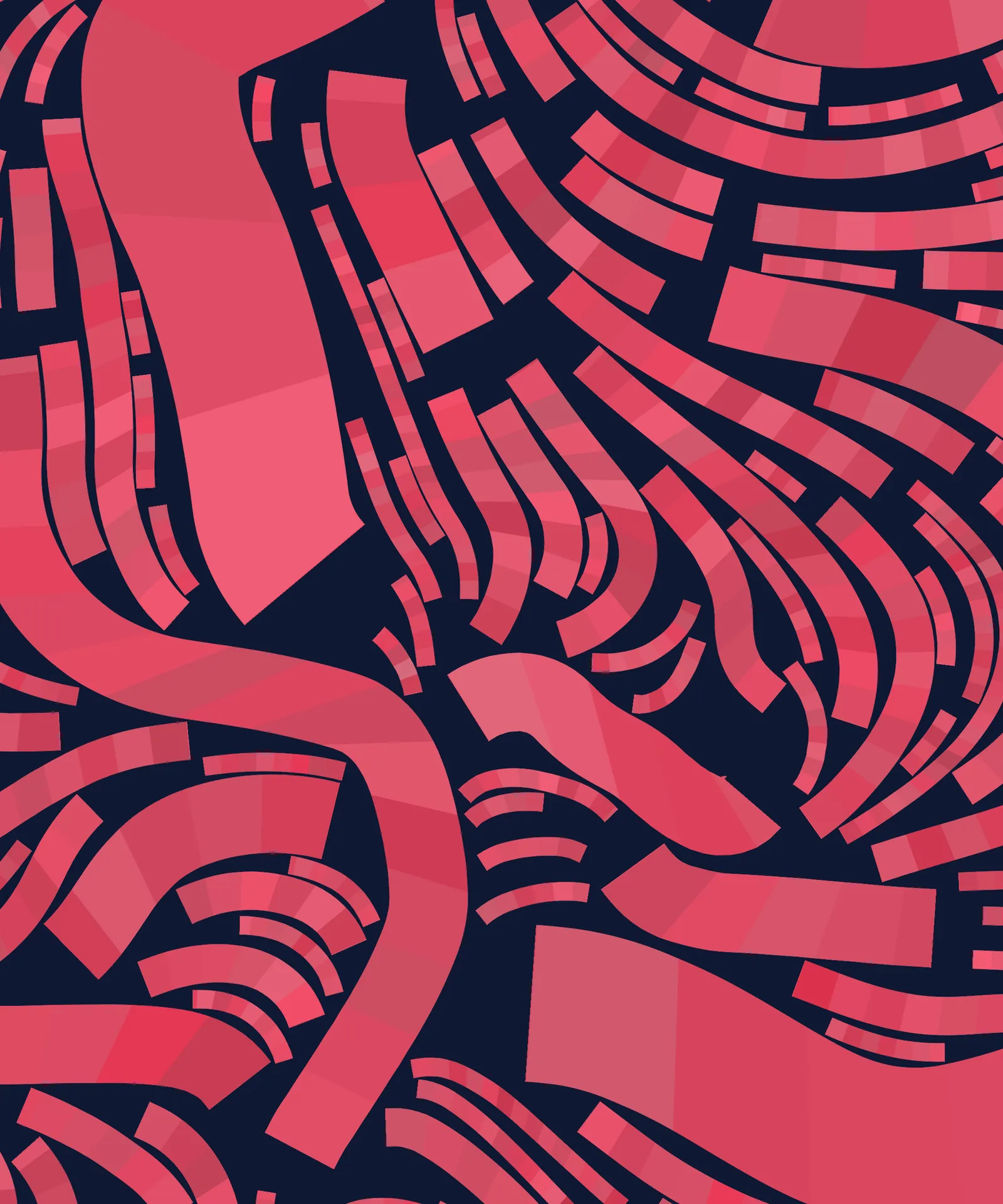
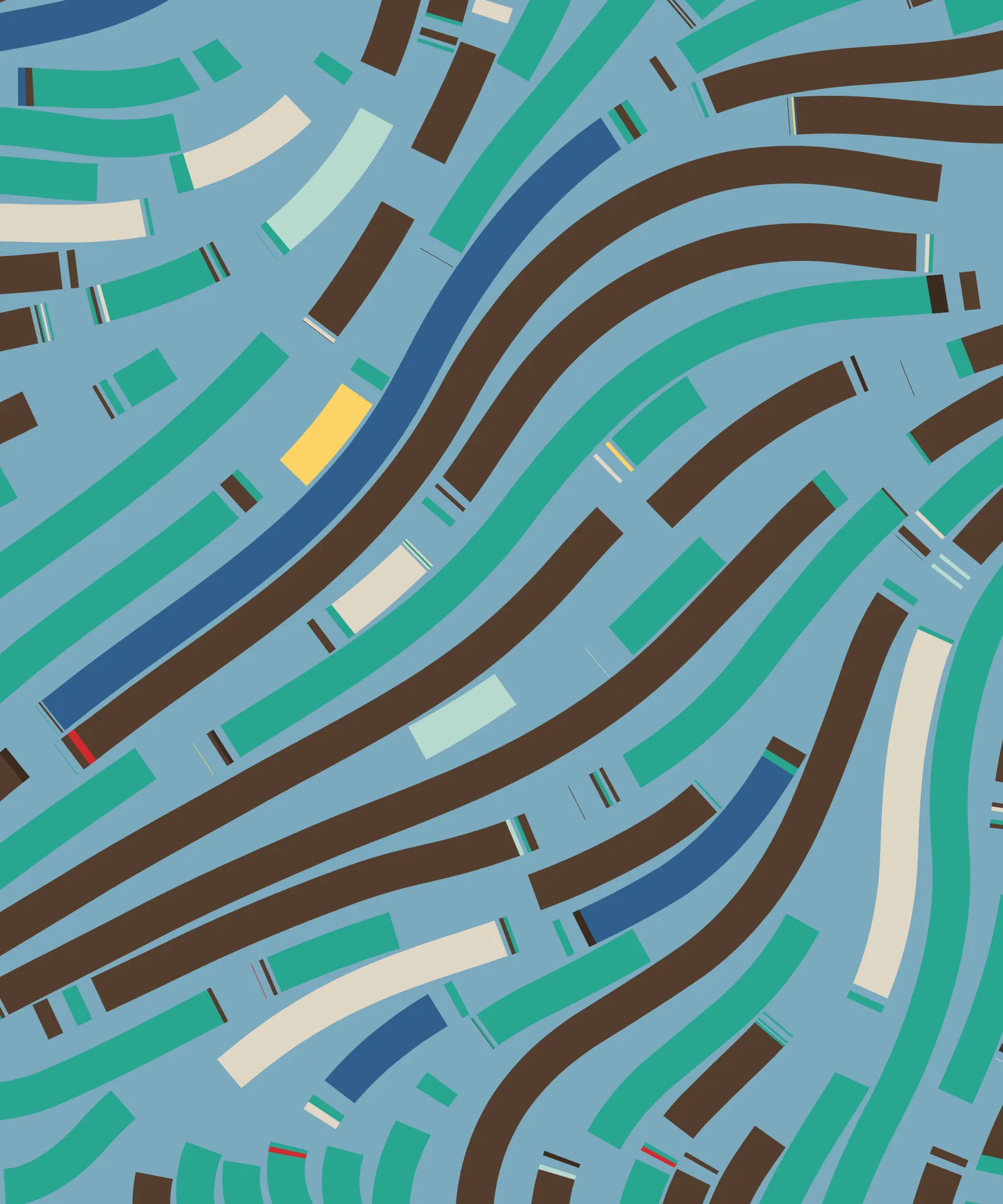
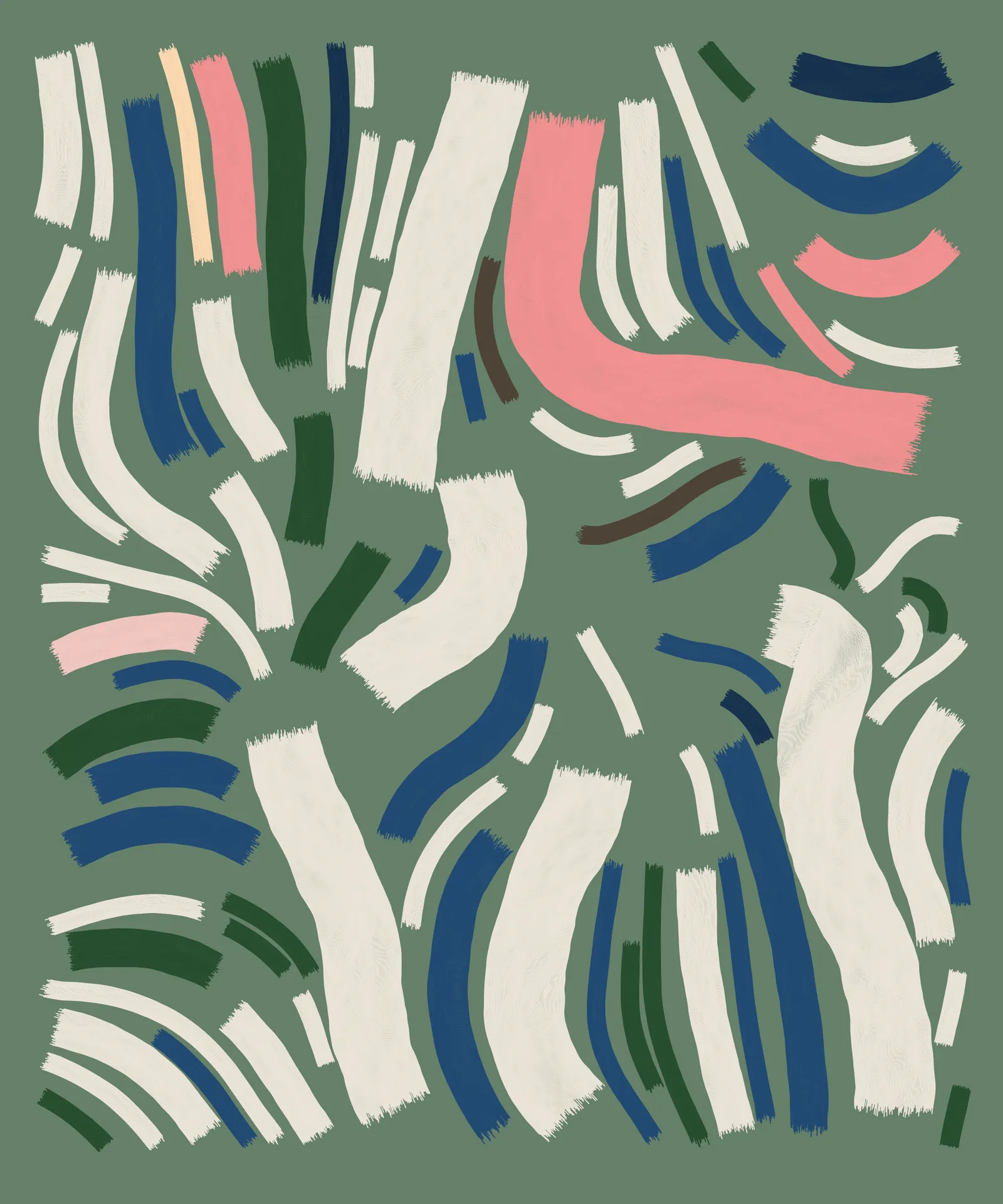
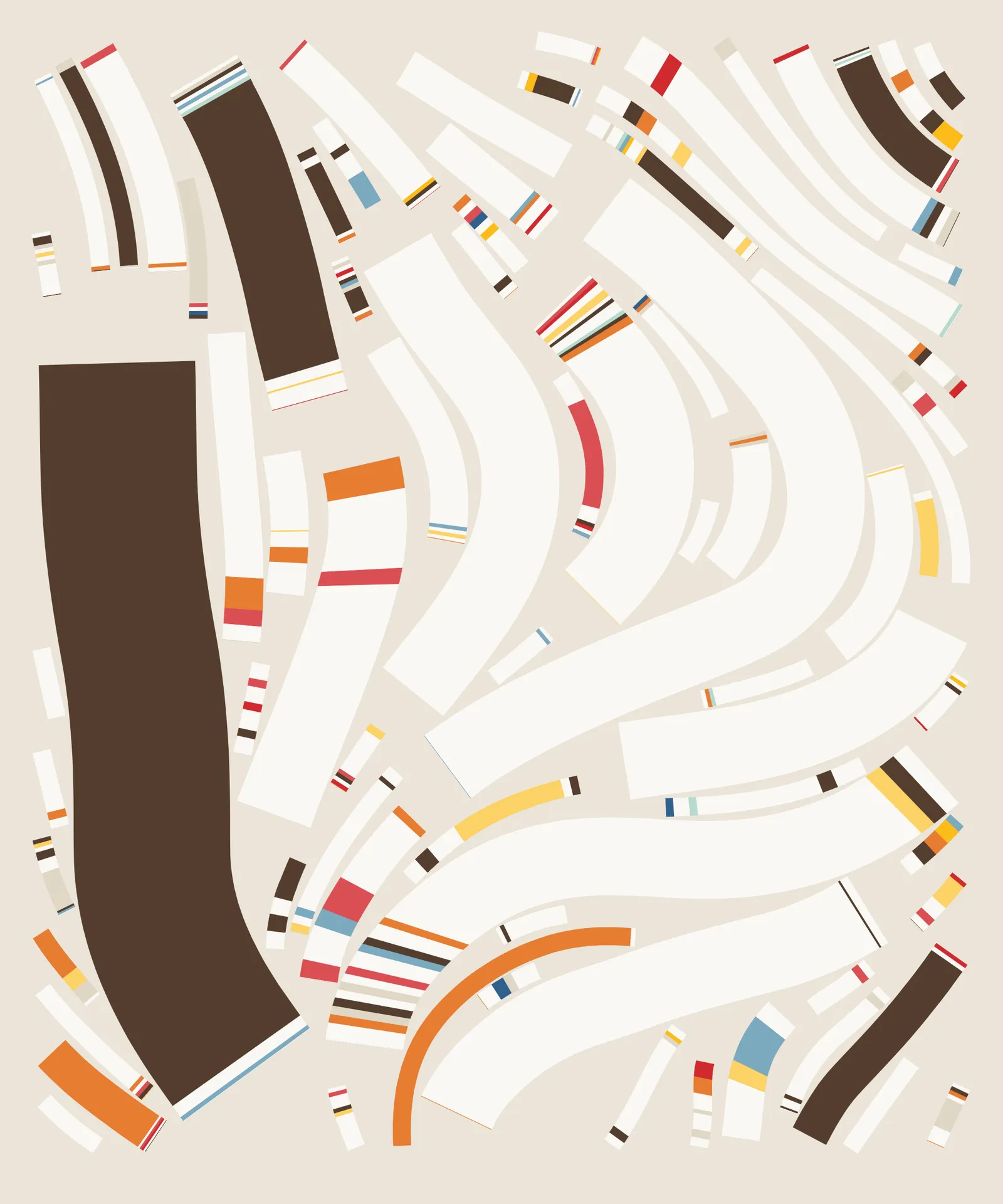
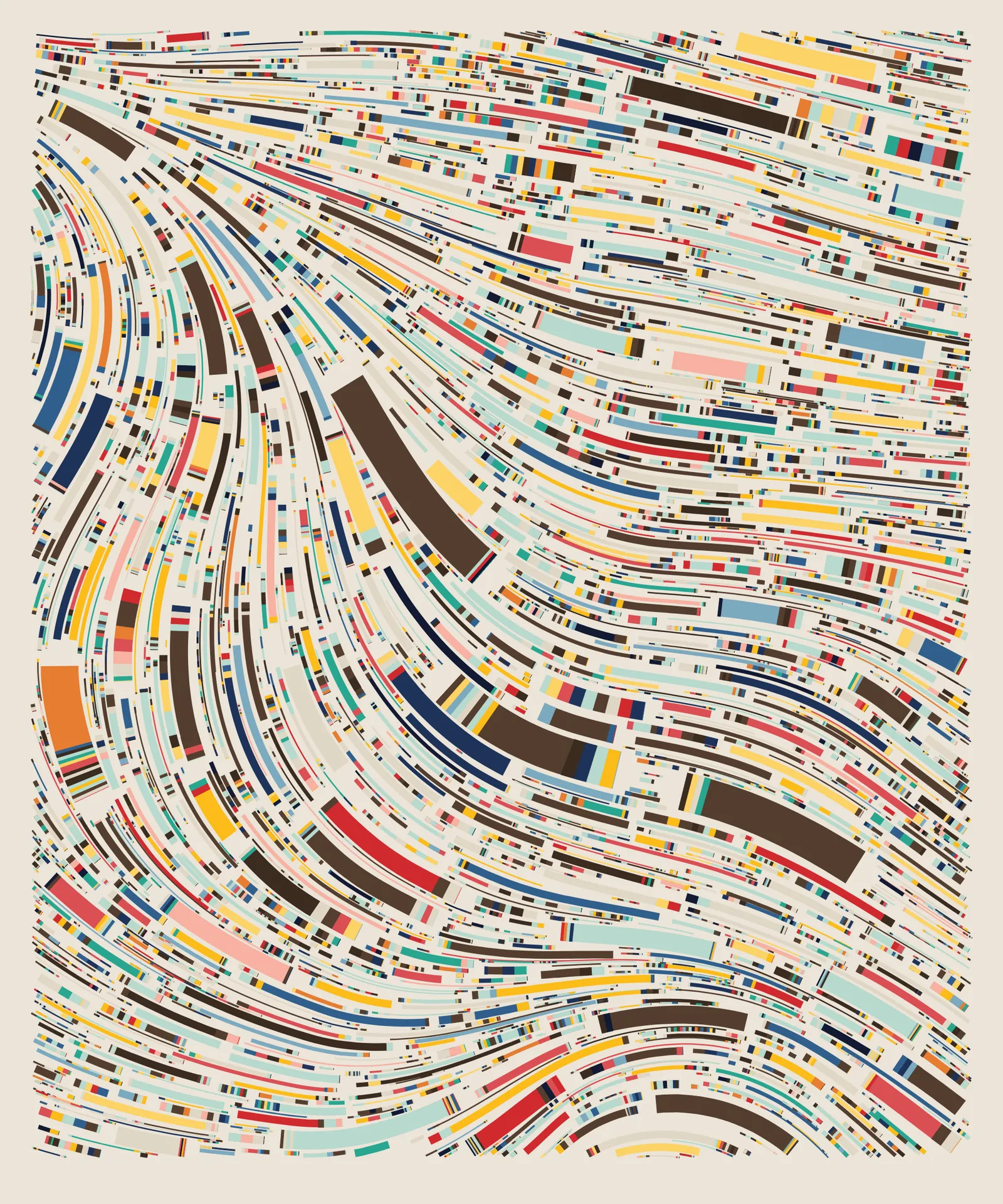
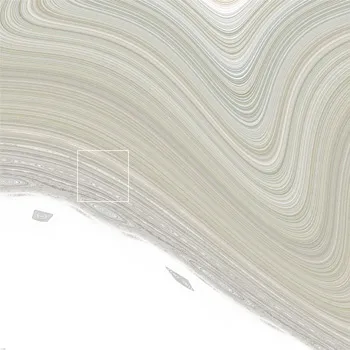
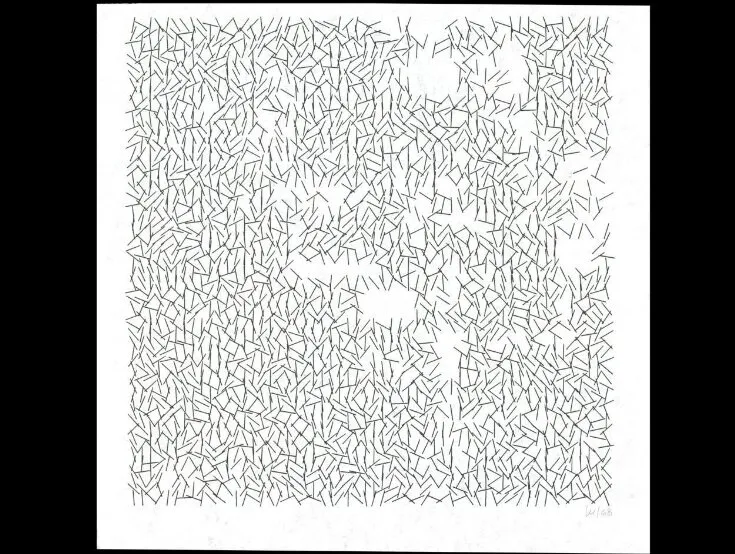
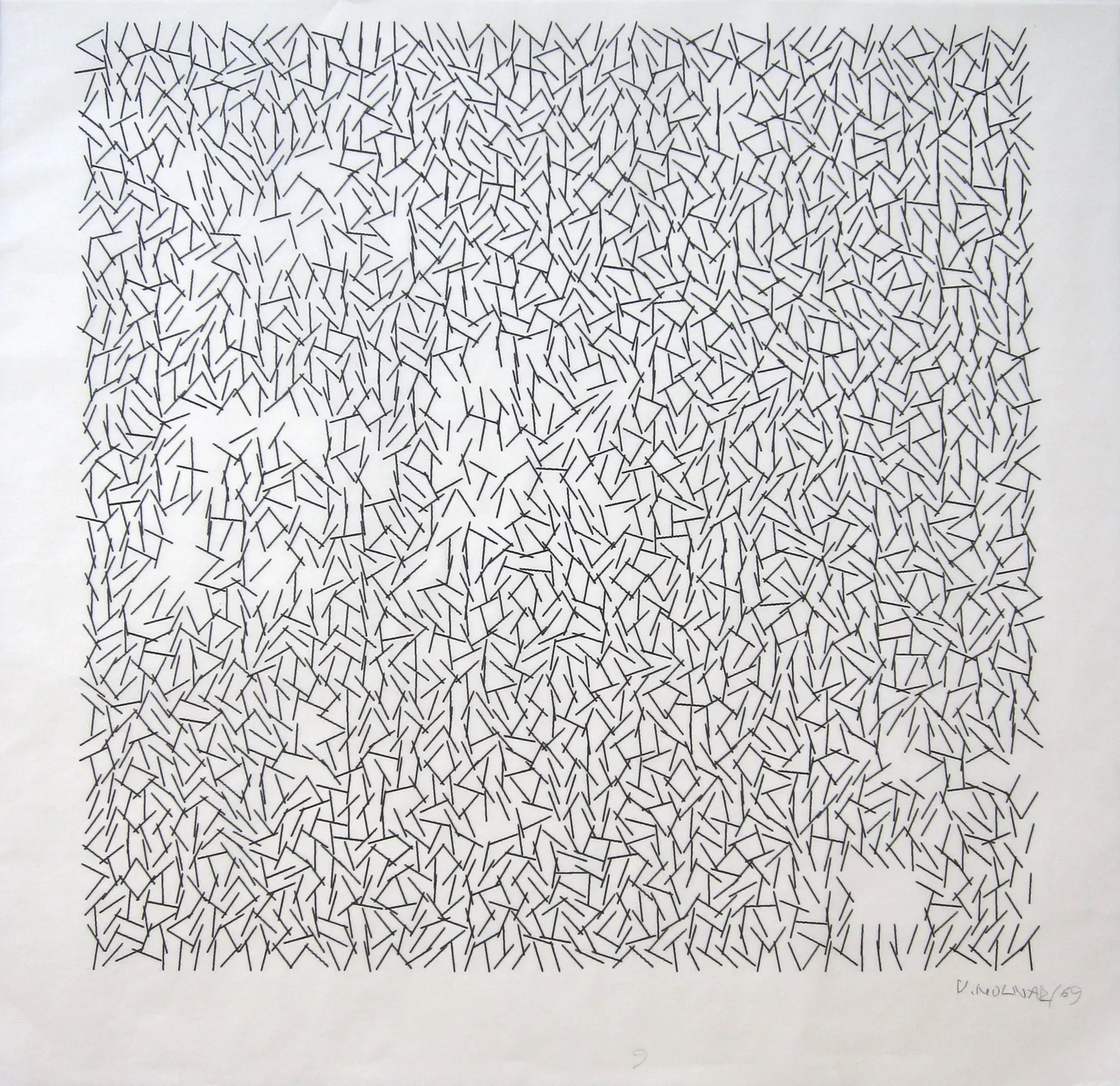
Seeded noise, random rotation, and probabilistic palettes inject variation into a strict structure. Molnár's Interruptions rotates same-length lines on a grid and erases sections; Hobbs's Fidenza steers thick non-overlapping ribbons through a flow field — order tipping toward chaos and back.
Real-time input and AI latent space
Frameworks like Processing, p5.js, and openFrameworks render live, letting work respond to face, gesture, sound, or sensors. AI-era pieces train GANs (StyleGAN2) on huge image corpora and move a camera through latent space, so the 'pigment never dries' — it regenerates continuously.
Where it comes from
Plotter pioneers (1960s–70s)
Vera Molnár's 'machine imaginaire' method and her FORTRAN-driven plotter drawings established rule-based image-making before personal computers, alongside peers like Frieder Nake — the conceptual root of every generative system since.
Open-source democratization (1995–2010s)
Joshua Davis posted his Flash source on praystation.com; Reas and Ben Fry released Processing (2001); Lieberman, Watson and Castro founded openFrameworks (2005); Shiffman's Nature of Code and Coding Train taught the craft to millions — code as an accessible artistic literacy.
AI and on-chain editions (2016–now)
Anadol's Machine Hallucinations turned trained GANs into museum-scale data sculpture (Unsupervised at MoMA, 2022); Hobbs's Fidenza (2021) crystallized 'long-form generative art,' where the algorithm must produce dependable quality across a whole minted series.
Artists
-
Plotter drawings (1965-1969); first prize, 1966 Computer Art Contest
German mathematician who drew ink plotter graphics from algorithms on the Zuse Graphomat in 1965.
-
Schotter / Gravel (1968); first public computer-art exhibition (Stuttgart, 1965)
German mathematician who held the first computer-art show and made Schotter, a grid dissolving from order into chaos.
-
First solo museum show of computer-generated art (Paris, 1971); cube/hypercube series
German-born artist who derives all his algorithmic drawings from the geometry of the cube and four-dimensional hypercube.
-
First digital computer art at Bell Labs (1962); Howard Wise Gallery show (1965)
Bell Labs engineer who made some of the first digital computer pictures and stereoscopic computer-animated films.
-
AARON (begun 1968), an autonomous drawing and painting program
British painter who spent decades writing AARON, a program that autonomously produces original drawings and paintings.
-
Pixillation (1970); Olympiad (1971); Mona/Leo analysis
Bell Labs artist who made early computer-animated films, blending hand-painting, image processing and optical post.
-
Co-creator of Processing; Visualizing Data (2007); All Streets; founded Fathom
Co-created the Processing language and builds data-driven visual work, mapping genomes, streets and numbers into images.
-
Design By Numbers (2001); The Laws of Simplicity (2006); MIT Media Lab reactive graphics
Designer-technologist whose reactive computational graphics and Design By Numbers taught artists to code, seeding Processing.
-
praystation.com (Golden Nica, 2001); HYPE framework; the V01D series
American artist who made rule-based Flash and Processing work and open-sourced his generative code and tools.
-
Magnetosphere (iTunes visualizer); co-creator of Cinder; Planetary iPad app
Builds sound-reactive particle systems and flocking simulations, and co-created the Cinder C++ creative-coding framework.
-
Generative series Inside, caza, Ailan; 88 Allegories exhibition
Argentine creative coder who builds vivid geometric compositions in Processing and open-sources much of his code.
-
Ringers (Art Blocks, 2021), 1000 outputs of strings wrapped around pegs
Canadian coder whose on-chain Ringers wraps strings around pegs, each output generated from a unique transaction hash.
-
Particle Dreams / Panspermia (1988-1990); Evolved Virtual Creatures (1994); Galapagos (1997)
American artist who evolves virtual creatures and forms with genetic algorithms and pioneered particle-system animation.
-
Generator.x platform (since 2005); abstrakt Abstrakt (2010)
Norwegian artist who makes hard-edged geometric forms from parametric software and founded the Generator.x platform.
-
Fidenza (2021, Art Blocks project #78); QQL (2022, with Dandelion Wist)
Defined long-form generative art with a flow-field algorithm tuned to deliver dependably strong, never-colliding compositions across an entire minted edition.
-
Process series / Process Compendium (2004–2010); CENTURY (2021, Art Blocks project #100); co-creator of Processing
Treats software as the medium itself — short text instructions that generate endless variations — and co-built the language that taught a generation to code art.
-
Subscapes (2021, Art Blocks project #53); Meridian (2022, Bright Moments)
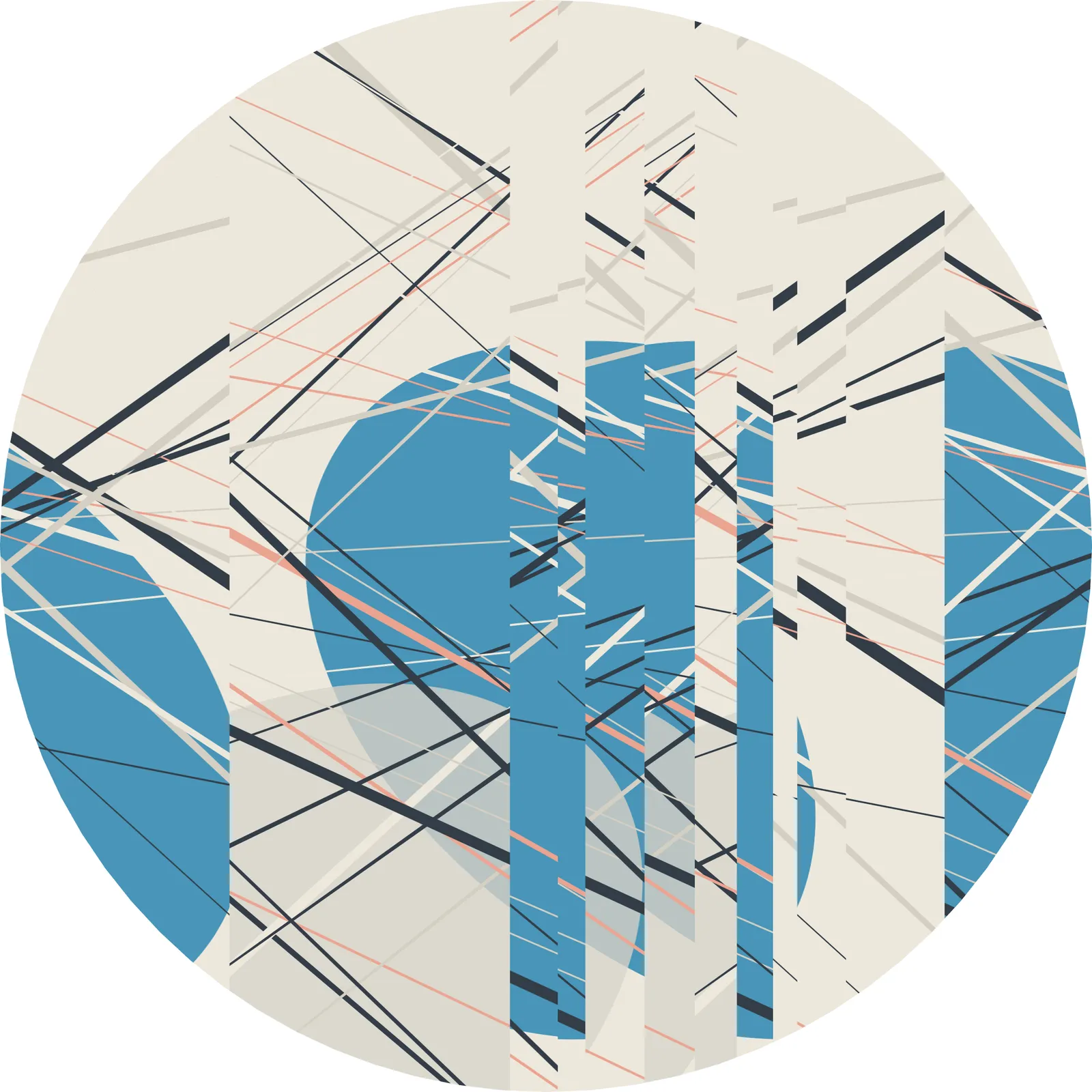
Canadian creative coder whose parametric landscape generator assembles lines, colour and form into impossible vistas, probing randomness, emergence and infinity.
-
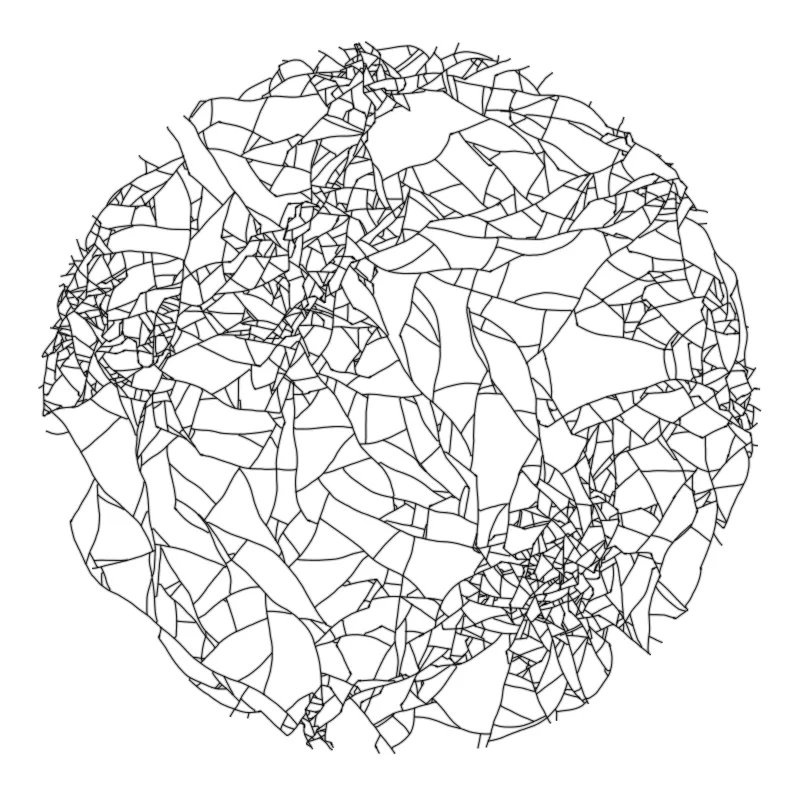
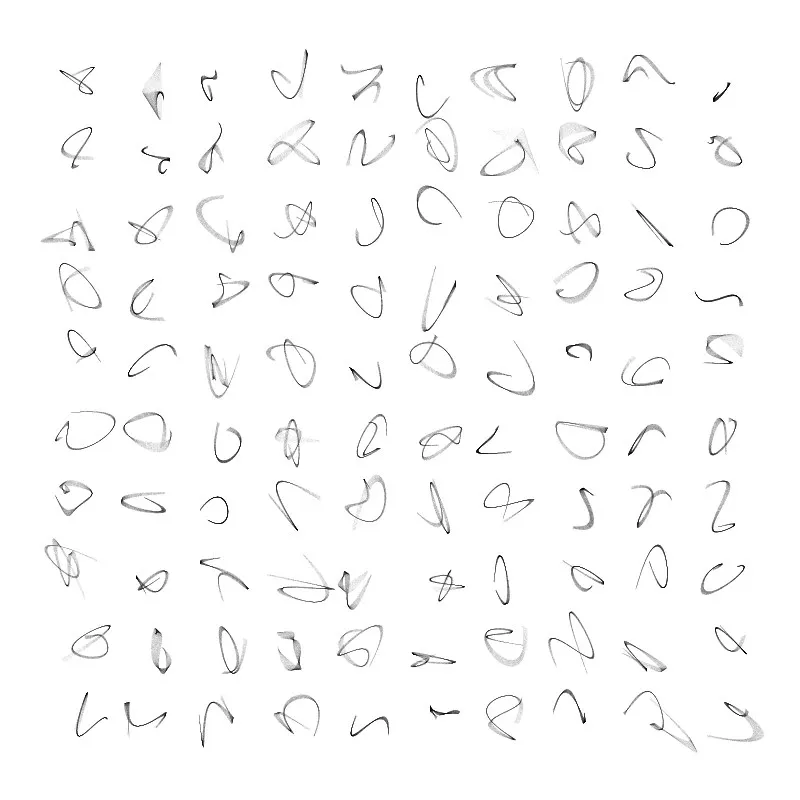
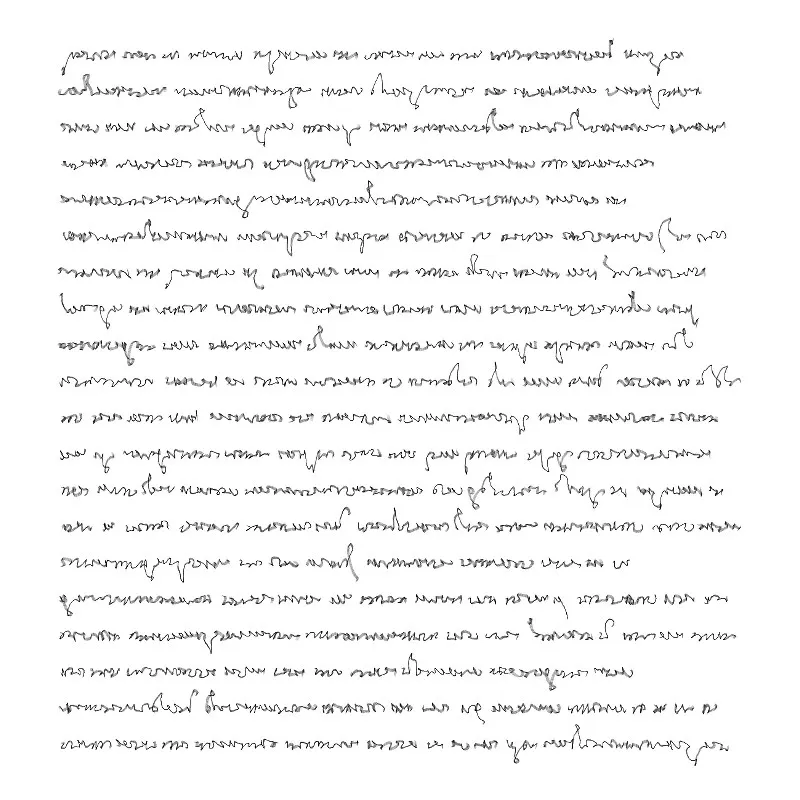
Sand Spline (2016); Fractures (2016); Differential Lattice (2017); Sand Creatures / Sand Glyphs
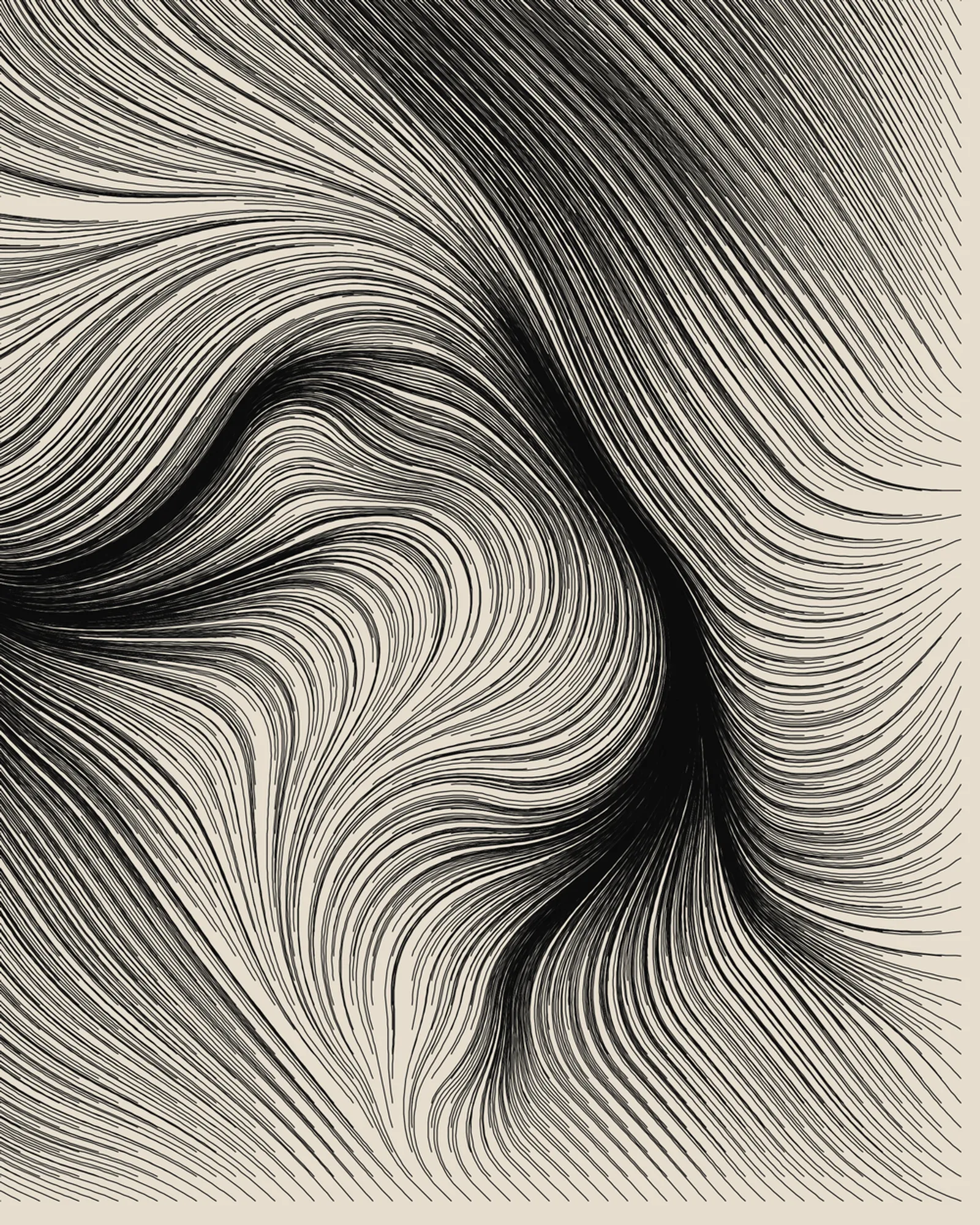
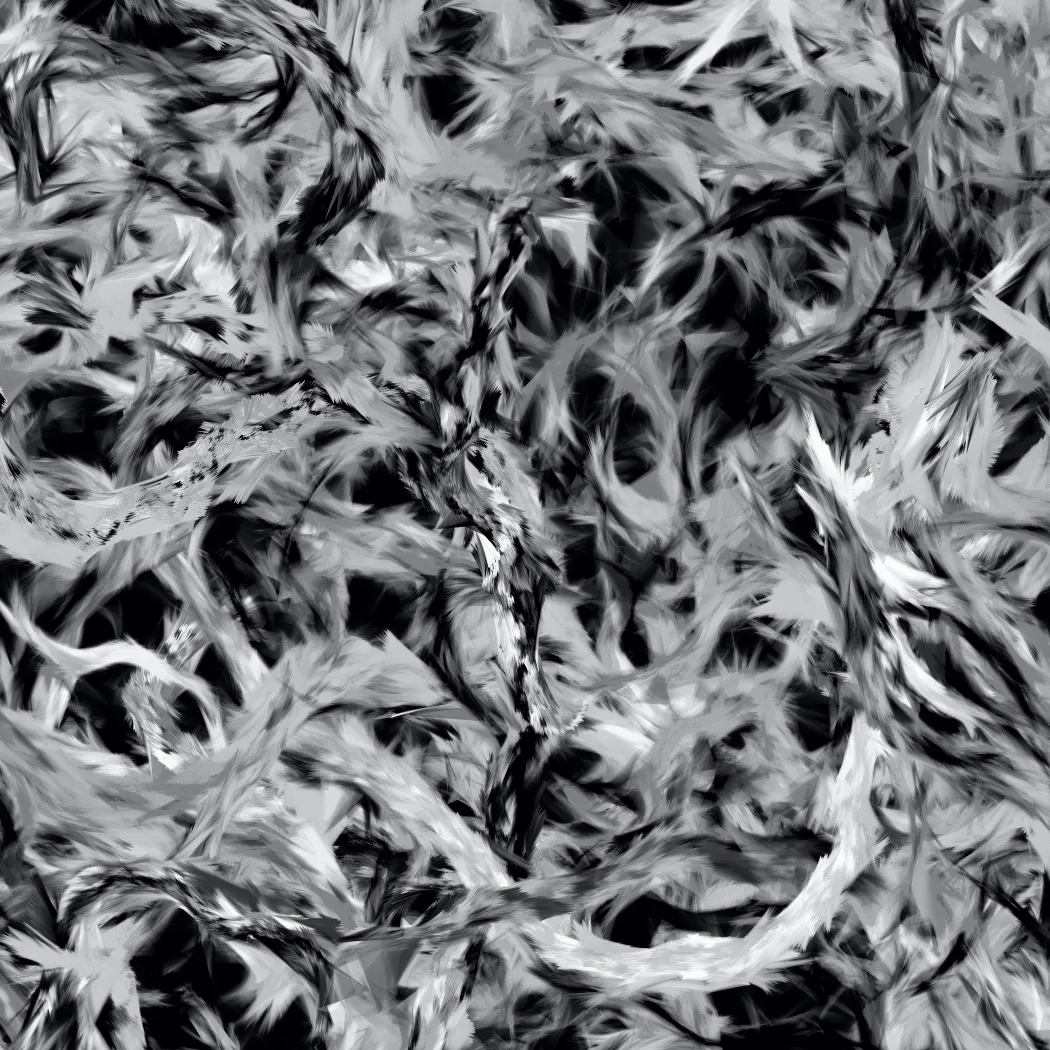
Norwegian numerical-mathematician-turned-coder ('inconvergent') who grows intricate organic textures from simple iterative rules — sand splines, differential growth, asemic glyphs.
-
Substrate (2003); Sand Traveler (2004); Bubble Chamber (2004); Node Garden; Happy Place; Henon Phase Deep
Pioneer of early Processing/Flash generative art whose 'computational machines' — crystalline line growth, particle physics, attractor maps — defined the algorithmic-beauty aesthetic.
-
Interruptions (1969); Structures of Squares (1974)
Hungarian-French godmother of generative art who programmed plotter drawings in FORTRAN, balancing strict grids against algorithmic disorder.
-
EyeWriter (2010); Daily Sketches (since 2016); co-creator of openFrameworks
Poetic computer who amplifies human gesture into live drawing and animation, and co-founded openFrameworks and the School for Poetic Computation.
-
Unsupervised — Machine Hallucinations — MoMA (2022)
Coined 'AI data painting and sculpture,' training GANs on vast archives and moving through latent space to make ever-shifting, room-scale generative imagery.
-
Sine Curve Man (1967); Hummingbird (1967, MoMA collection); founded ACCAD at Ohio State (1987)
Called the father of computer art; his 1967 film Hummingbird broke a line drawing into thousands of permuted frames by program.
-
3/78 (Objects and Transformations) (1978); Calculated Movements (1985); Death Star briefing animation for Star Wars (1977)
American animator who programmed precise vector computer animation, including the wireframe Death Star run-through in the first Star Wars.
-
Learning to See (2017); Deep Meditations (2018); Simple Harmonic Motion; Gloomy Sunday (Forms)
Turkish artist-researcher who feeds live camera and motion into trained neural networks, so a model 'hallucinates' the world it was taught to see.
Frames
Tyler Hobbs
-
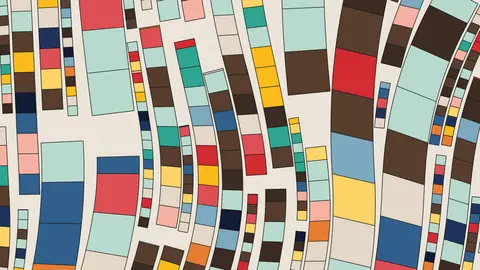
Fidenza (2021) · Tyler Hobbs · Source -
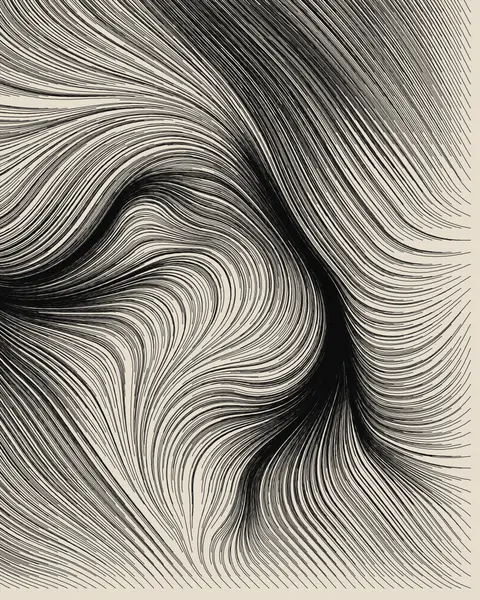
Fidenza — flow field diagram (2021) · Tyler Hobbs · Source -
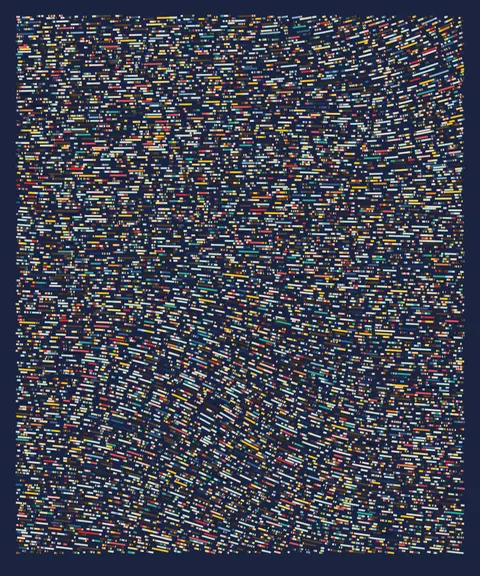
Fidenza #9 (2021) · Tyler Hobbs · Source -
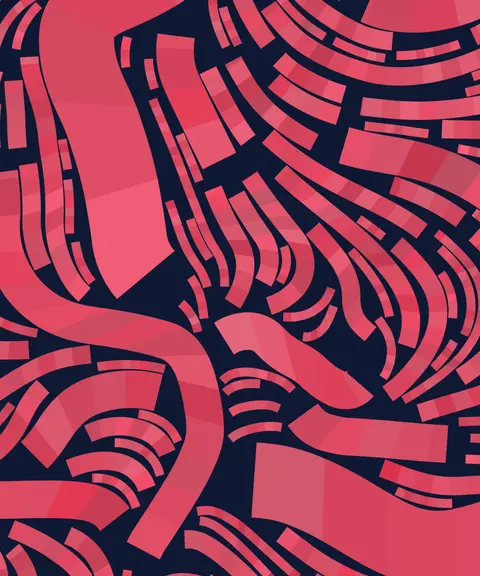
Fidenza #77 (2021) · Tyler Hobbs · Source -
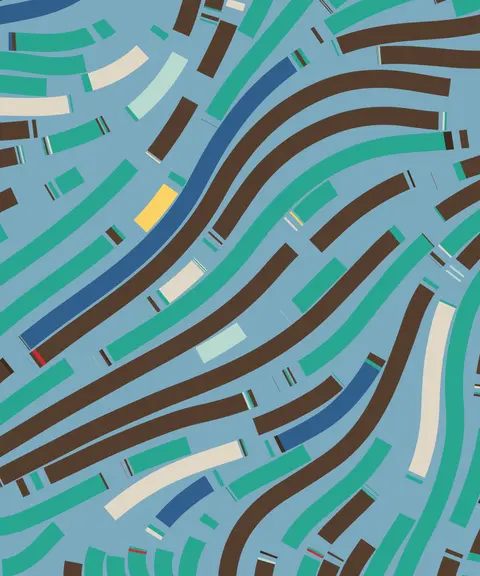
Fidenza #88 (2021) · Tyler Hobbs · Source -
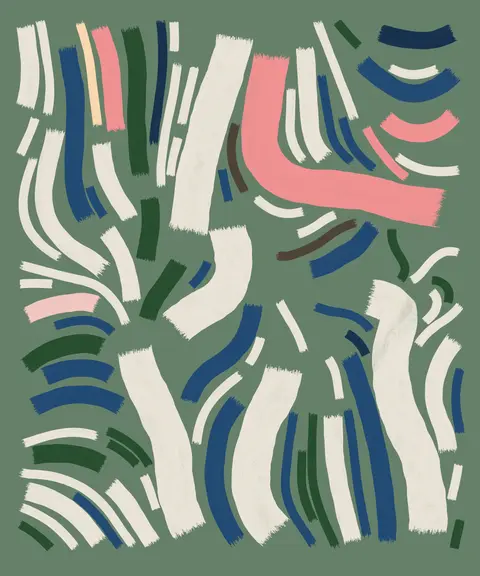
Fidenza #180 (2021) · Tyler Hobbs · Source -
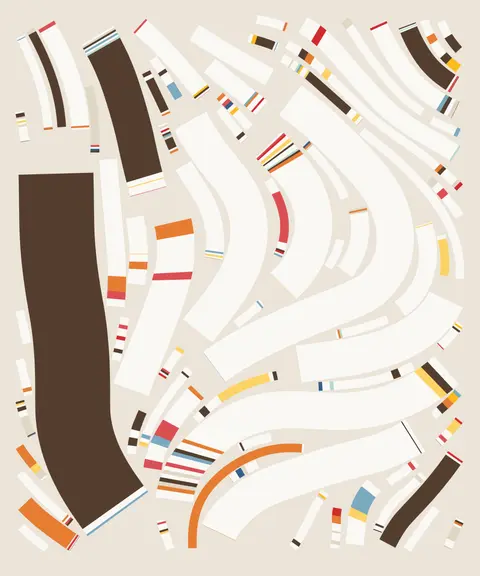
Fidenza #404 (2021) · Tyler Hobbs · Source -
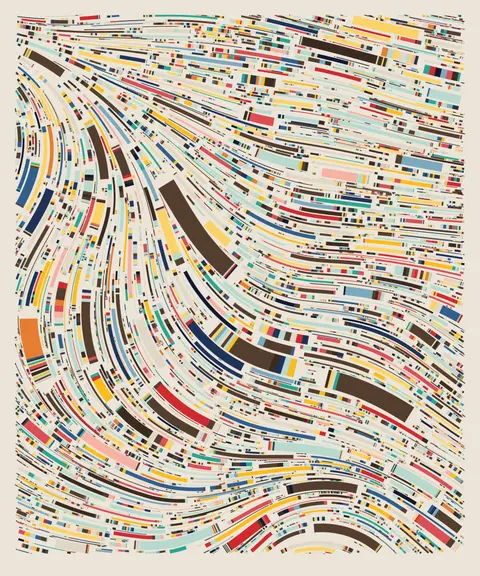
Fidenza #545 (2021) · Tyler Hobbs · Source -
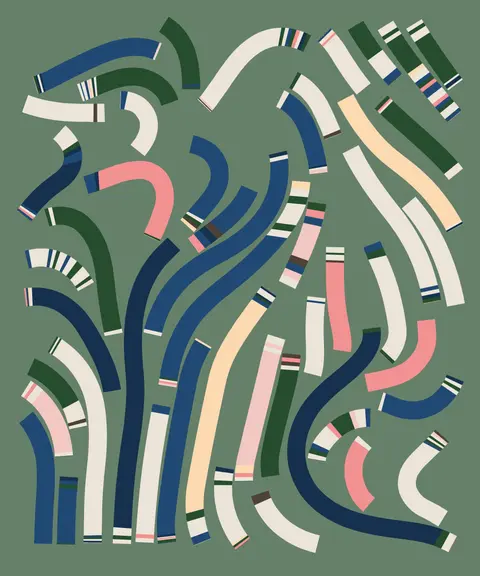
Fidenza #702 (2021) · Tyler Hobbs · Source
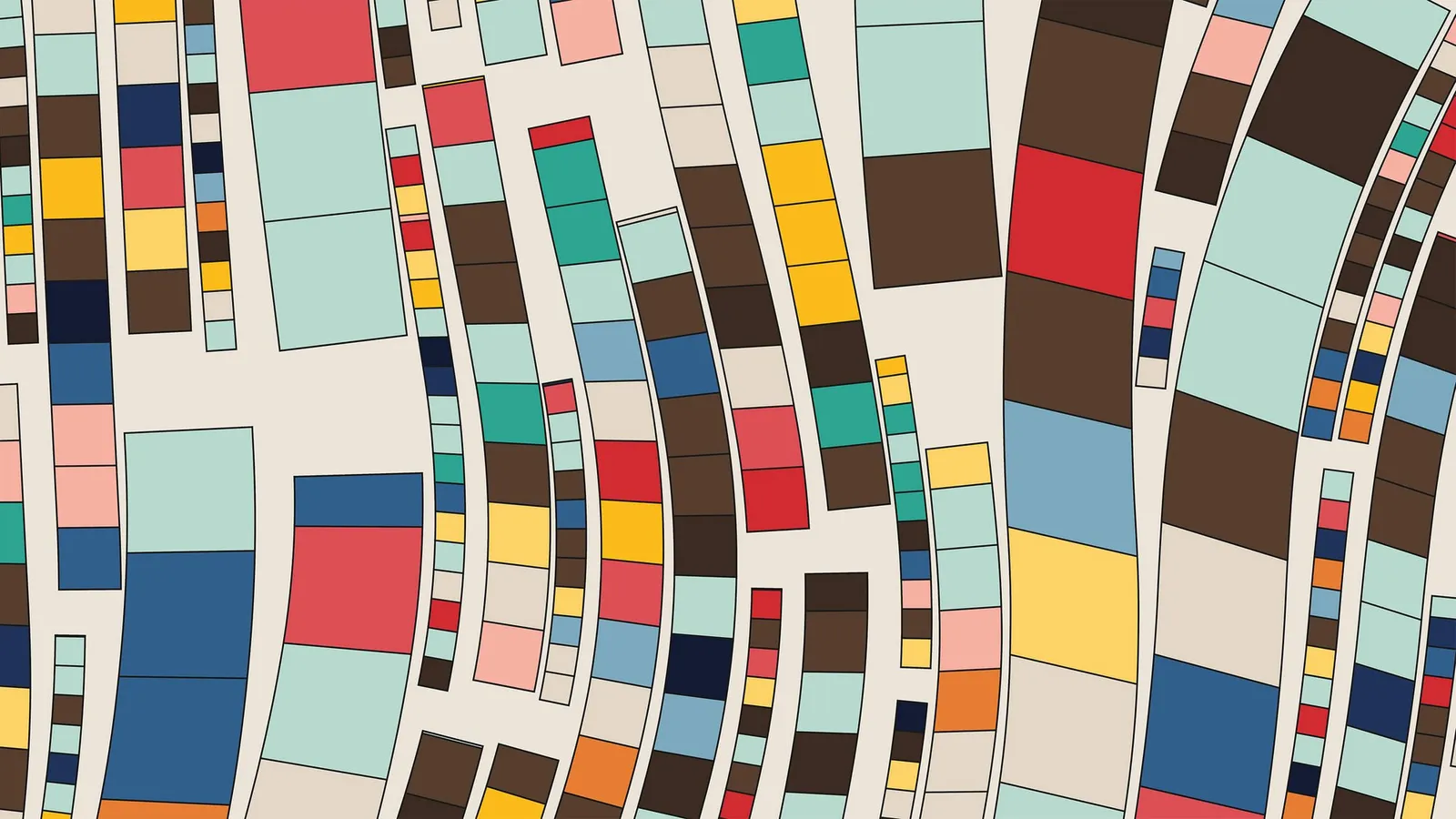
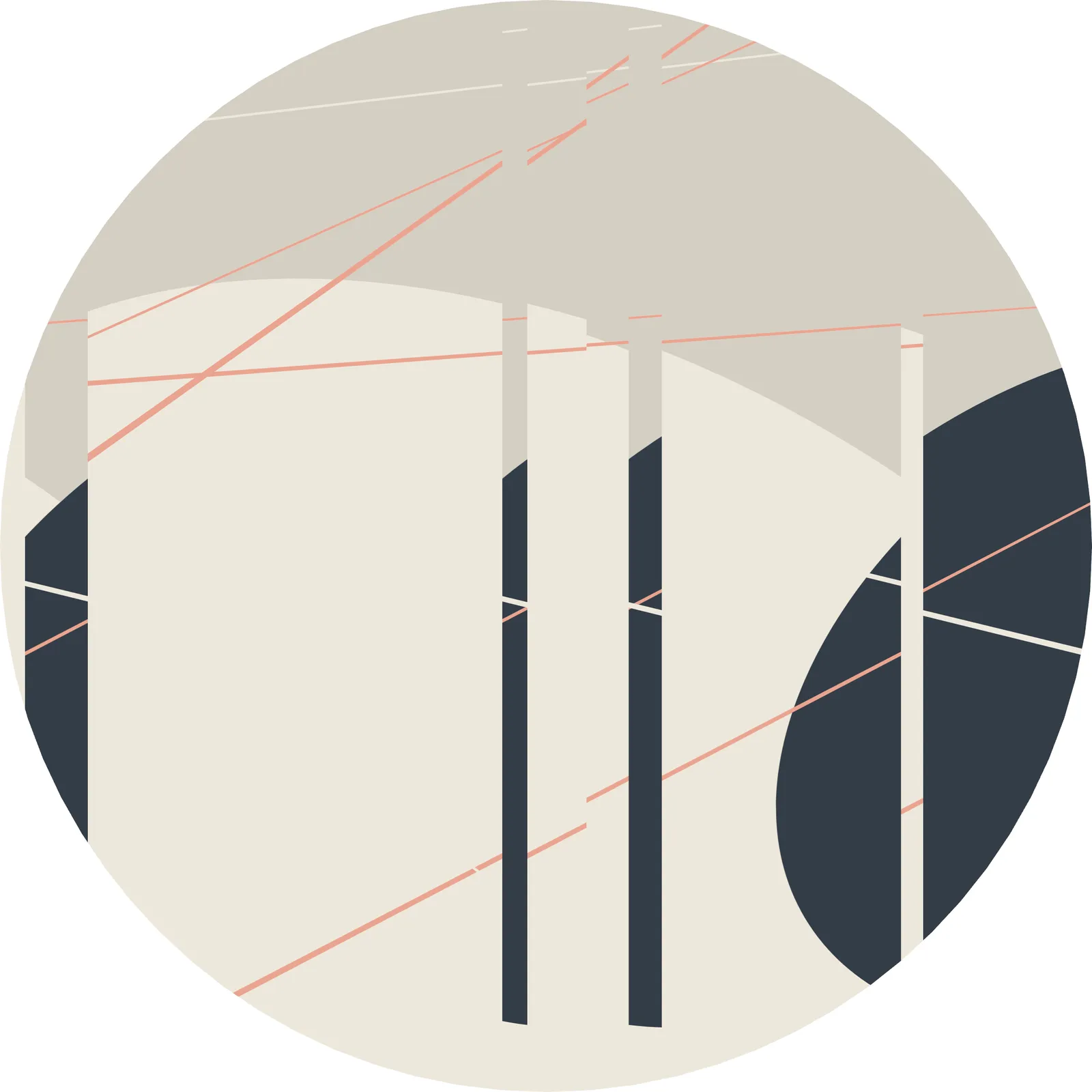
Casey Reas




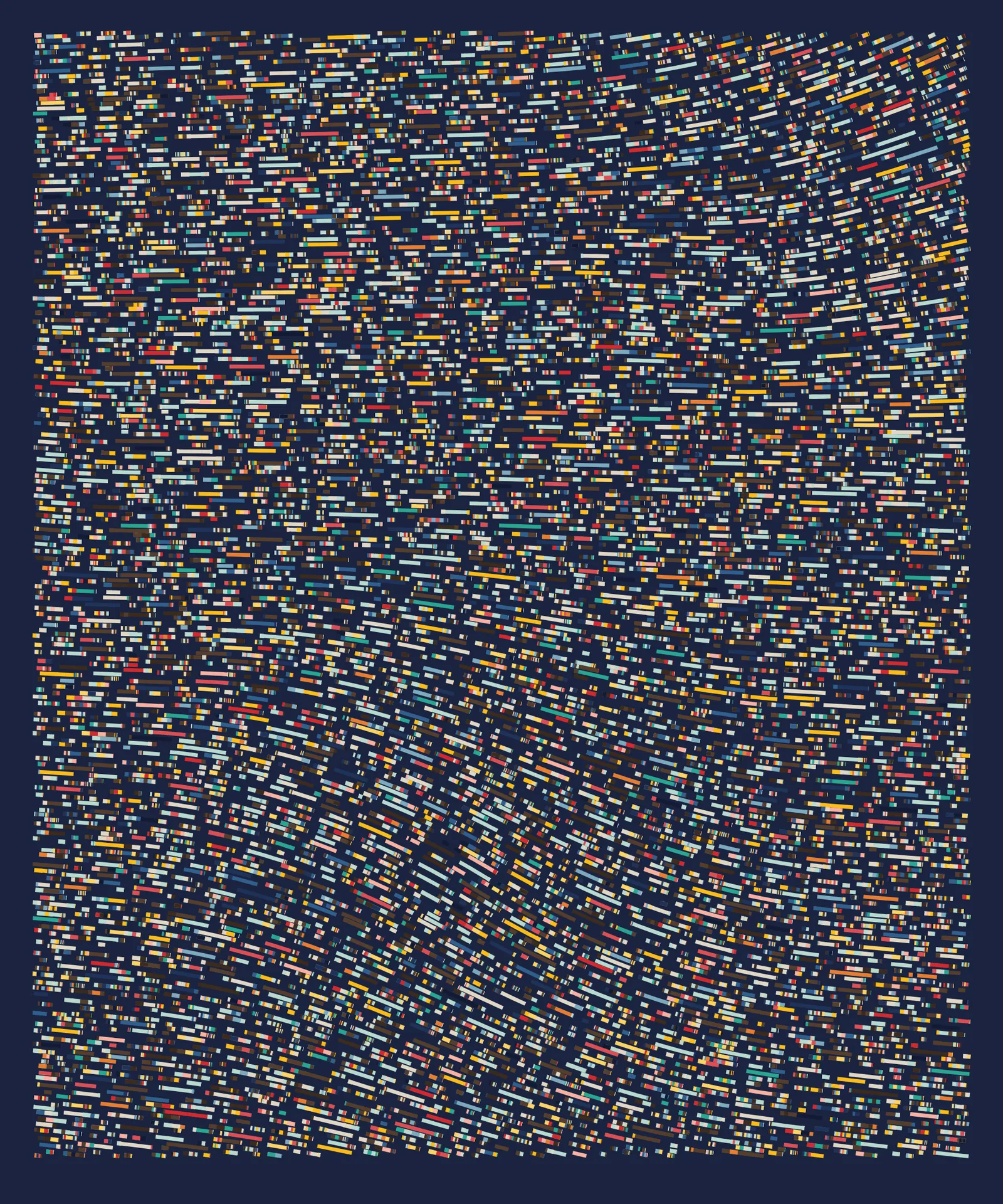
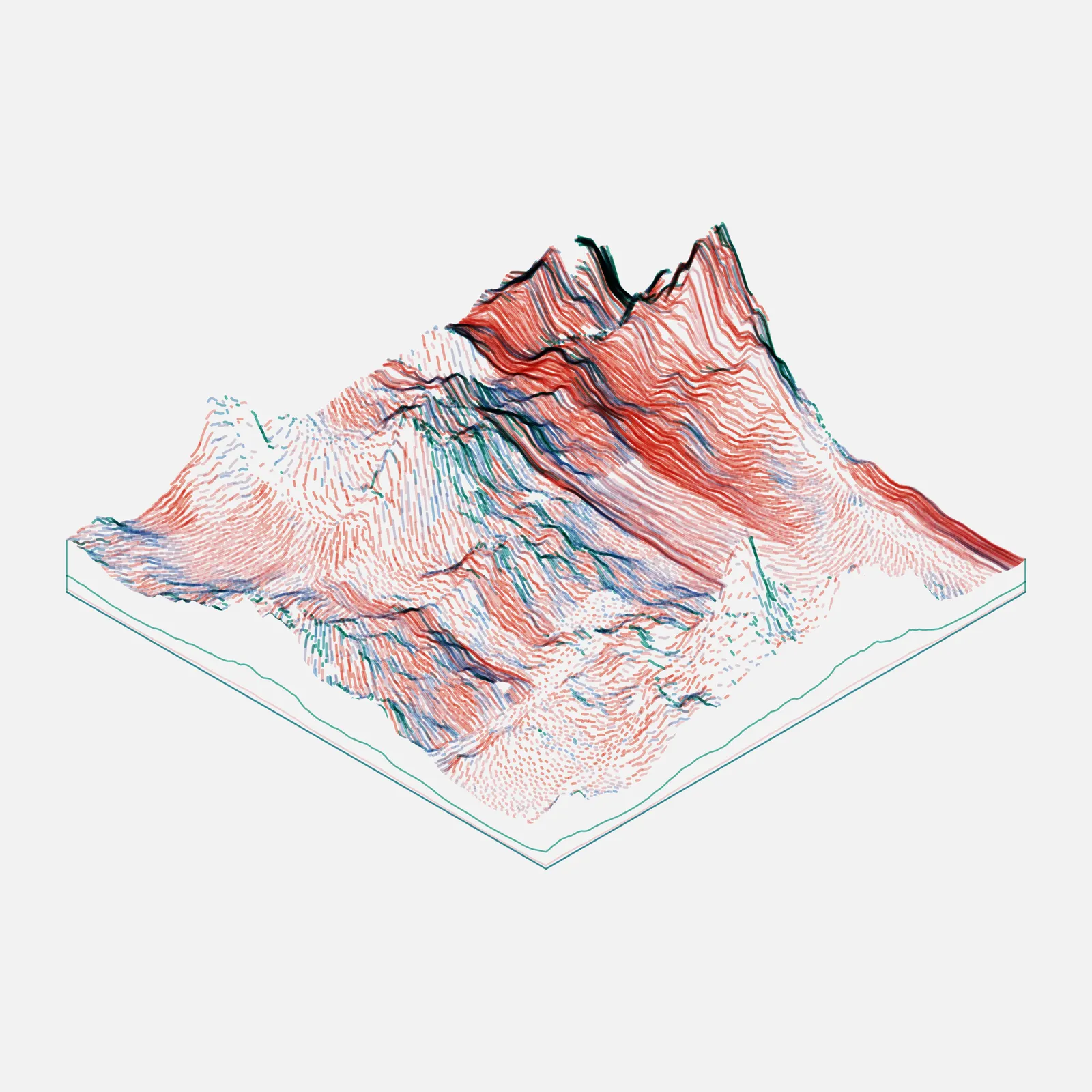
Matt DesLauriers
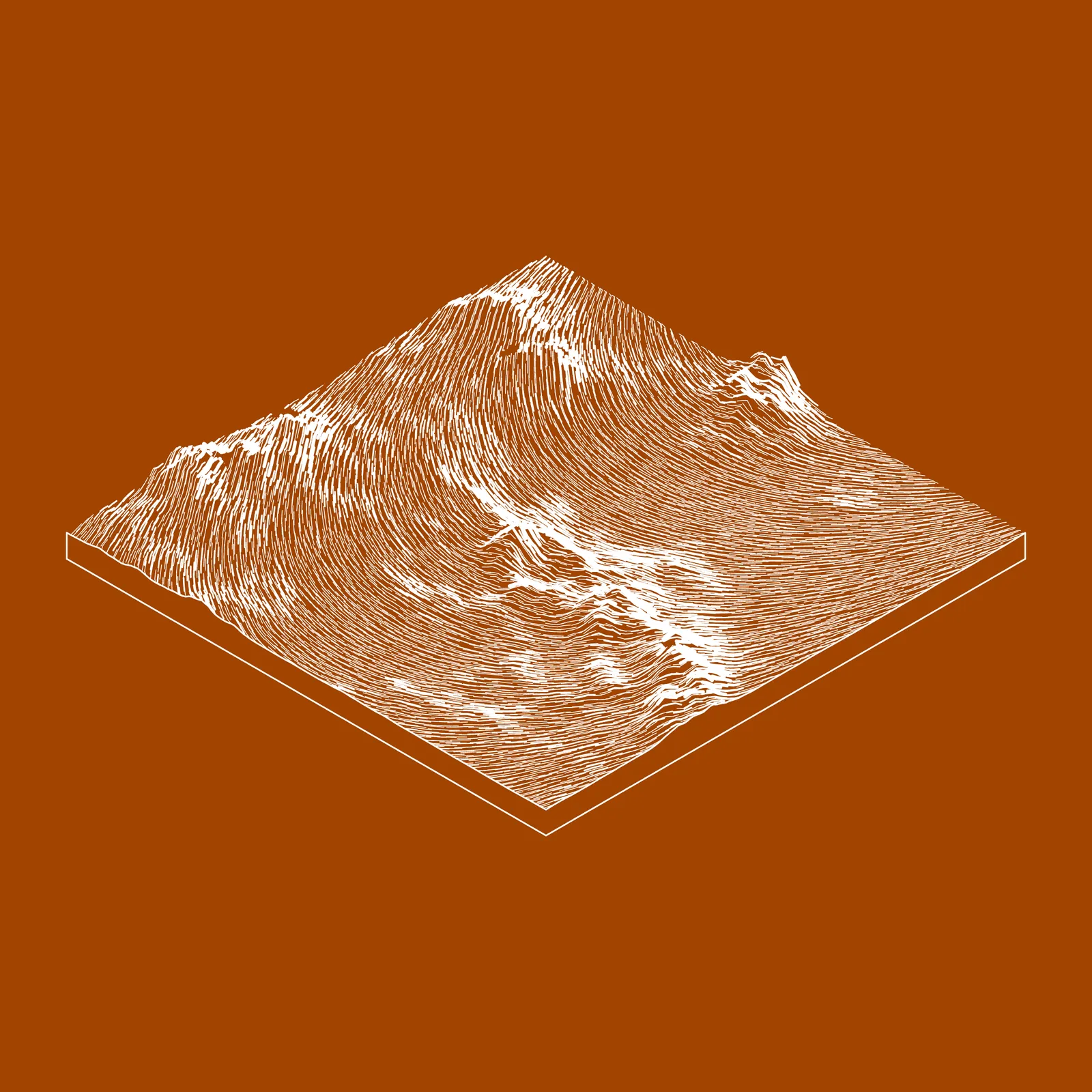
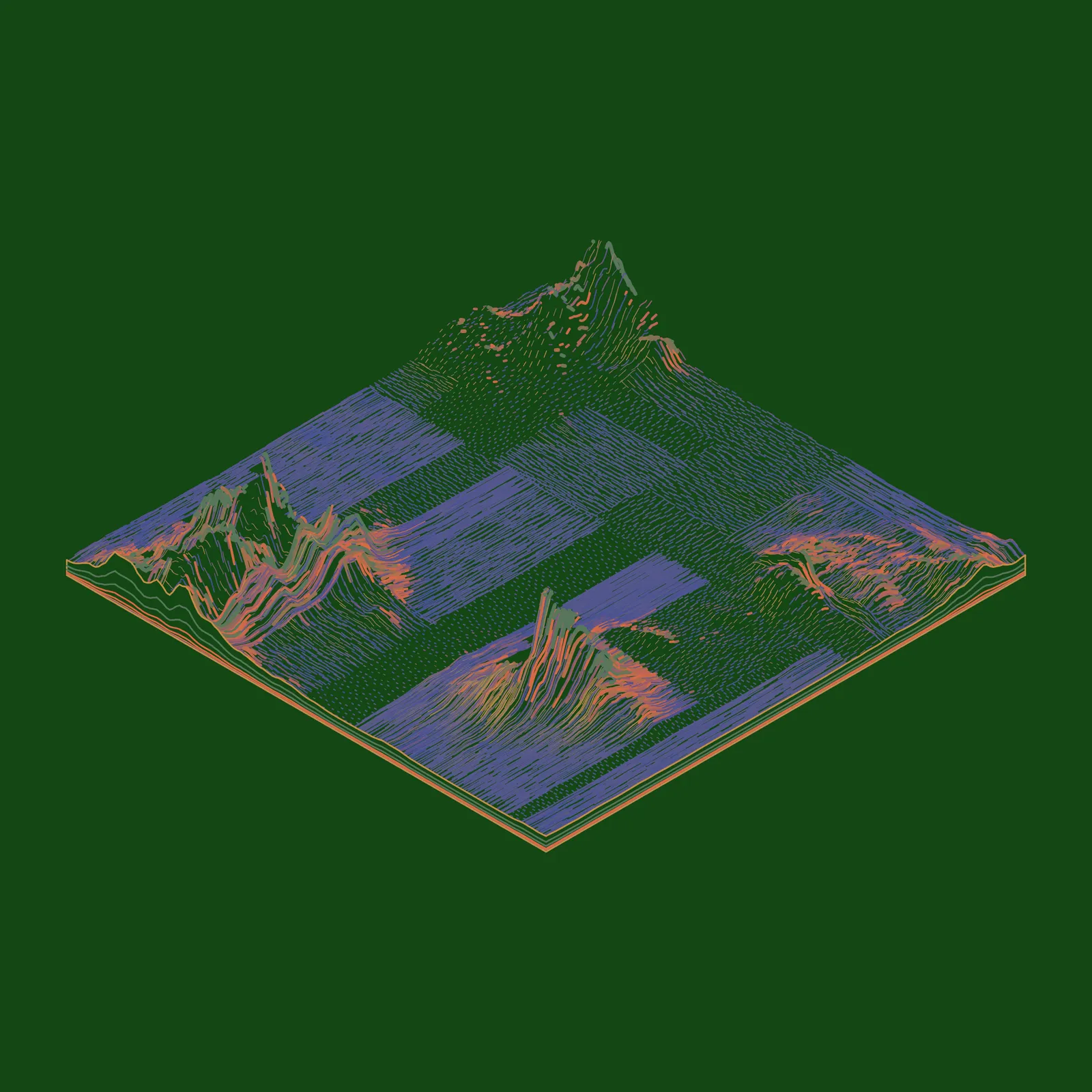
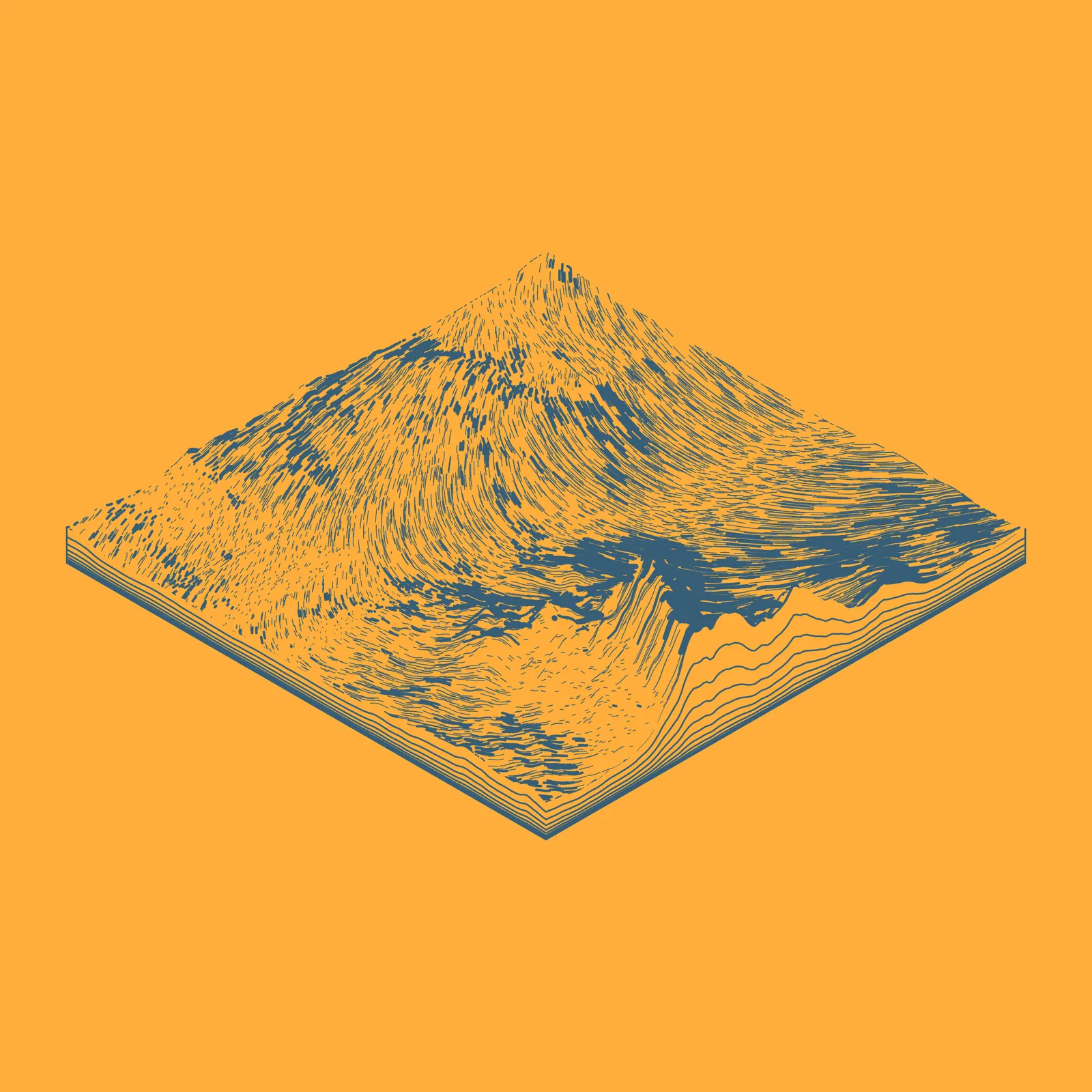
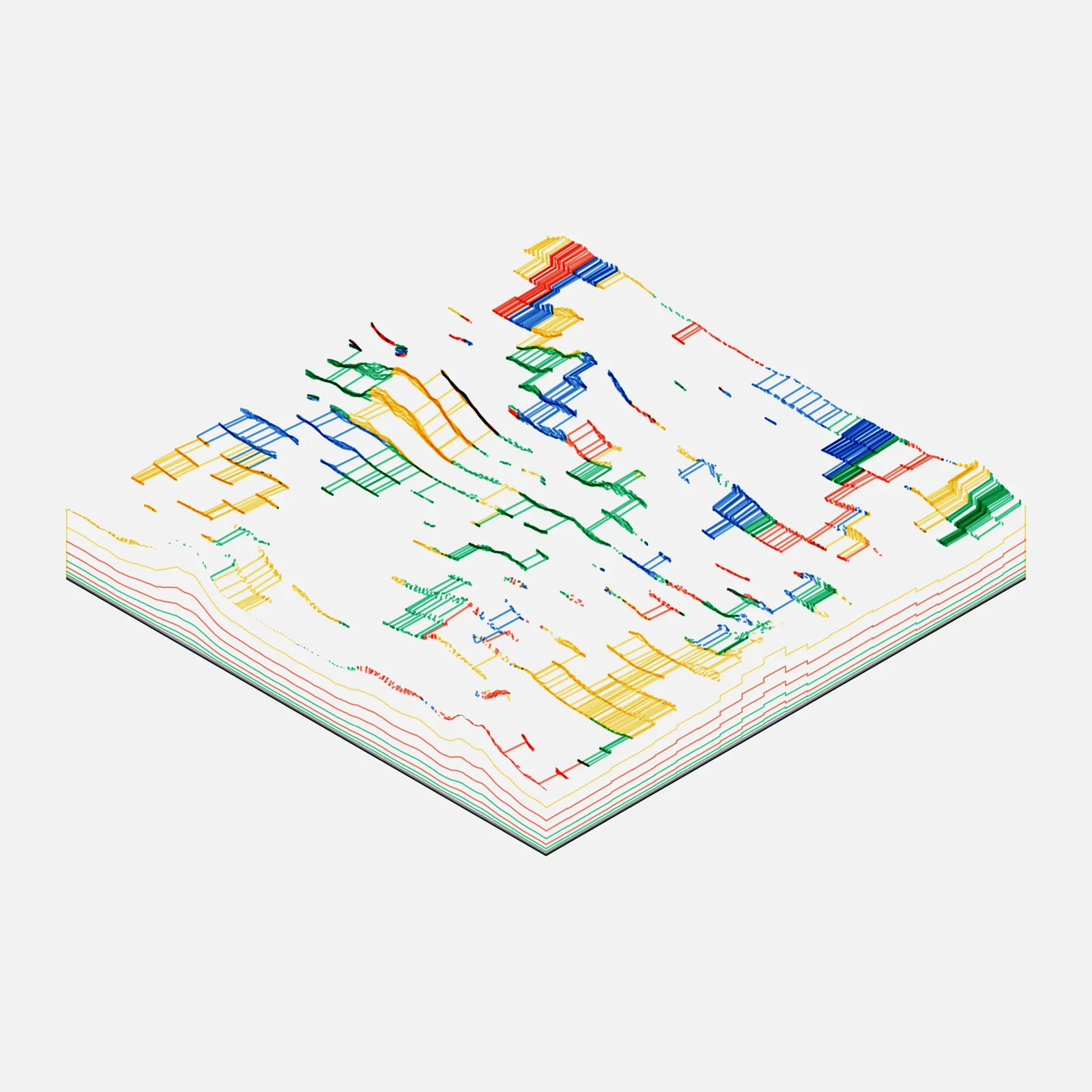
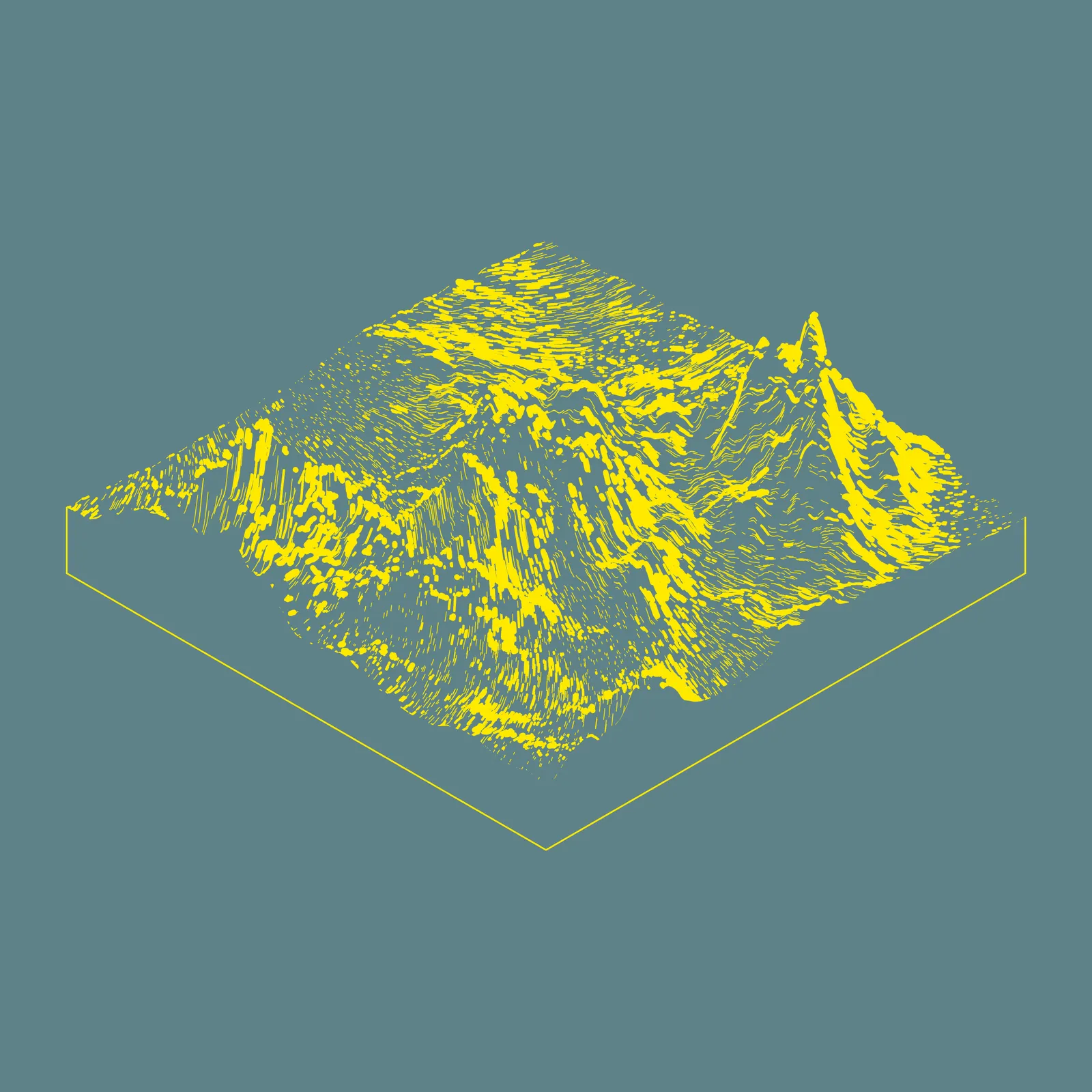
Anders Hoff
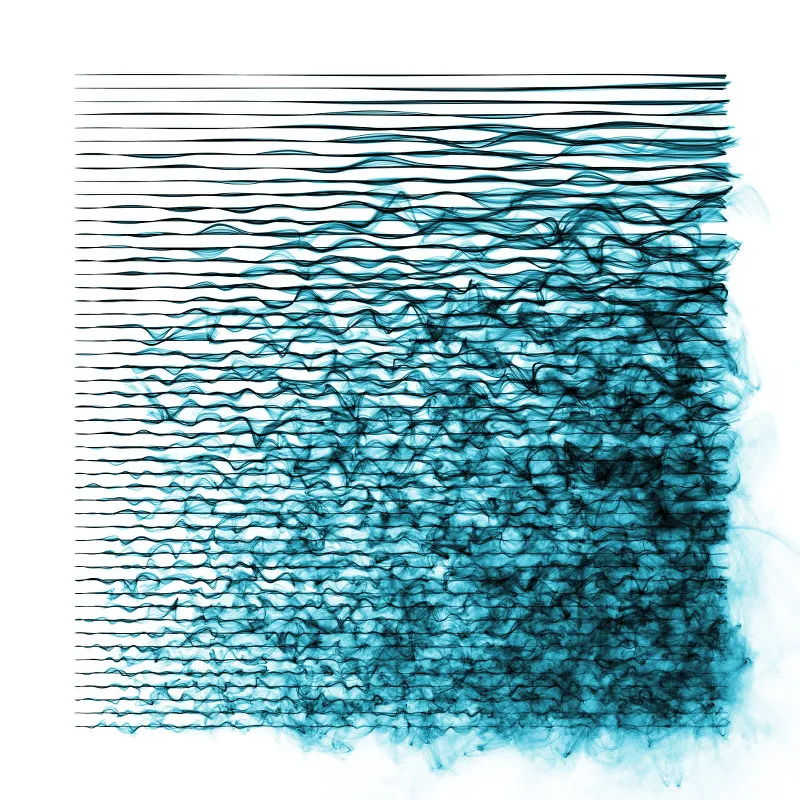
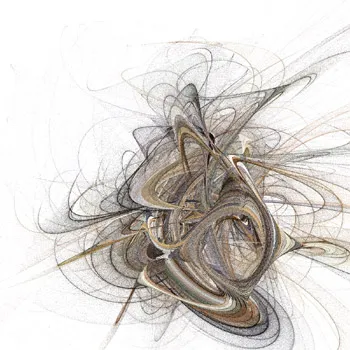
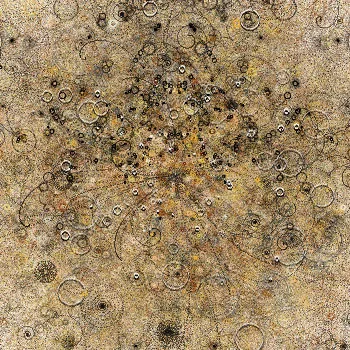
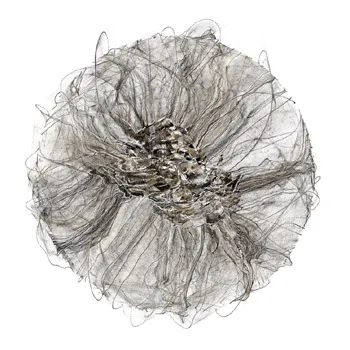
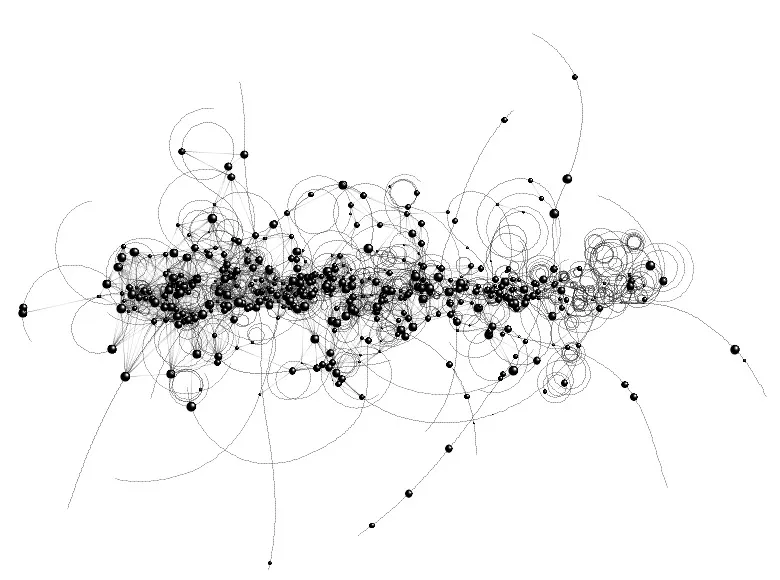
Jared Tarbell
-
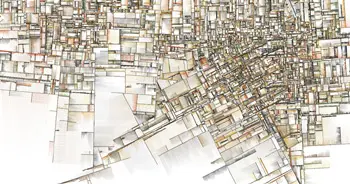
Substrate (2003) · Jared Tarbell · Source -
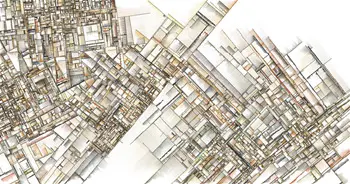
Substrate — variation (2003) · Jared Tarbell · Source -
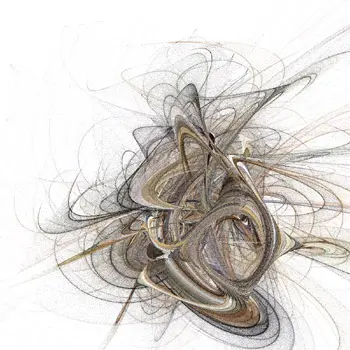
Sand Traveler (2004) · Jared Tarbell · Source -
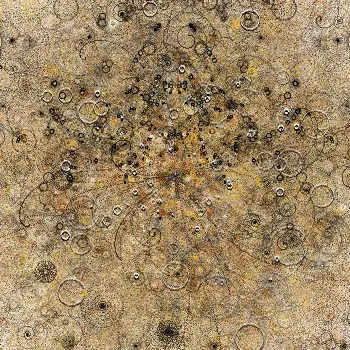
Bubble Chamber (2004) · Jared Tarbell · Source -
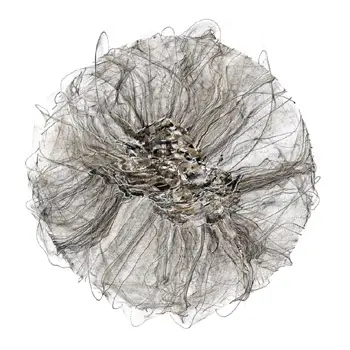
Happy Place (2004) · Jared Tarbell · Source -
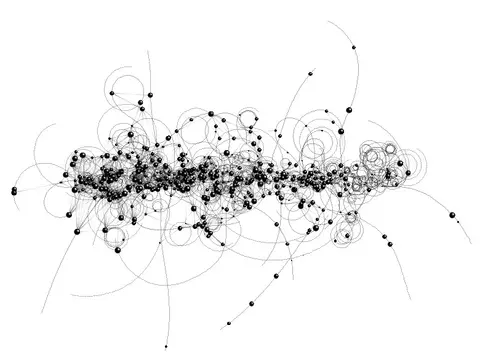
Node Garden · Jared Tarbell · Source -
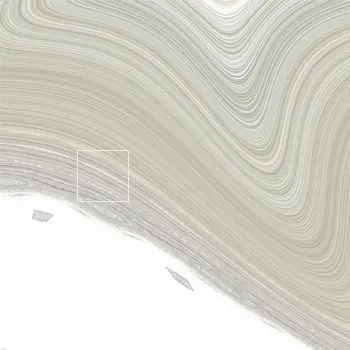
Henon Phase Deep · Jared Tarbell · Source
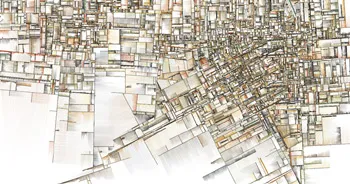
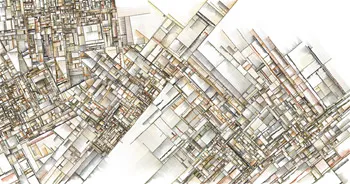
Techniques
- algorithmic randomness
- flow fields & noise
- particle systems & flocking
- recursive subdivision
- L-systems
- cellular automata
- reaction-diffusion
- feedback / iterative redraw
- plotter vector drawing
- parametric color
- long-form on-chain seed generation
- evolutionary algorithms
- differential growth
- Perlin/simplex noise displacement
- Voronoi/Delaunay tessellation
- latent-space interpolation
Tools
- Processing
- p5.js
- openFrameworks
- Cinder
- TouchDesigner
- Three.js / GLSL
- Hydra
- pen plotters / AxiDraw
- fxhash / Art Blocks
- nannou (Rust)
- Vsketch / vpype (plotter)
What to take from it
Tune one parameter across its full range
Hobbs ships Fidenza with turbulence at none/low/medium/high and varied scale and collision rules. Take a single variable in your system and sweep it end to end — the extremes often reveal the most striking outputs.
Let the text be the artwork
Reas pairs two images from the same Process text to prove no single frame is definitive. Write your idea as a short rule-set first; treat any rendered frame as one sample of the system, not the deliverable.
Quality-control the worst case, not the best
For long-form work, Hobbs spent ~two months hunting his weakest outputs and eliminating them. Don't chase lucky masterpieces — engineer the floor so even the unluckiest seed still reads well.