Atlas
Atlas indexProcedural Dynamic Simulation (the 'Ugly' School)
Hand off the keyframe to the physics solver and keep the mistakes.
- procedural-animation
- physics-simulation
- ragdoll
- houdini
- cinema-4d
- anti-polish
- uncanny-valley
- generative-motion
What it is
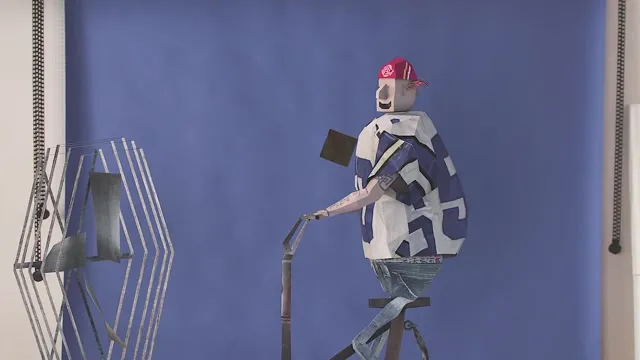
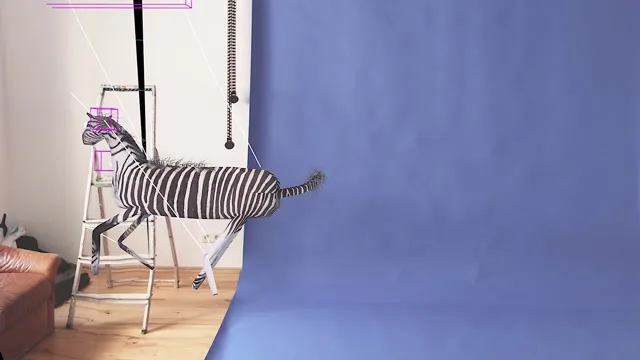
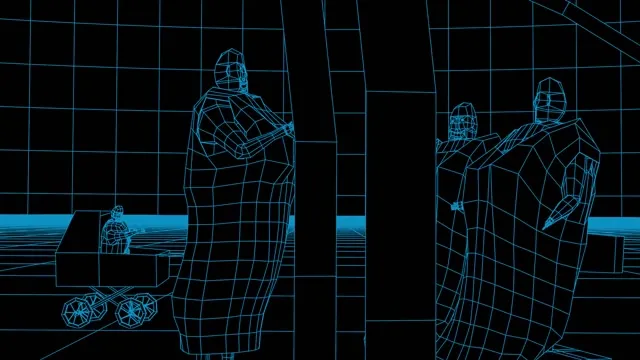
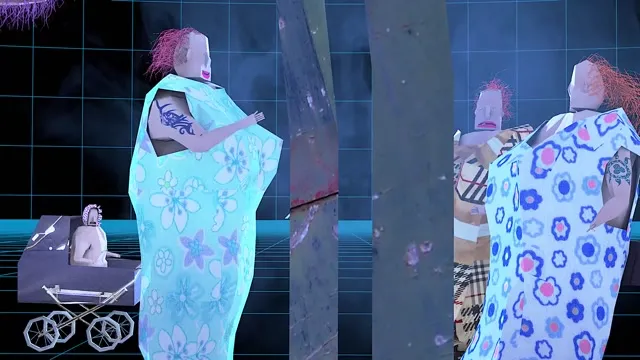
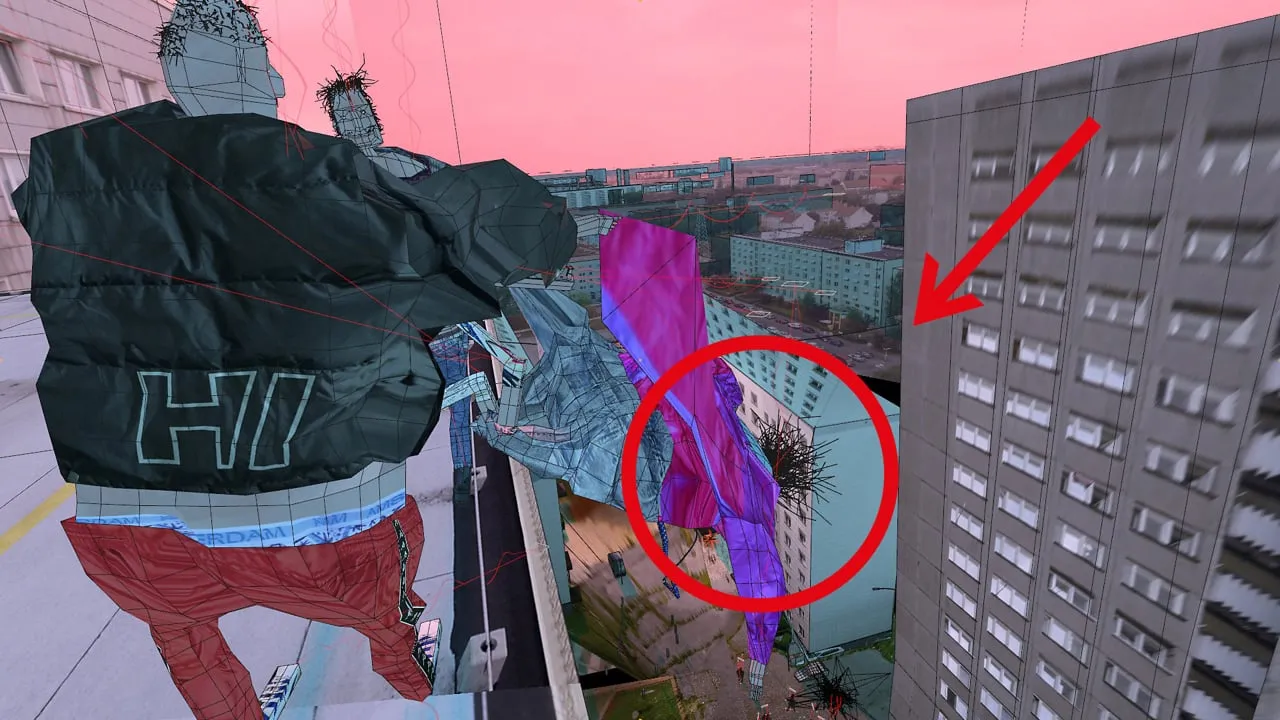
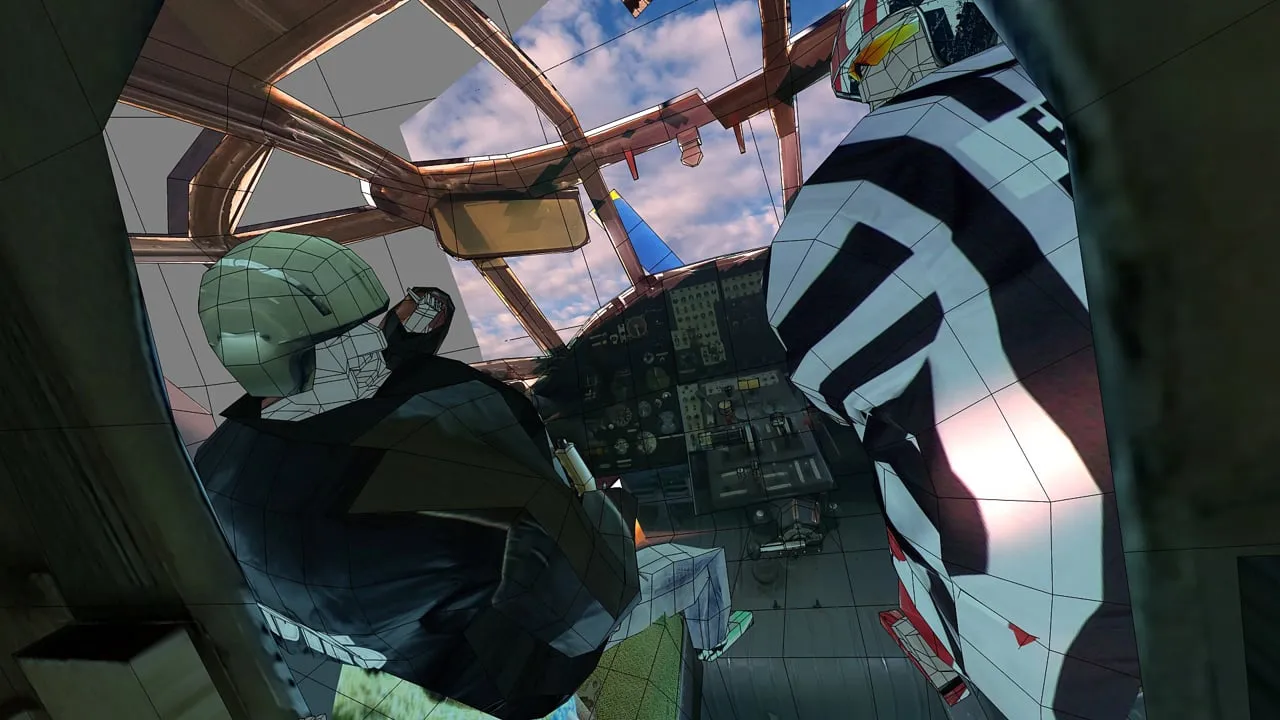
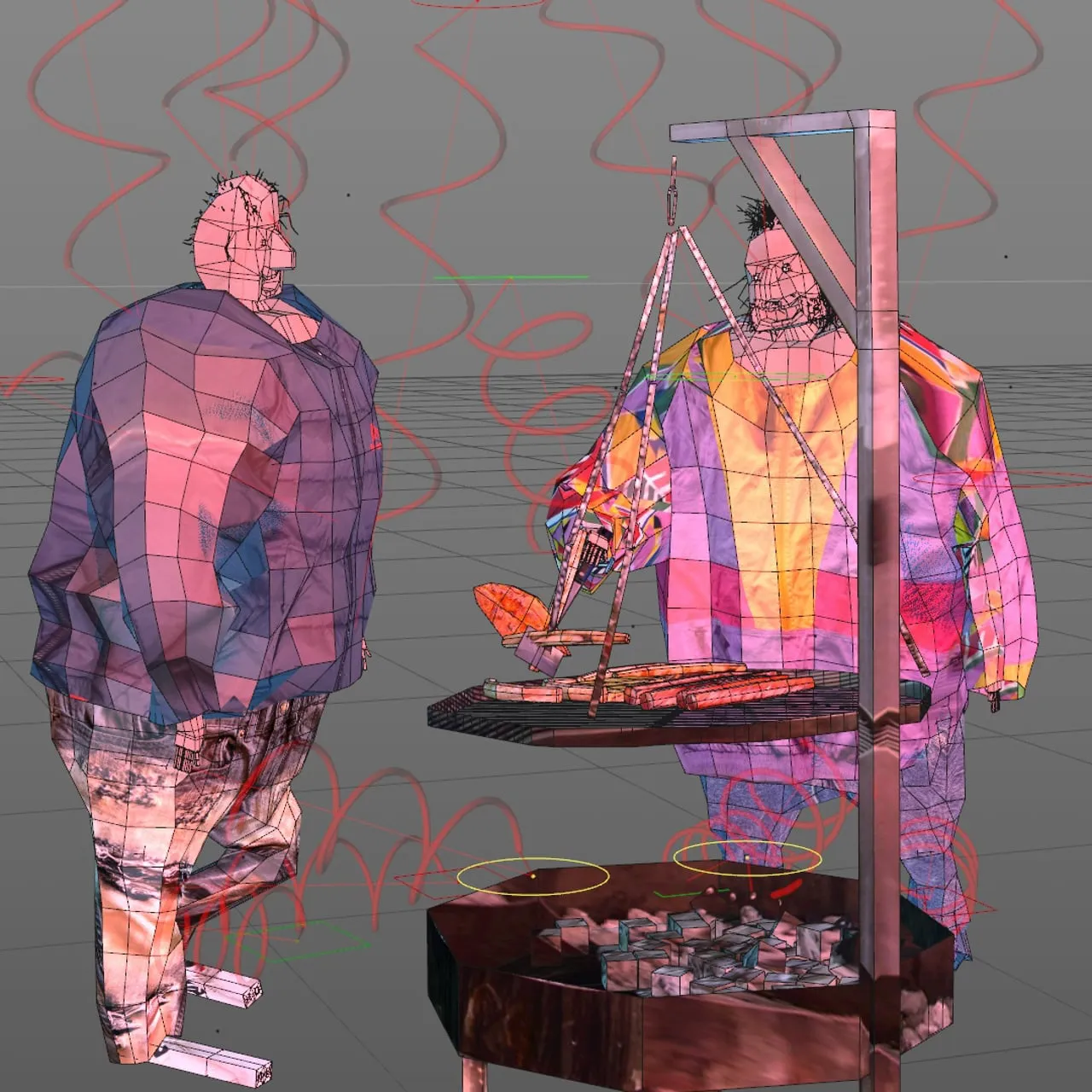
A digital-only animation craft where motion is authored by running physics, ragdoll, and machine-learning simulations rather than posing keyframes by hand. The artist sets initial conditions and forces, then surrenders timing to the solver — embracing jitter, collapse, glitch, and the 'uncanny' as the point, not the defect. Aesthetics run from deliberately broken CGI to clinically smooth Houdini form-studies, but all share the same authorship model: the computer is a co-actor, not a renderer. Note on the Diakur branch: its look is NOT only the motion. Diakur photographs the real world (places, objects, clothes, his own face) and projects each photo from one camera onto crude geometry modelled by eye, so it looks real from the front and smears and breaks from the side; the figures are lopsided on purpose; and the construction (wireframe, untextured grey planes, rig lines) stays visible. A take that copies only the ragdoll motion, with clean code-made textures and symmetric bodies, is not this branch (owner finding, 2026-10-24).
How it is made
Rig as puppet, drive with forces
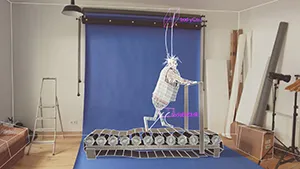
Characters are built as rigid-body limbs joined by ball-and-socket constraints, then steered by invisible spring/wire 'controllers' — Diakur's Cinema 4D 'ugly dynamics'. Animators set the scene's conditions; the solver computes the actual motion, often shaking, snagging, or crumpling as it tries to resolve.
Direct the sim, don't keyframe it
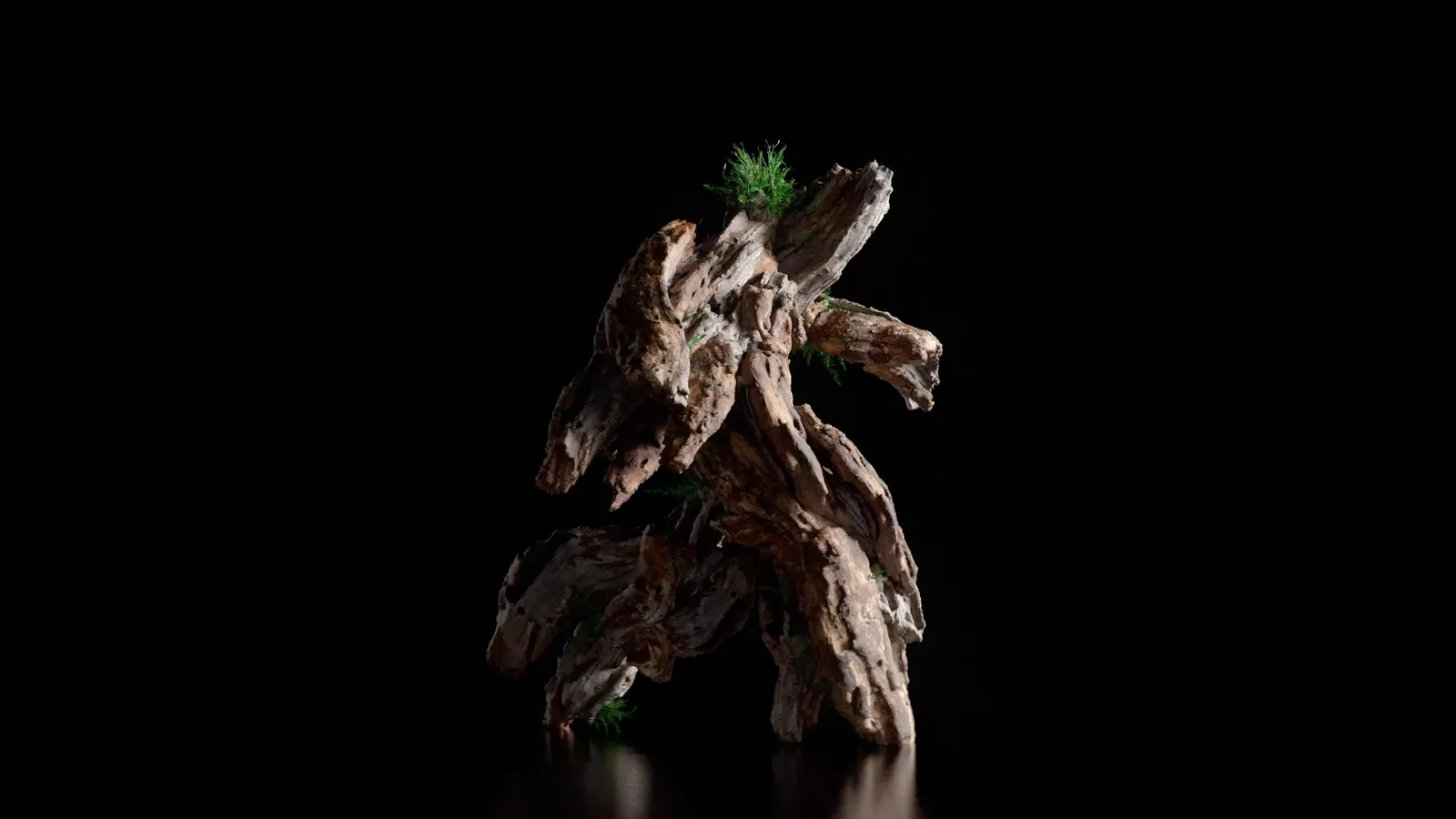
Control is exerted through forces, attractors, collisions, and constraints rather than poses. Omoss procedurally models solids then carves stress points so forms yield and collapse under simulated forces; the artist nudges the sim toward a target shape while letting physics remain the primary actor. Mocap can be fed into ragdoll to deform 'correct' human motion into something wrong.
Let the machine learn the move
The most recent extension swaps hand-physics for reinforcement learning: Diakur's Backflip trains a self-avatar via the DeepMimic method (example-guided deep RL of physics-based skills), iterating thousands of failed jumps on a 6-core CPU until it lands — paired with camera-projection sets (his own Leipzig flat), a VR camera recorded in real time, a Descript voice clone, Wav2Lip lip-sync and AIVA music.
Photograph the world, project it onto crude shapes
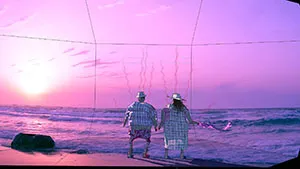
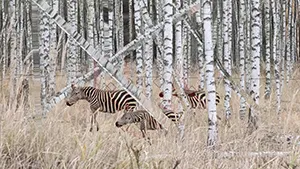
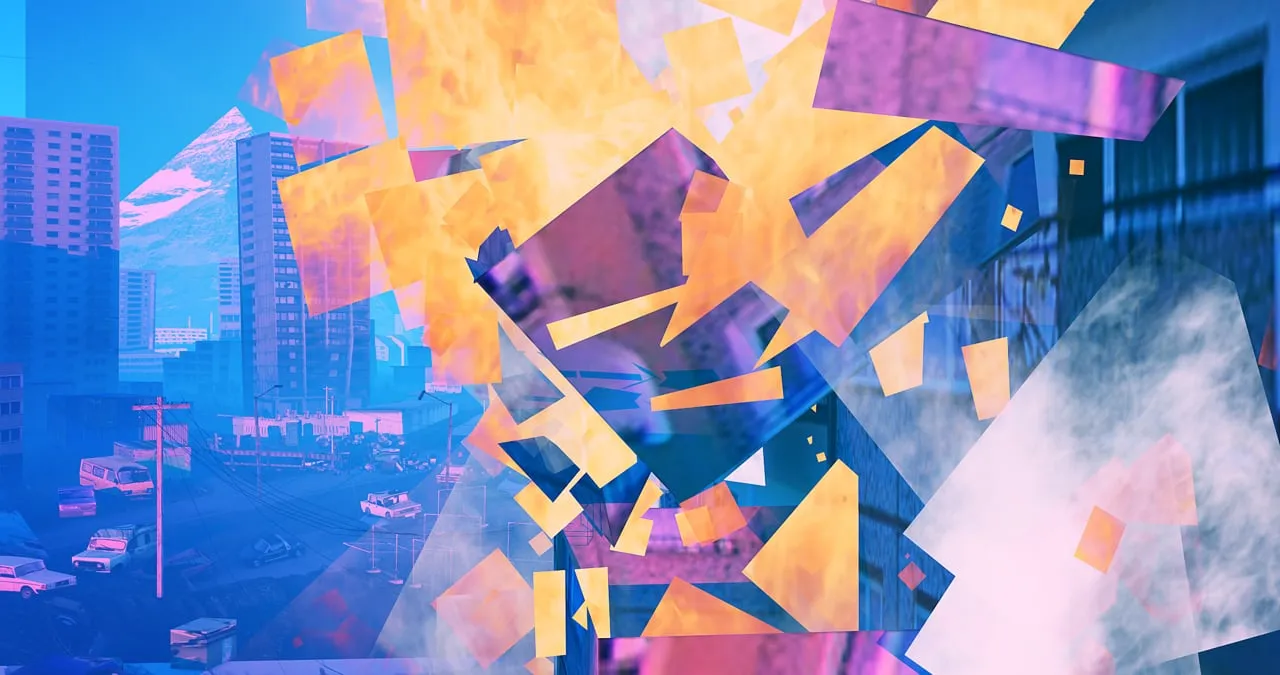
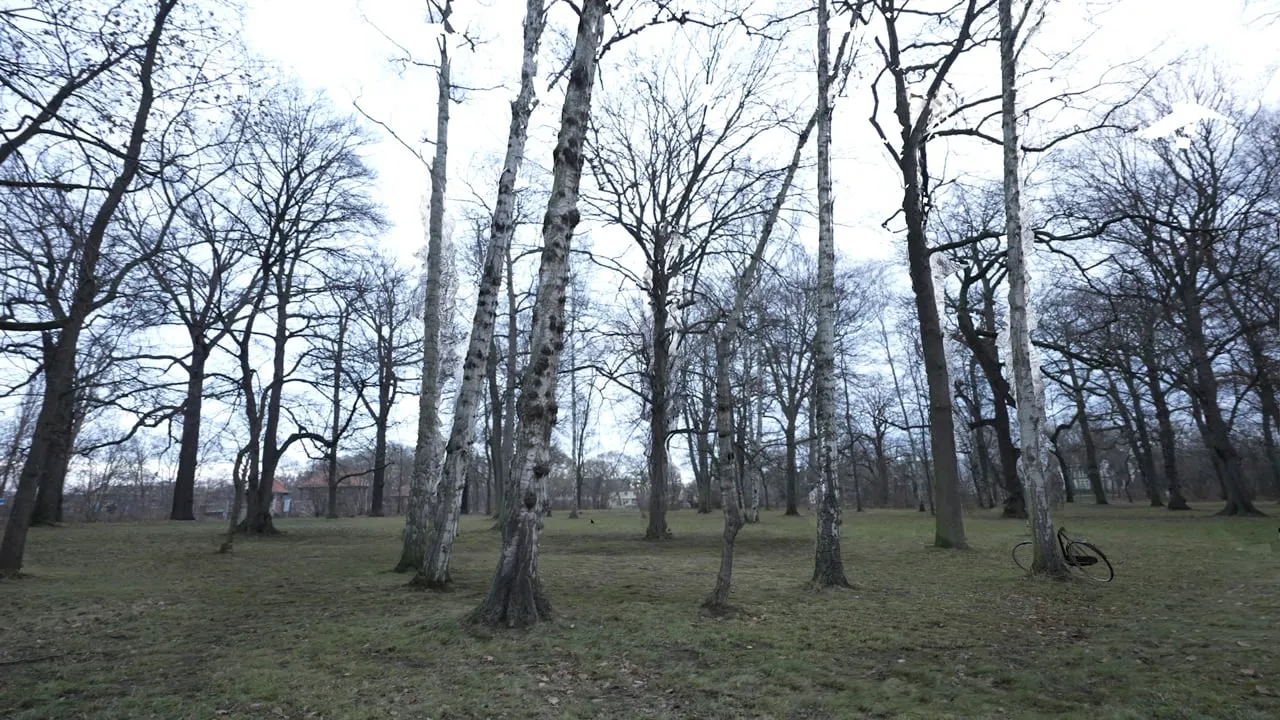
Diakur's look comes from real photos, not from code-made textures. In his words: "We took pictures of the environments and objects that needed to be built" and "modeled everything from the exact angle that the picture was taken from"; the texturing is "camera projection", which "only works from one side and is broken on the other". Clothes, skin, cars, tower blocks and skies are all photos, at low resolution; smoke, fire and water are video textures. When the camera turns, the photo stretches and the true crude shape shows. Backflip builds the avatar from a photo of himself and the set from his own flat. Sources: rebusfarm.net (In the eye of the beholder), cartoonbrew.com (Beautiful side of Ugly), refresh.zhdk.ch (Backflip).
Design with the weak hand: asymmetry on purpose
In his words, the characters are made "as if they were created by someone who doesn't know how to design ... like when you are drawing with your weak hand ... everything is slightly off and out of proportion", and "the mapping of the textures is all wrong, the models are badly proportioned". Heads are blocks, eyes protrude, legs are crooked, clothes are separate puffed volumes over the body, and every left side differs from its right. A mirrored, lathe-turned body is the opposite of this. Sources: itsnicethat.com, inverse.com.
Leave the construction visible
Stills of Ugly, Fest and Backflip show a wireframe drawn over the photo textures, grey untextured planes where a projection ends, red rig strings, and software or YouTube-style labels and arrows. The making is part of the picture.
Operate the camera and play the puppets live
The rig controllers are keyed or played live with PlayStation 2 game pads ("A game controller is perfect for this. You can interact with the simulation in realtime"); a drone camera is flown with a pad; Backflip records a VR camera in real time. Many takes are run and the glitches are kept (a hair bug of one Cinema 4D beta was kept on purpose). Sound by David Kamp; for Backflip, real foley of every object in the flat, including Diakur's own head hitting things. Sources: cartoonbrew.com, engadget.com, shortoftheweek.com (The importance of sound: David Kamp).
Where it comes from
The anti-polish manifesto
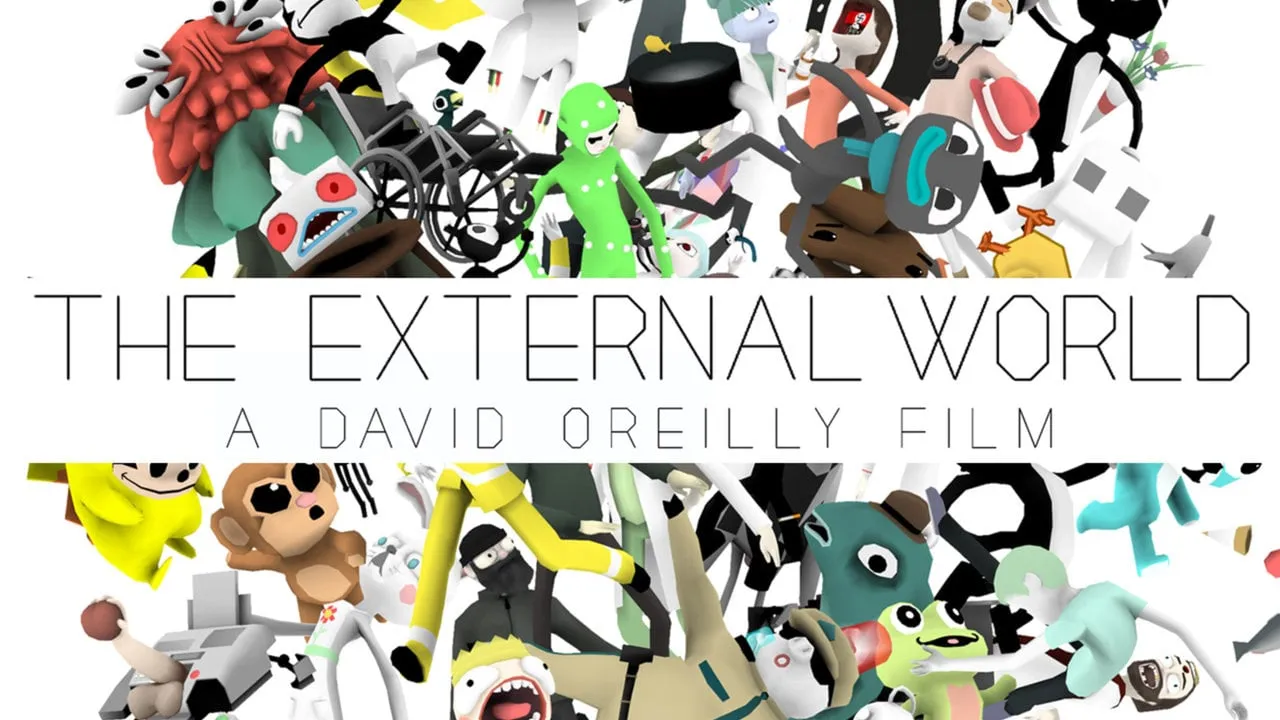
David OReilly's 2009 essay 'Basic Animation Aesthetics' argued for economy and honesty in 3D — showing software artefacts, preview-render snapshots, and low-poly crudeness instead of hiding them. Please Say Something (Golden Bear for Best Short Film, Berlinale 2009) and The External World (2010) proved unreal, openly-computed imagery could carry real emotion, seeding the 'embrace the error' ethic.
From VFX tool to authored gesture
Game and VFX physics engines (ragdoll, rigid-body, fluid) were built to fake reality cheaply. This school inverts their purpose: the simulation's failure modes become the subject. Diakur traces his start to a clip of a ragdoll tumbling down stairs — and the realization that simulating everything produces motion no animator would ever pose.
The quantified, uncanny body
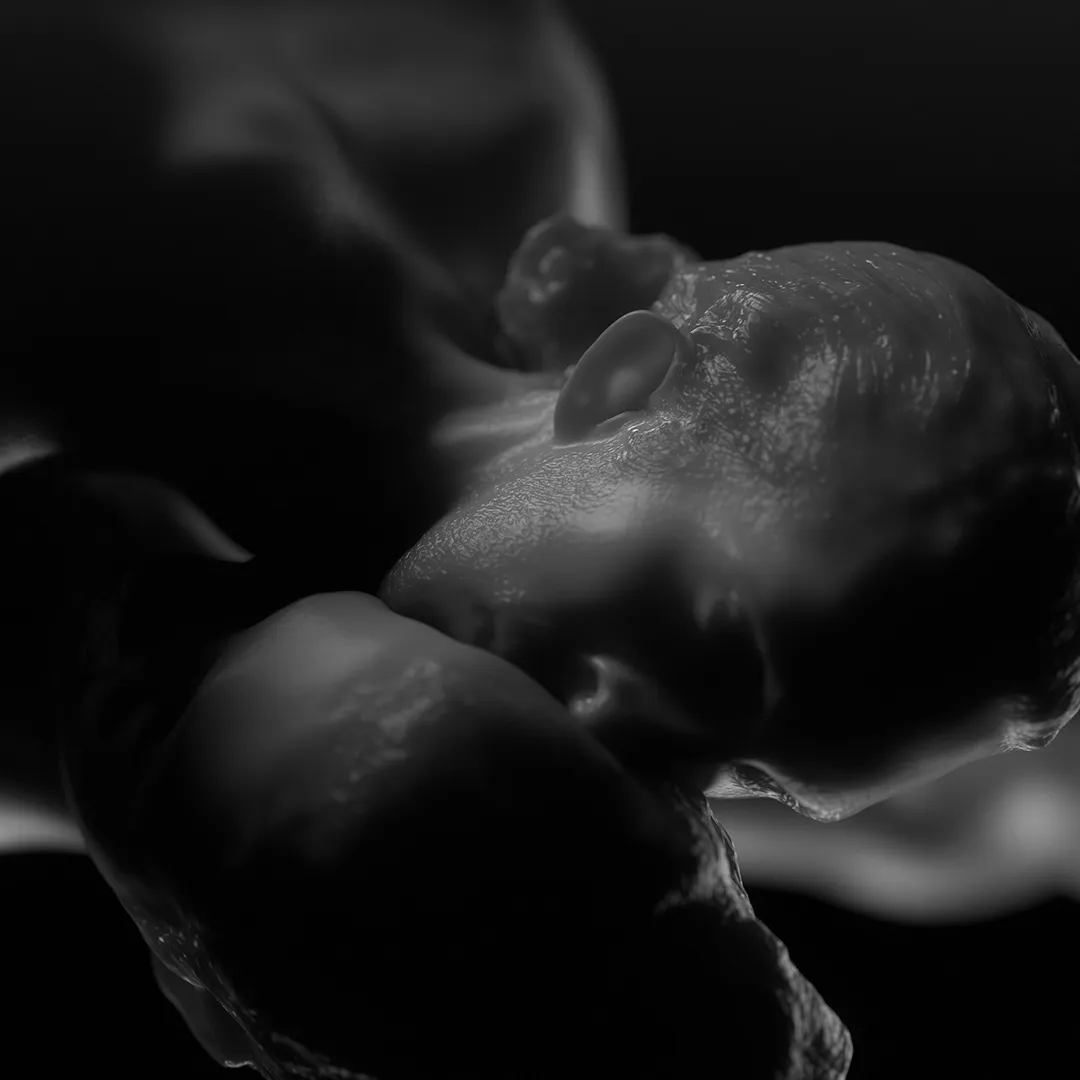
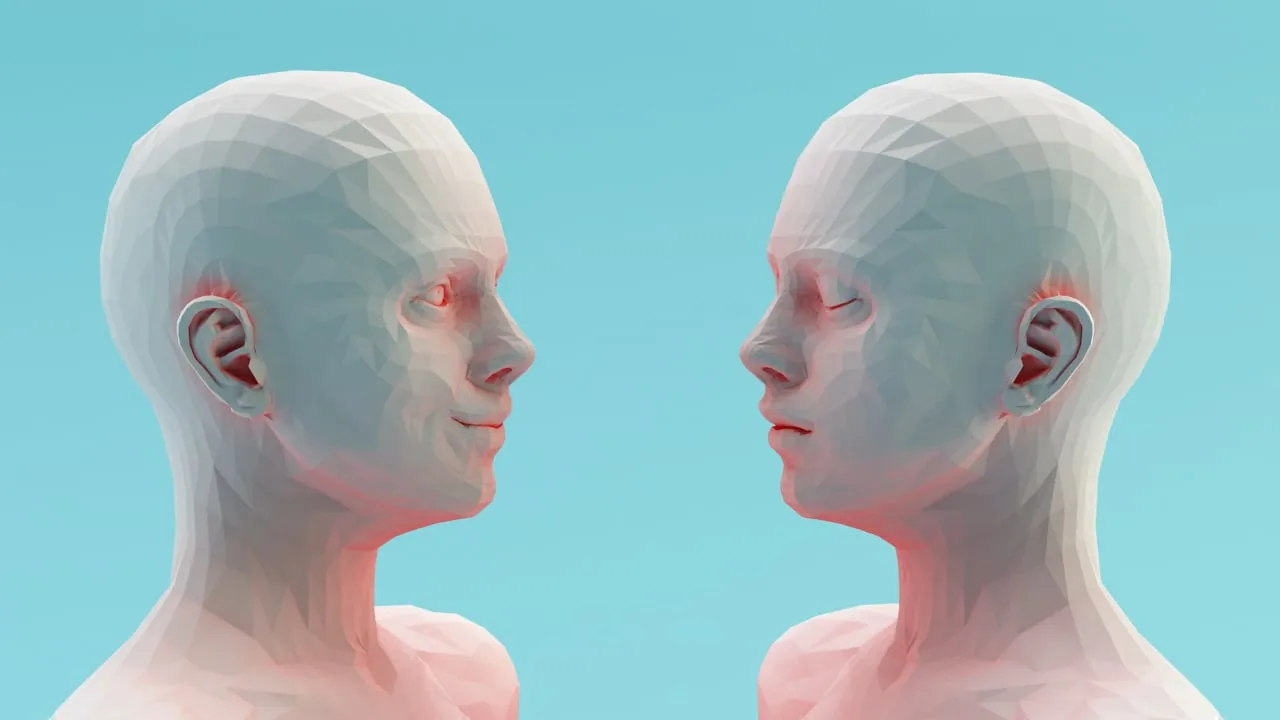
A parallel strand turns physical simulation on the human face and figure. Mike Pelletier's Parametric Expression (2013) and Parametric Portraits map motion-capture of real expressions onto distorting 3D avatars, while Omoss's higher-dimensional form-studies (Forms, 2014) push simulation toward pure abstract geometry — both treating the body as data to be deformed.
Artists
-
Ugly (2017), Fest (2018), Backflip (2022)
Defining figure of 'ugly dynamics' — Cinema 4D ragdoll-puppets jolted along on invisible springs, later self-training ML avatars that fail thousands of times before they land.
-
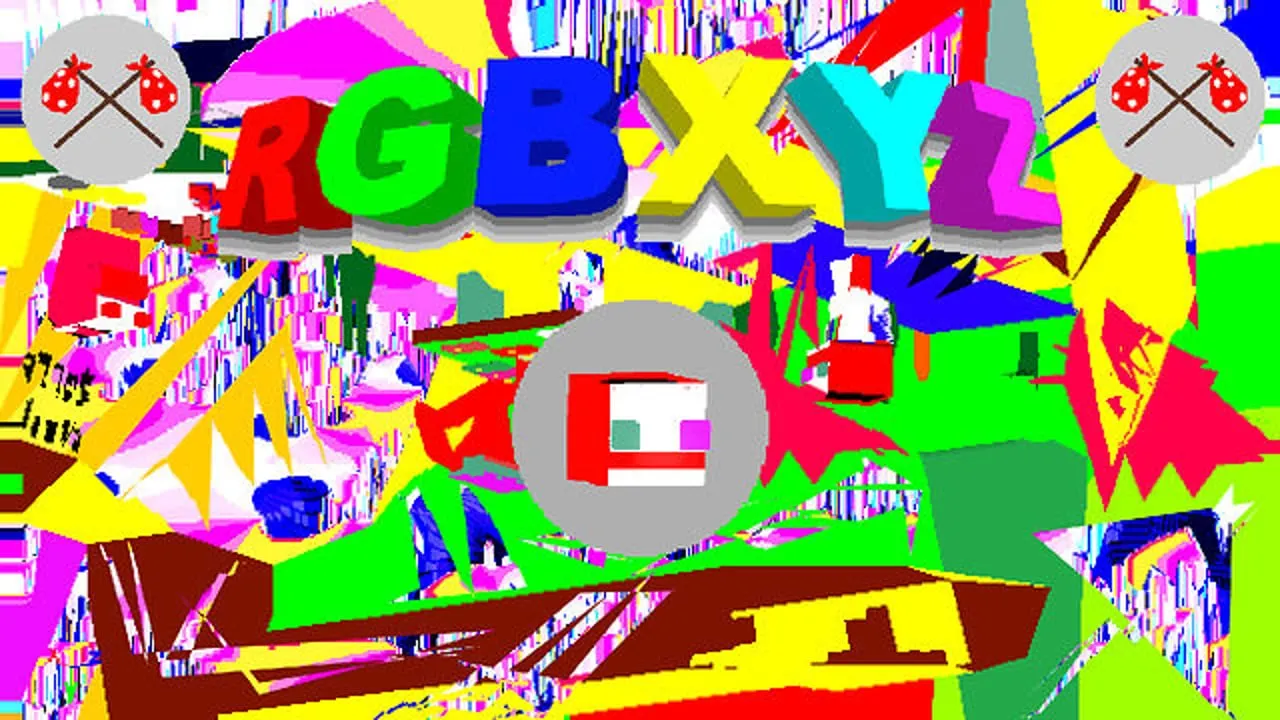
RGB XYZ (2007), Please Say Something (2008), The External World (2011), WOFL 2106 (2009)
Patron saint of anti-polish 3D; theorized in 'Basic Animation Aesthetics' that showing the software's seams — TTS voices, untextured low-poly, compression noise — is honest, economical craft.
-
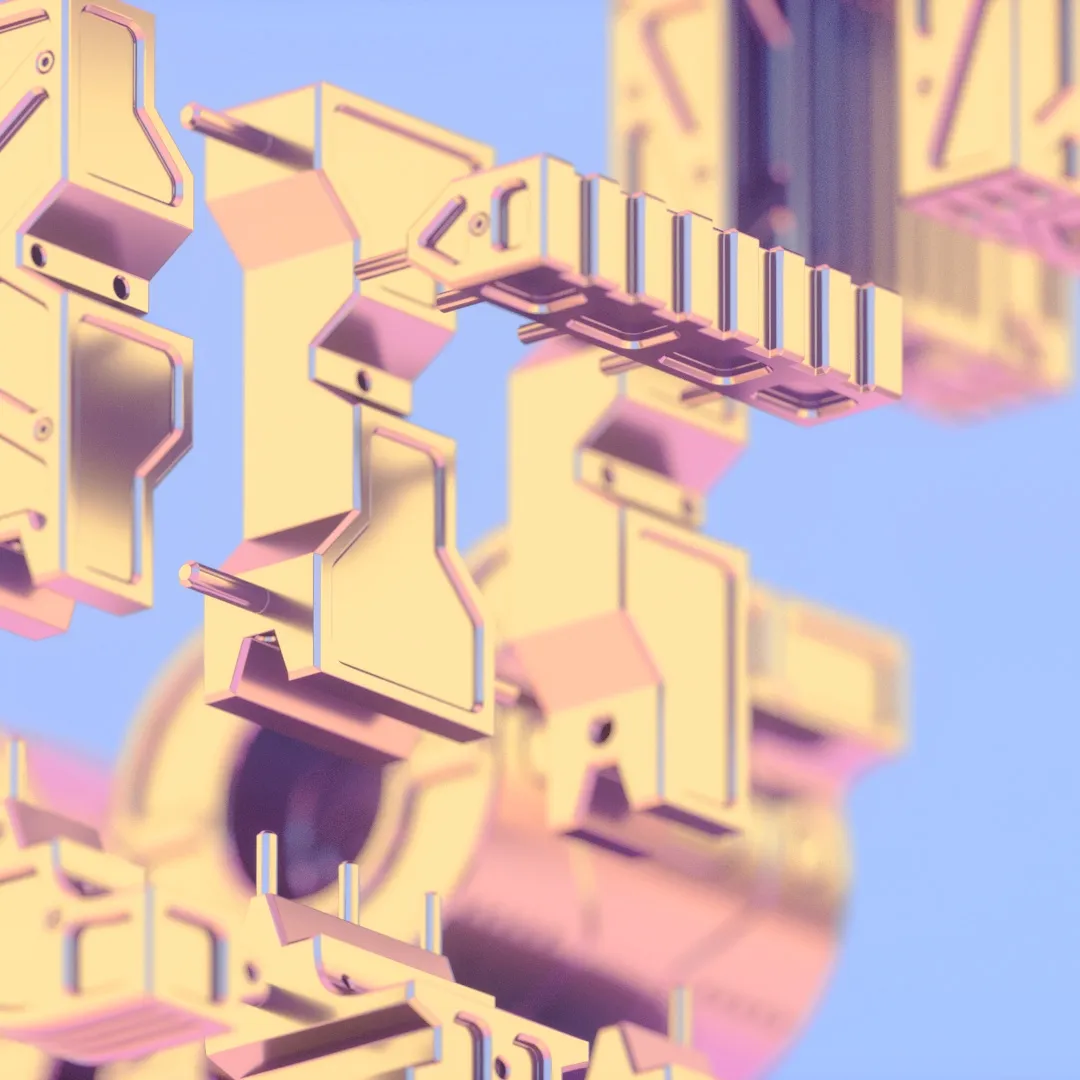
Forms (2014), Entangle, Cognition, Omoshiroi Kuchi, Cost to Consume
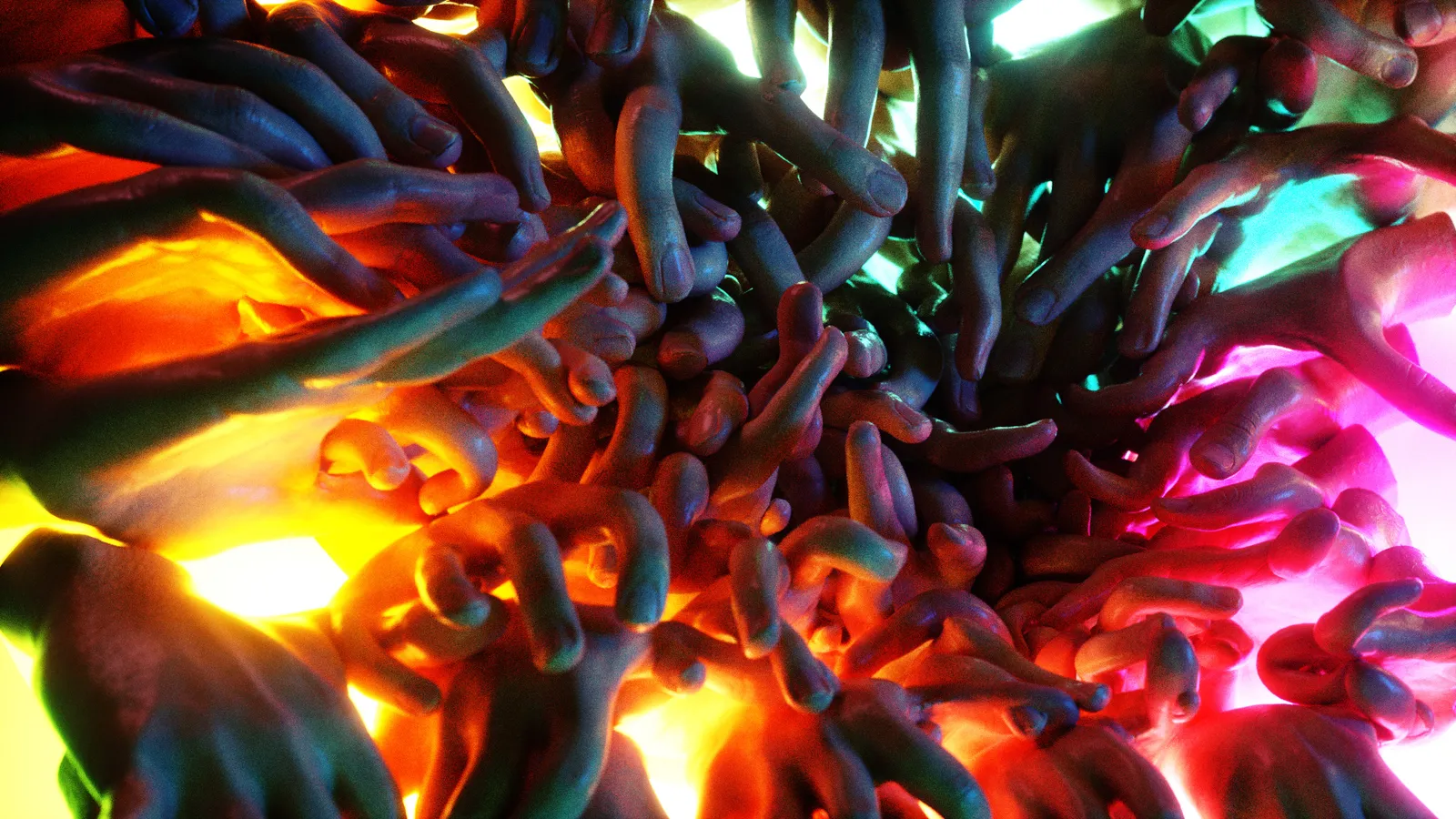
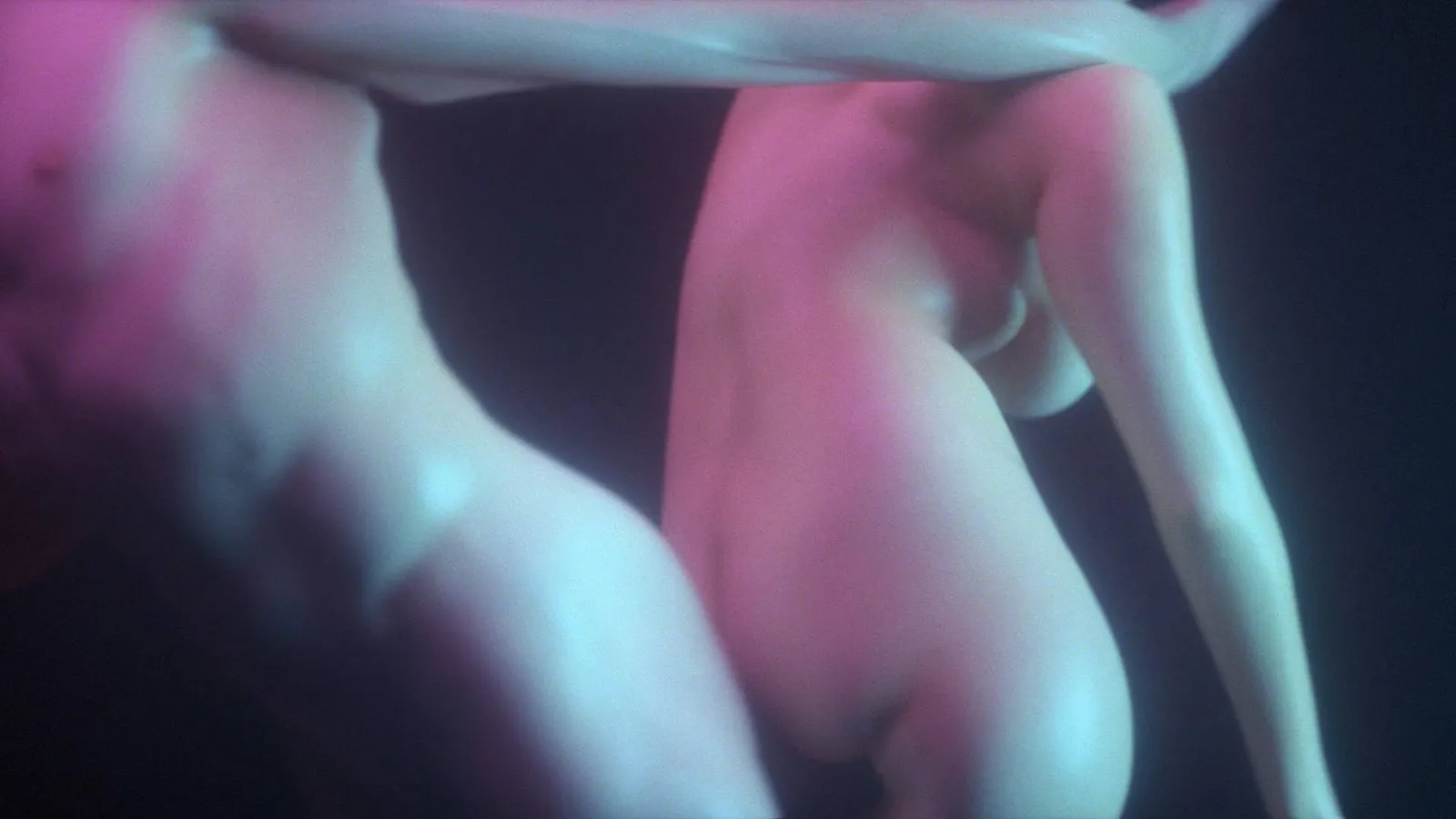
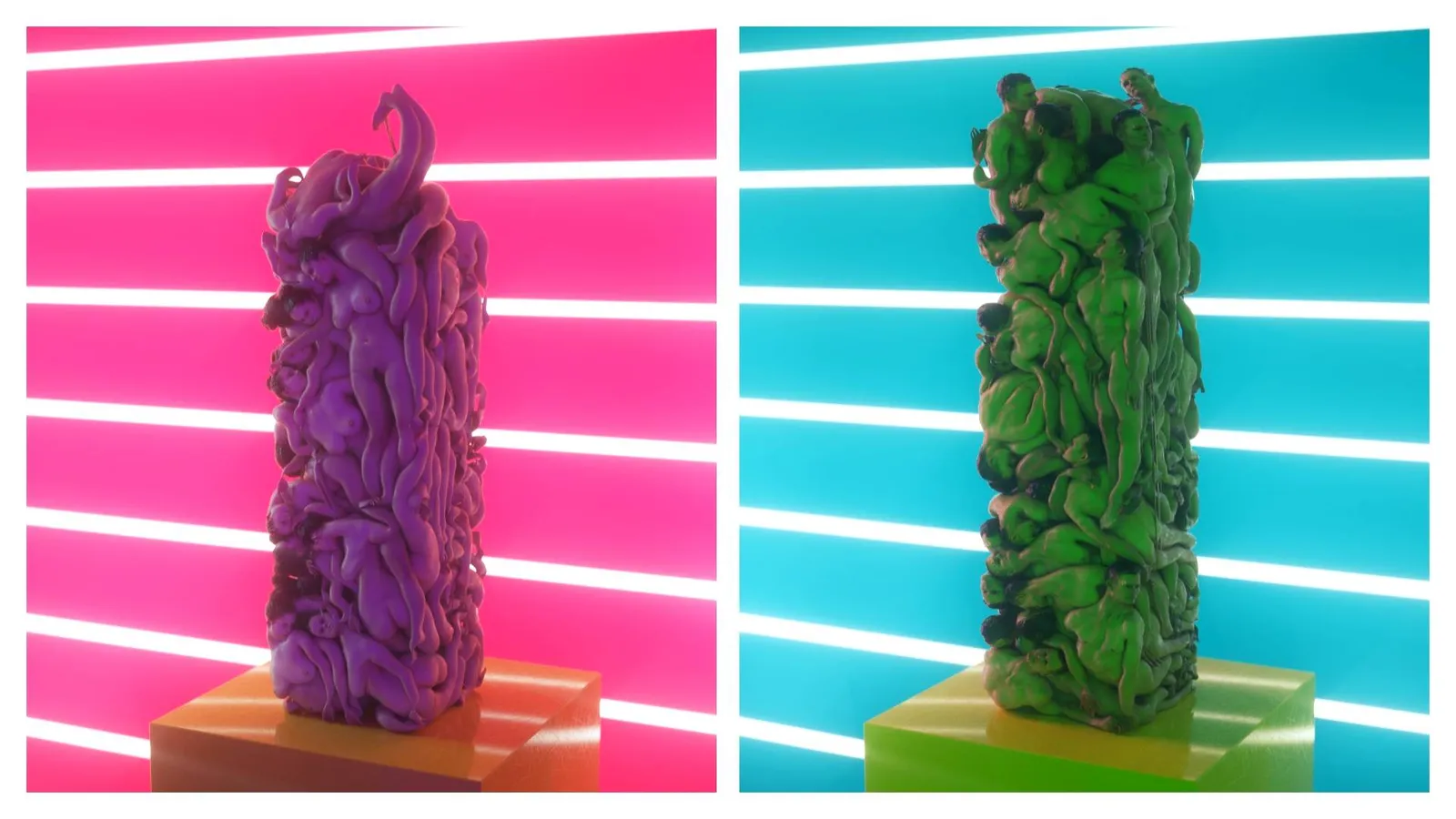
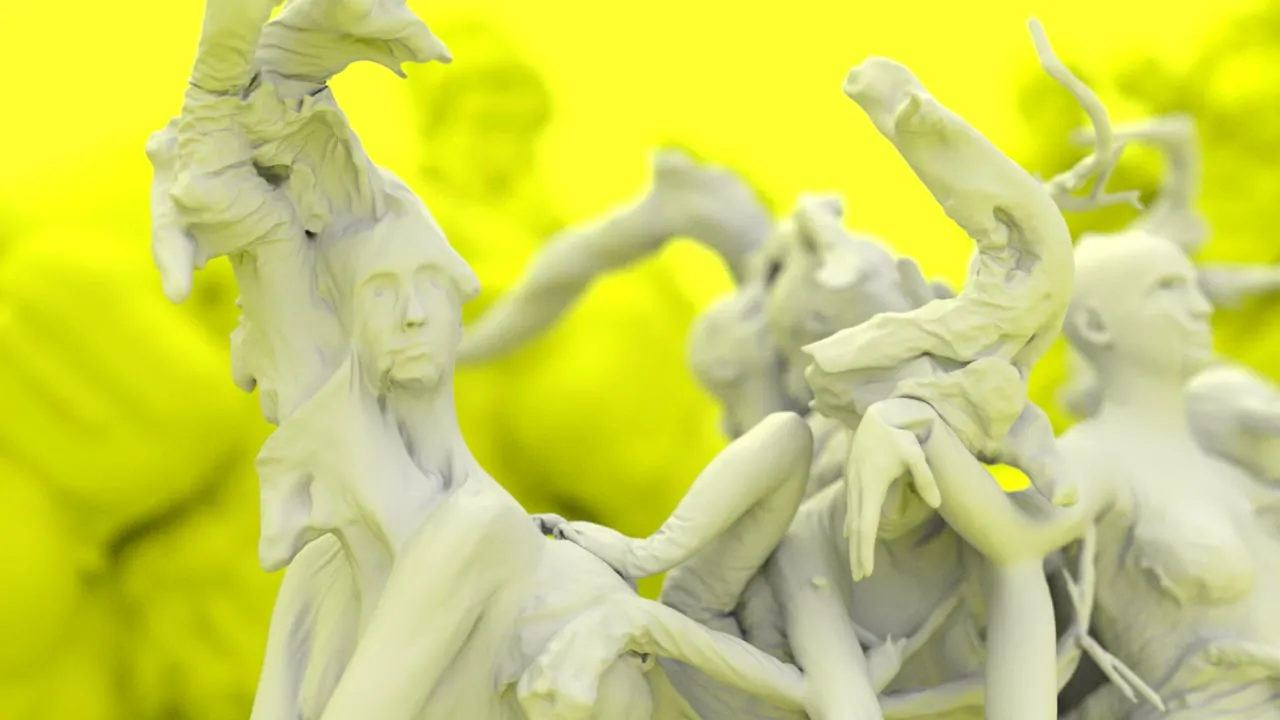
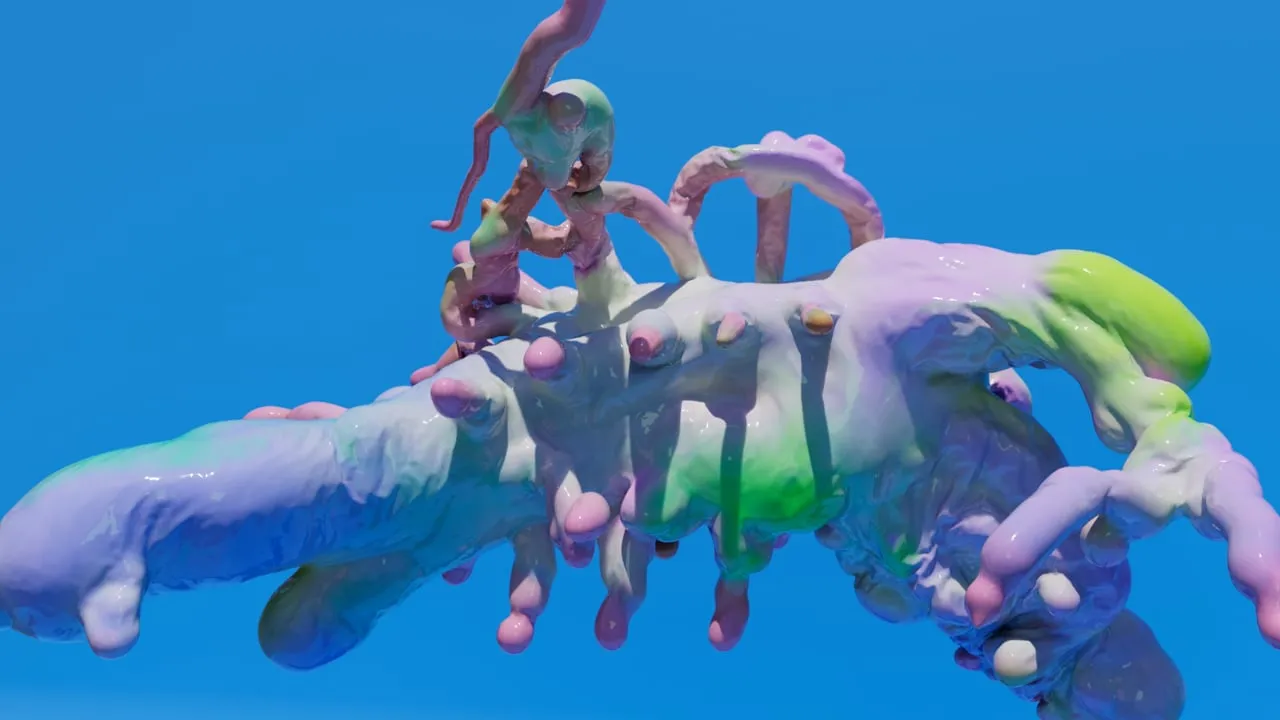
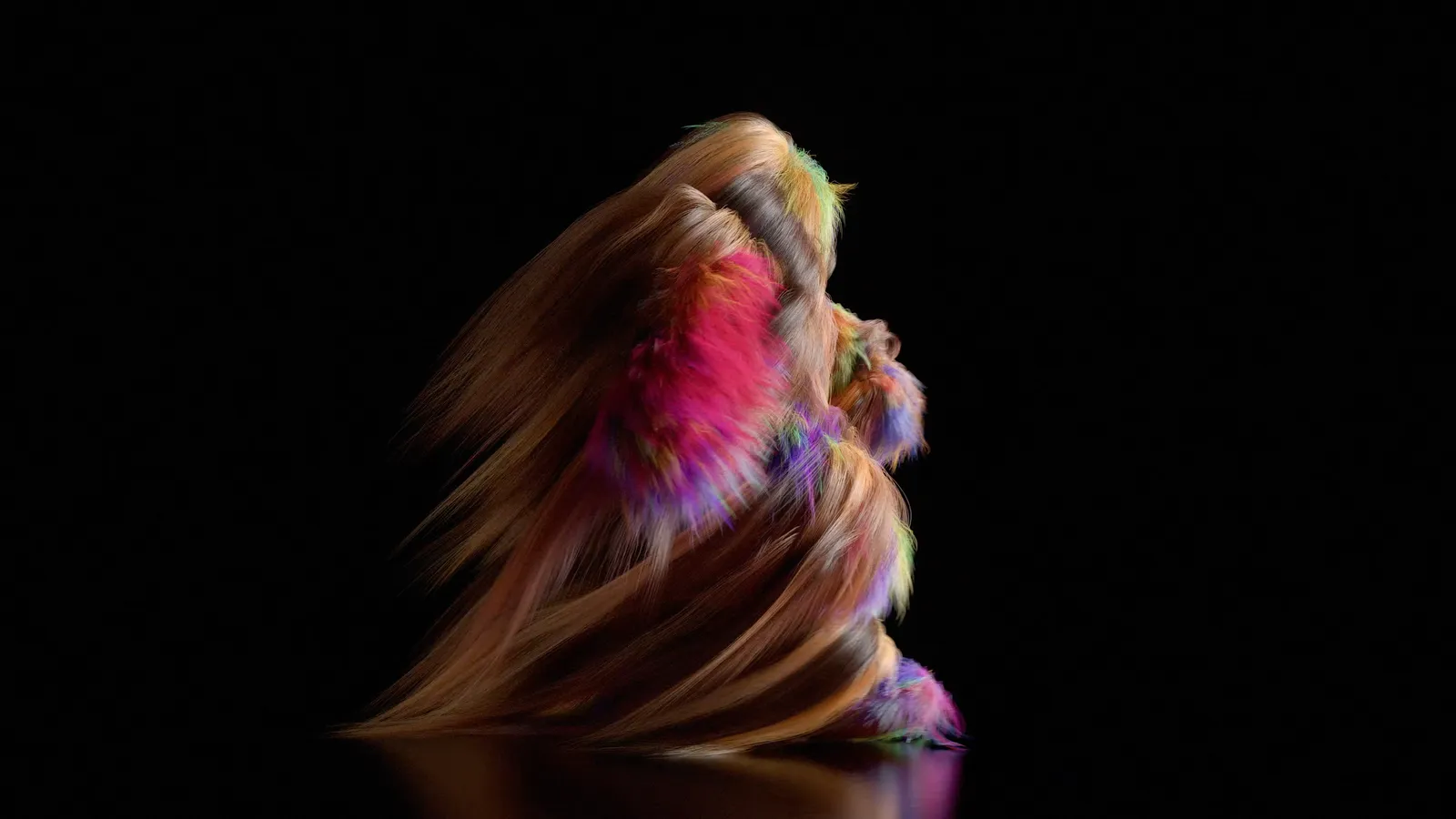
Houdini sim-master who procedurally models solids and scanned bodies then collapses, melts and dissolves them into higher-dimensional, anatomically uncanny form-studies.
-
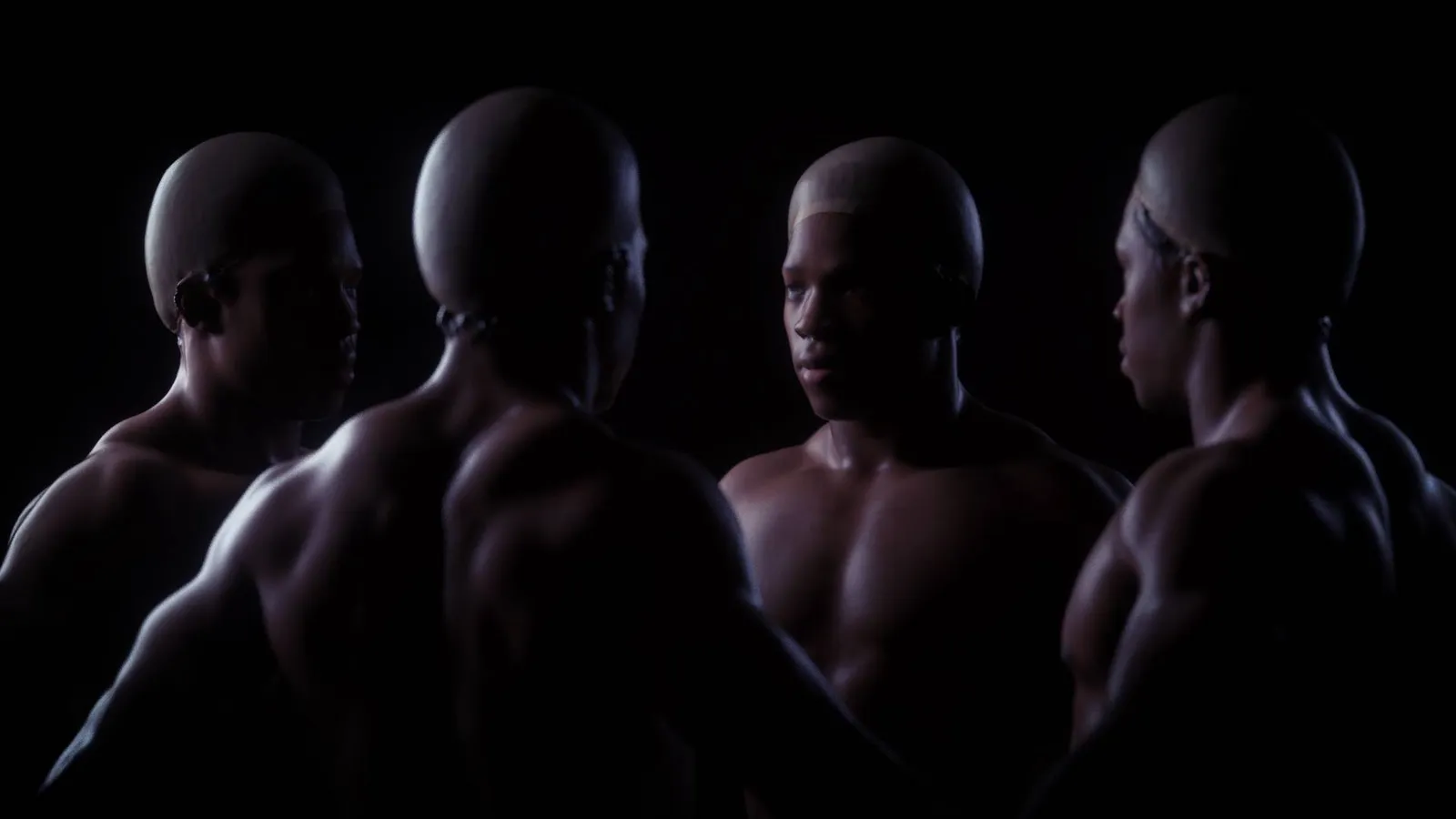
Parametric Expression (2013), Parametric Portraits, Coordinated Movement, Constraint Iterations (2020-22), Mediums
Maps motion-captured faces and bodies onto distorting 3D avatars, driving recognisable human input through constraint sims until it ripples, glitches and decays across the uncanny valley.
-
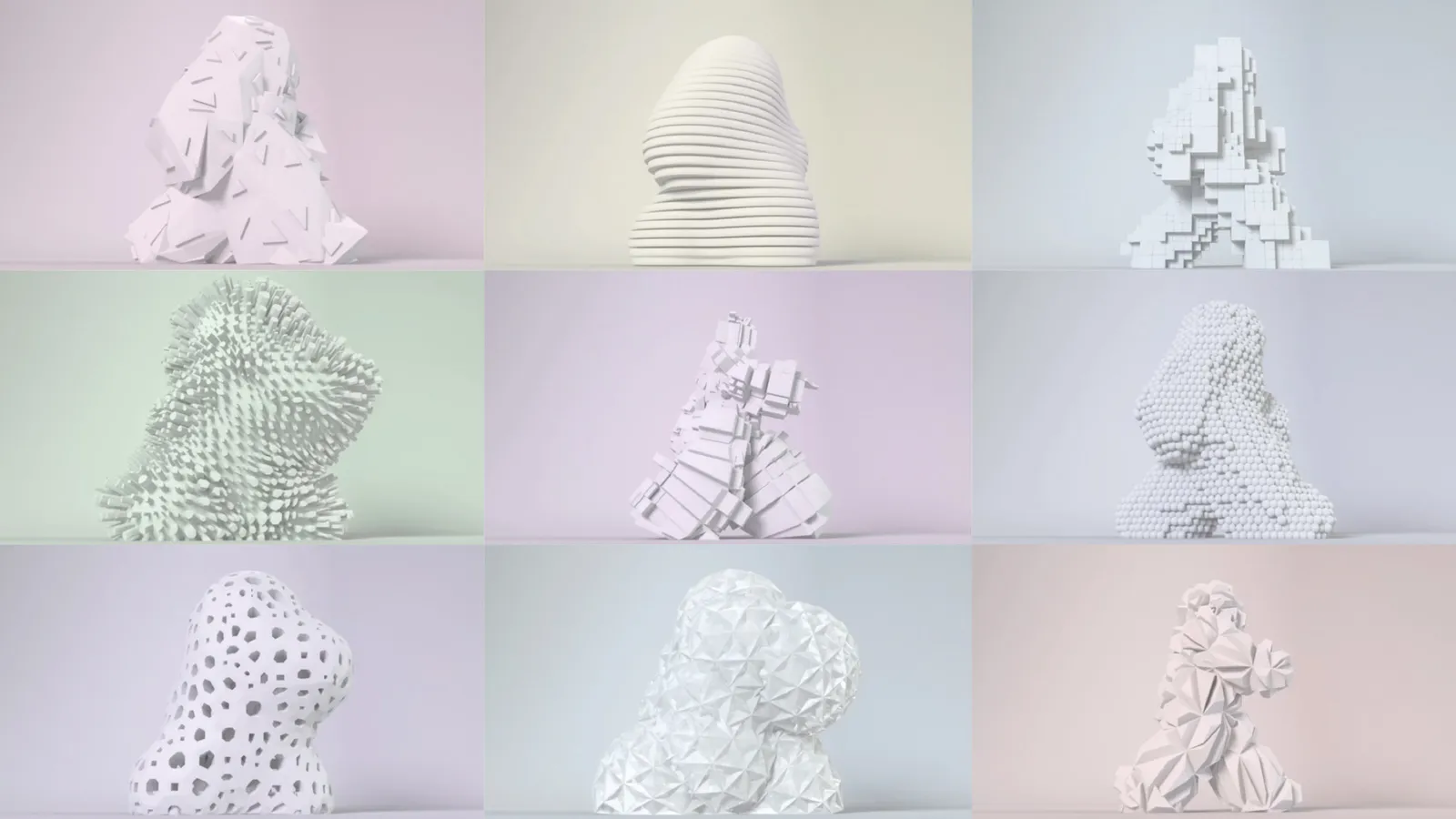
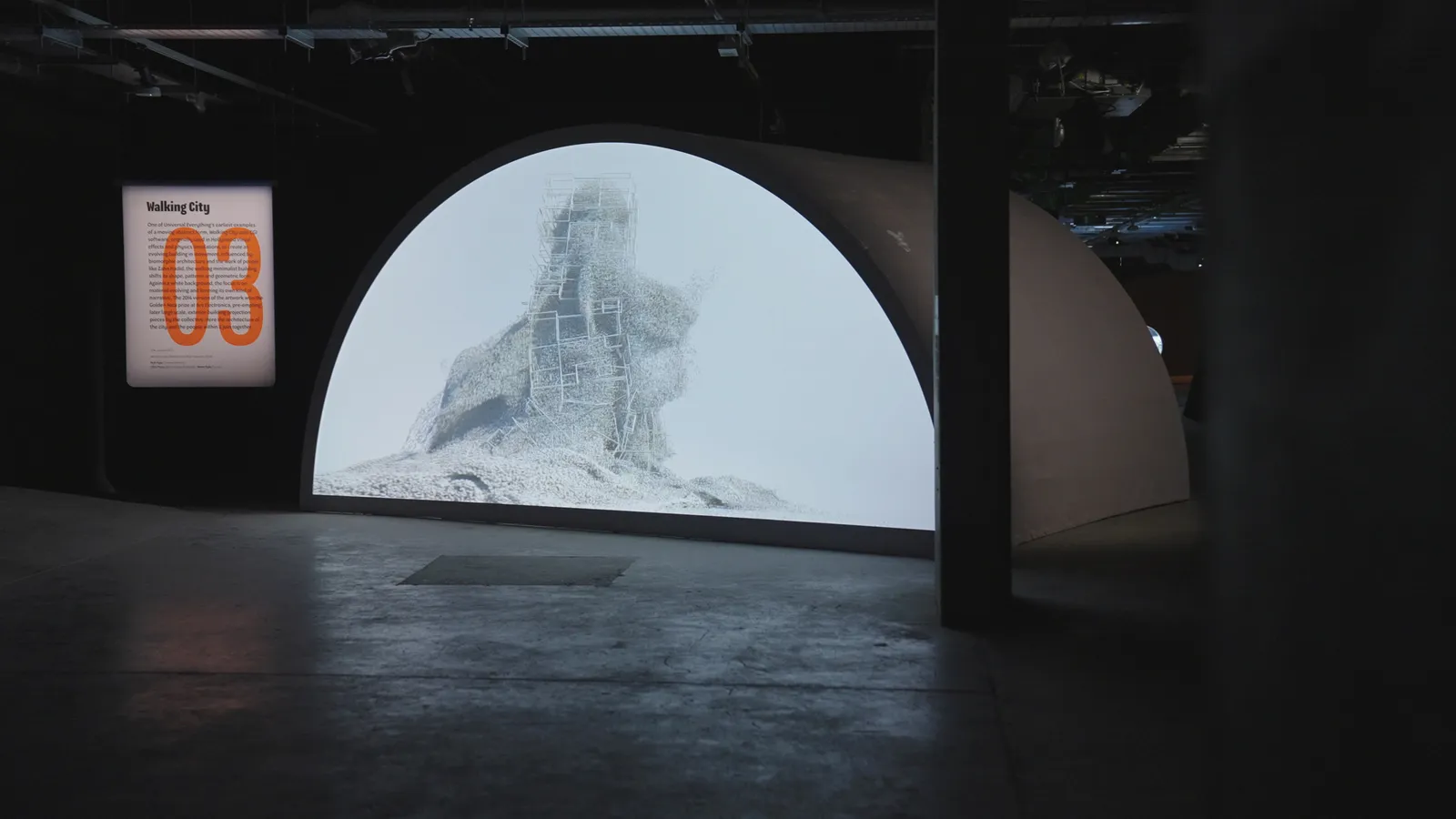
Walking City (2014), Transfiguration (2020), Future You (2019)
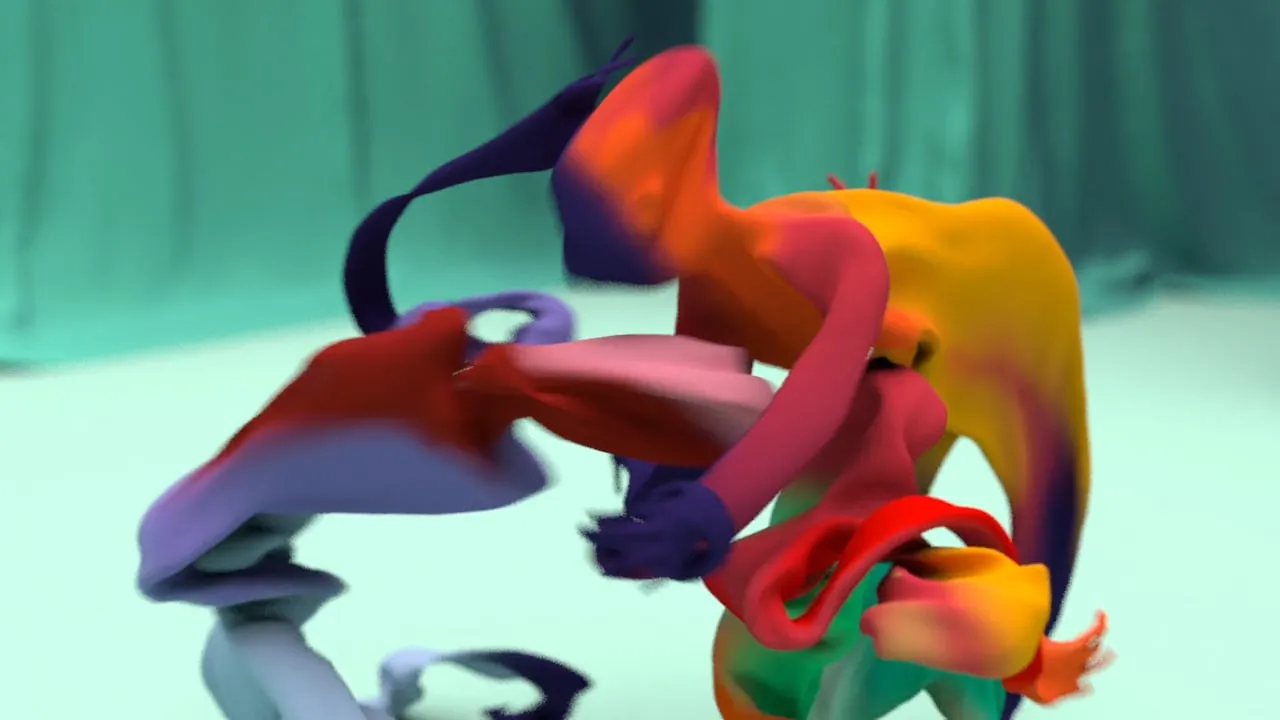
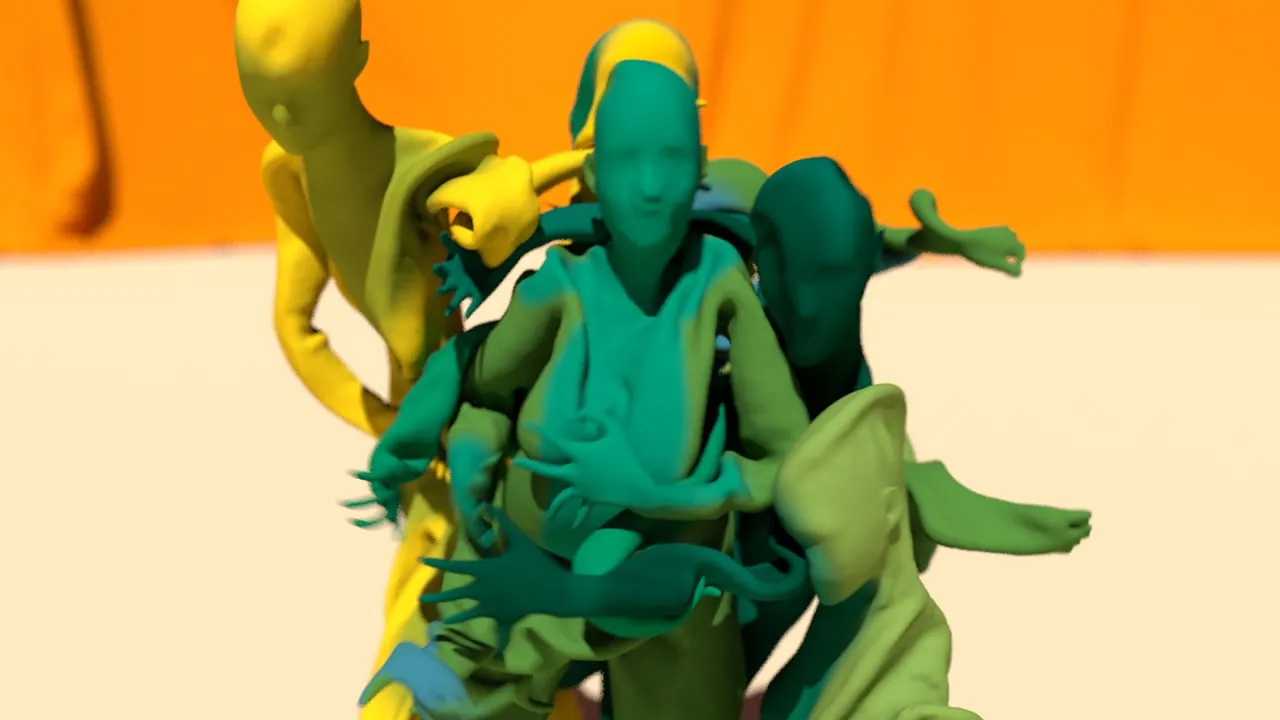
Matt Pyke's studio runs a single procedural walk-cycle through Houdini so a CG figure endlessly morphs its own surface — the clinically smooth end of the spectrum, where the solver is hidden, not exposed.
-
Cool 3D World ongoing short-film series
Brian Tessler and Jon Baken animate grotesque humanoids whose faces distort past the modeller's limits, treating classic-CGI error as the subject.
-
Looping body-distortion animations for Adobe, Apple, Beyoncé
German animator who loops human bodies through impossible squashes and stretches, using the sim to push flesh past its real limits.
-
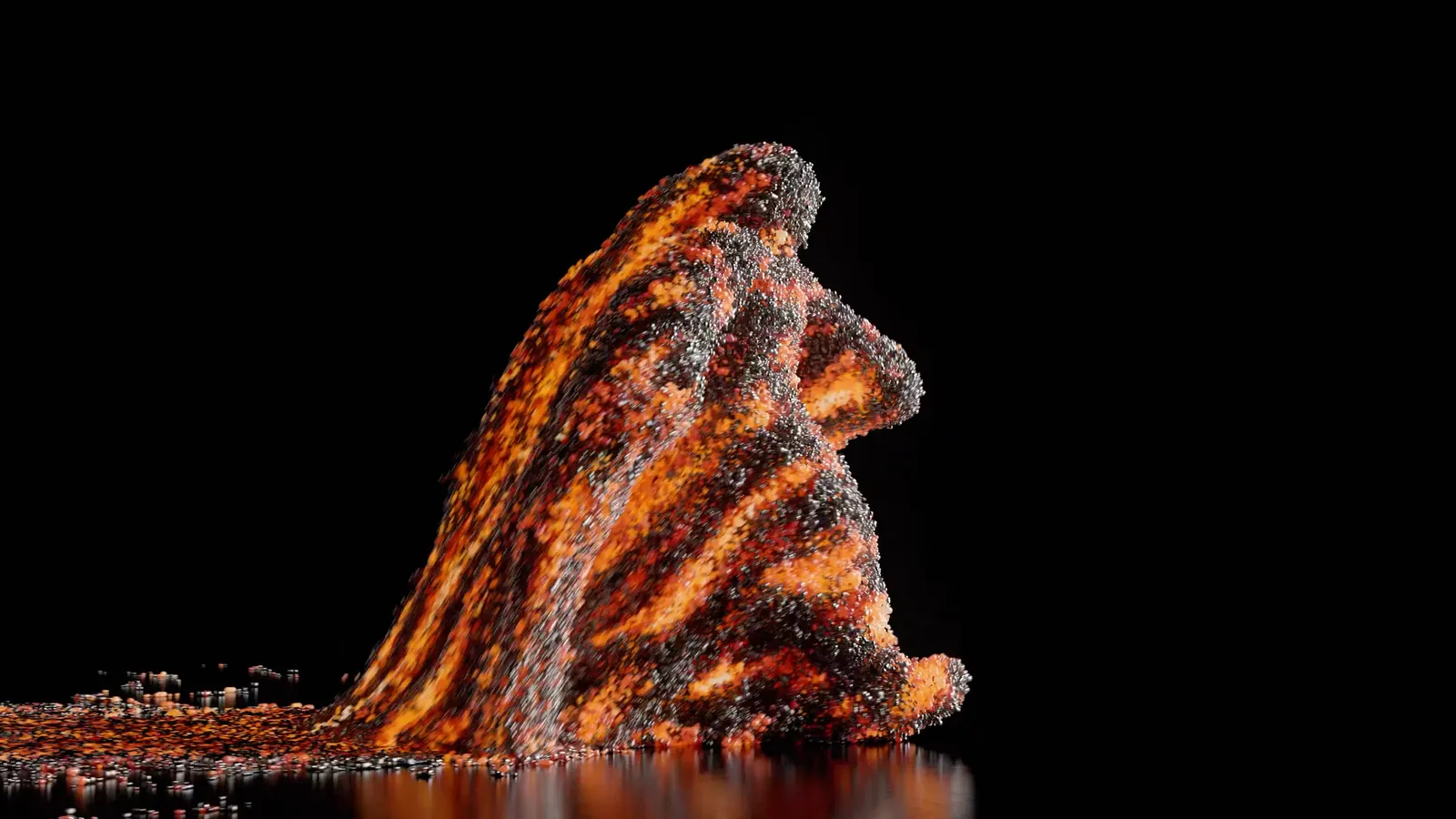
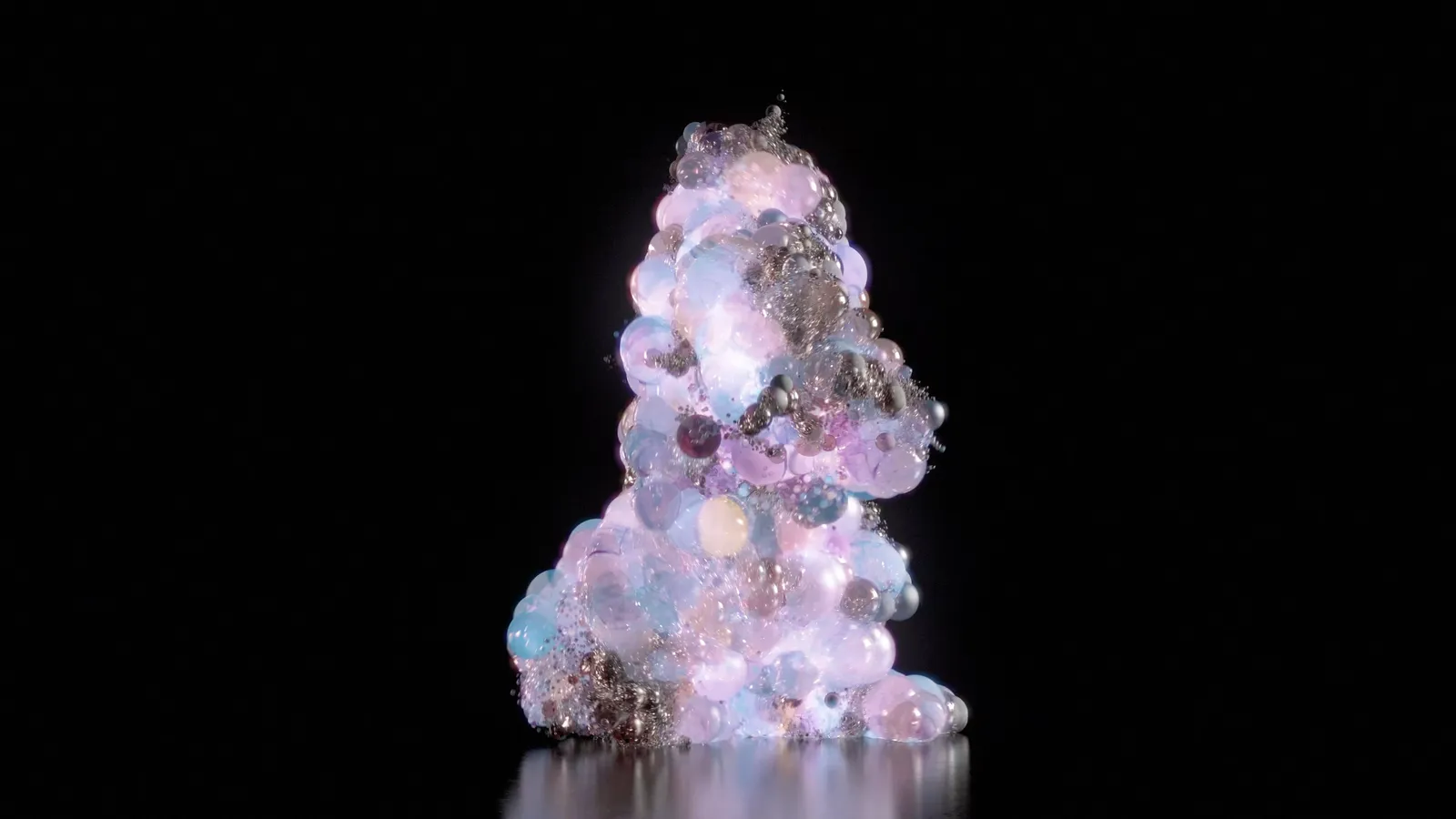
Volumes (2018), Computations (2019), Elements, Waves
Builds art films from physics simulations of millions of colliding spheres under forces — he seeds the rules and the solver generates the form, never keyframes it.
-
Live mocap-puppet performances for Amnesia Scanner, Arca and Lady Gaga; VR club-theatre
Authors motion live in a game engine through deliberately mis-rigged, mocap-driven avatars improvised in real time — performance-as-simulation against the keyframe.
-
geist.xyz (2016, V&A collection), synthetic-textile films
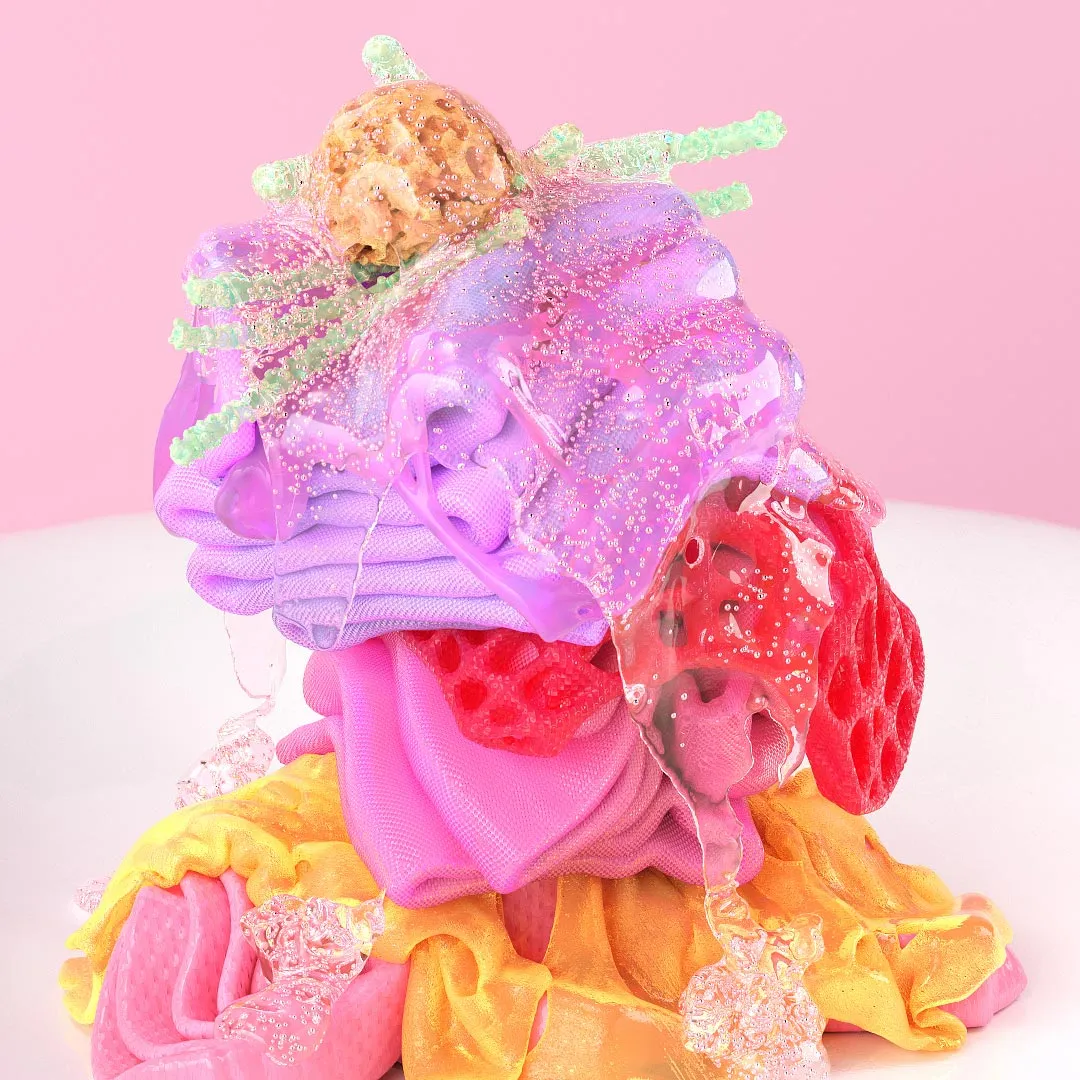
Berlin studio that physics-simulates speculative textiles in Marvelous Designer and drives them with Houdini systems, so the cloth behaves and dances on its own.
-
The Flow (2011), Quantum Fluctuations (2016), aBiogenesis (2022)
Builds environments where millions of particles interact under defined forces (often fed real scientific data) and renders the running simulation itself as the subject.
Frames
Nikita Diakur
-
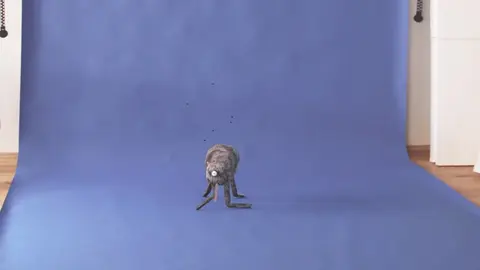
Studio reel · Nikita Diakur · Source -
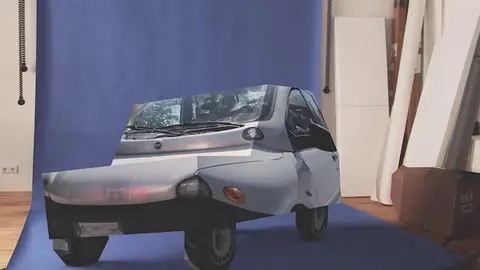
Studio reel · Nikita Diakur · Source -
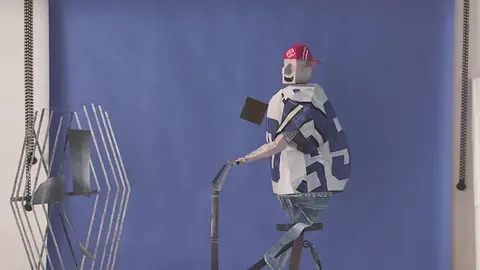
Studio reel · Nikita Diakur · Source -
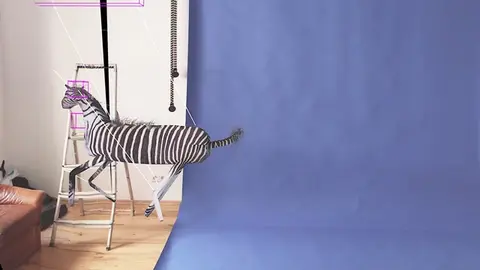
Studio reel · Nikita Diakur · Source -
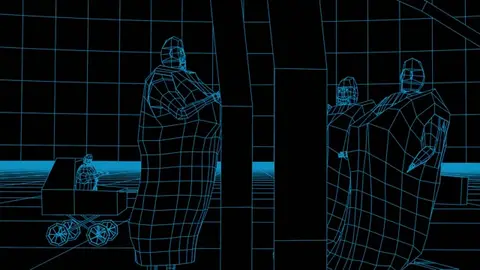
Studio reel · Nikita Diakur · Source -
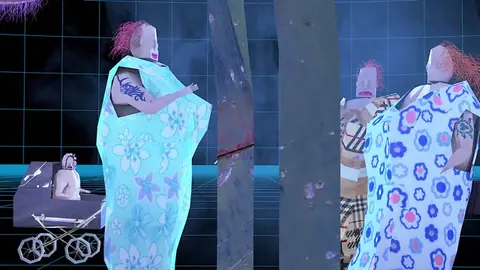
Studio reel · Nikita Diakur · Source -
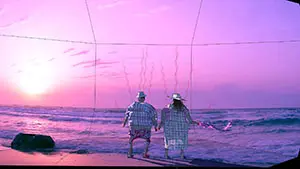
Fest (2018) · Nikita Diakur · Source -
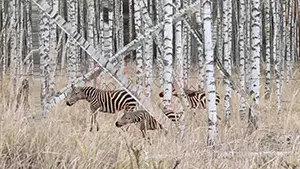
Diakur portfolio still · Nikita Diakur · Source -
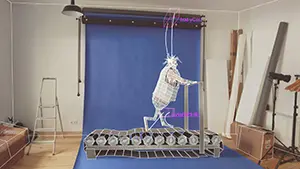
Ugly (2017) · Nikita Diakur · Source -
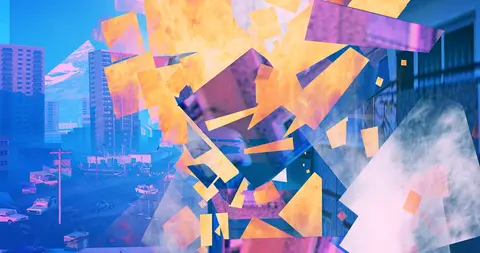
Ugly (2017) · Nikita Diakur · Source -
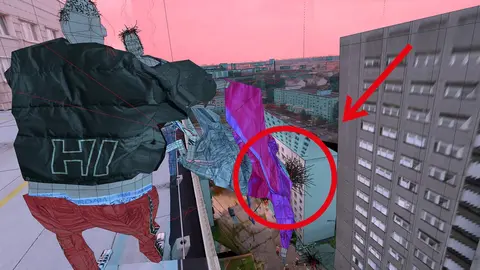
Fest (2018) · Nikita Diakur · Source -

Ugly Universe (2014) · Nikita Diakur · Source -
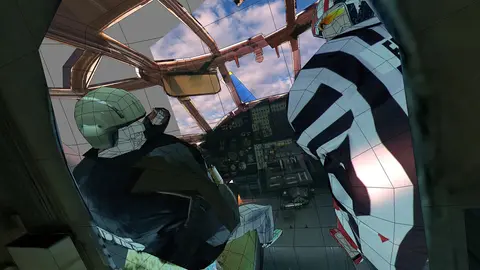
Skydivers Unite (2020) · Nikita Diakur · Source -
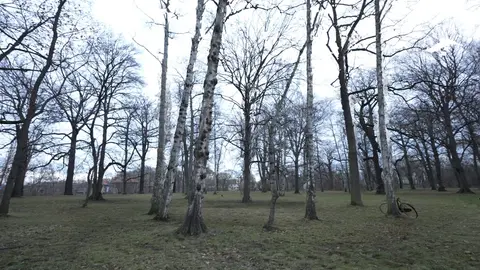
Scanned a Park (2021) · Nikita Diakur · Source -
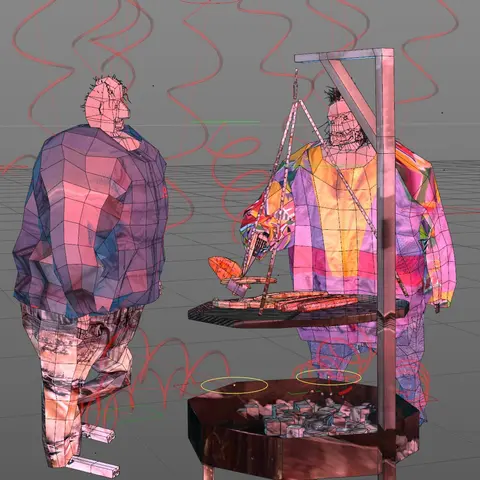
BBQ Sharing (2018) · Nikita Diakur · Source -

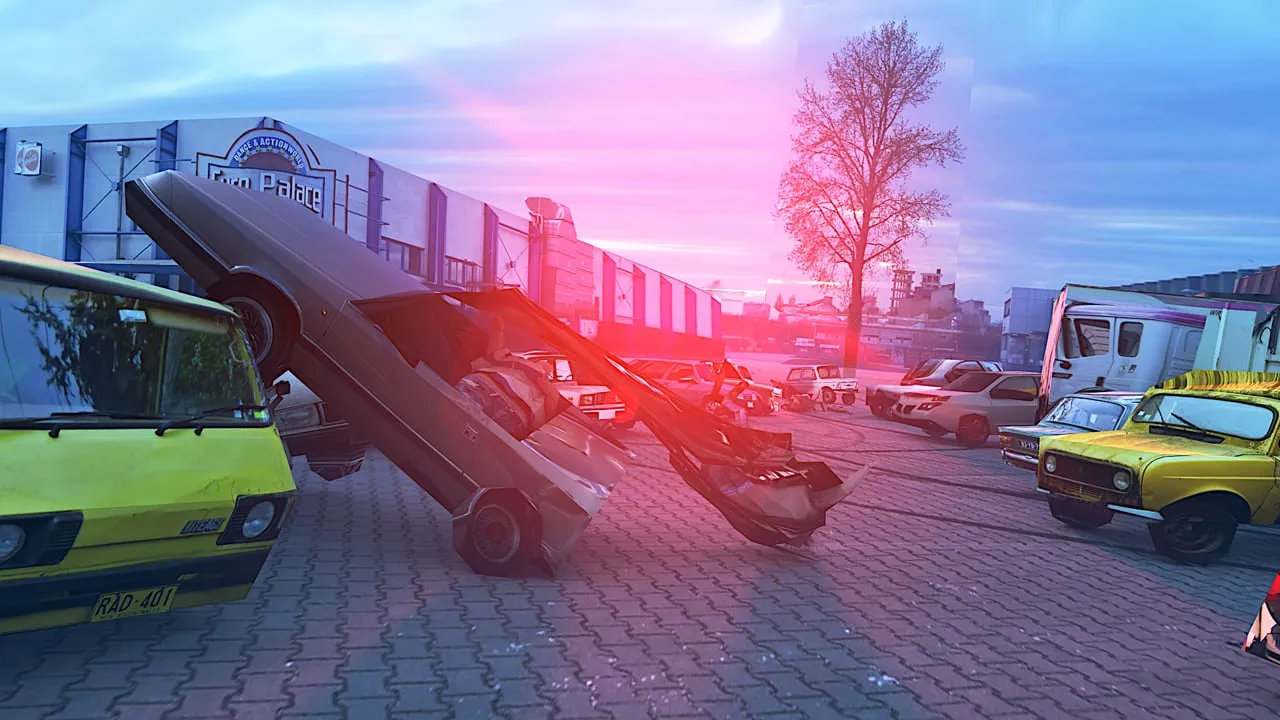
Ugly Parking Lot (2016) · Nikita Diakur · Source
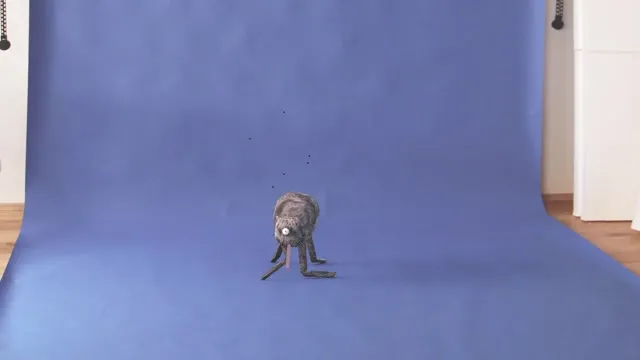
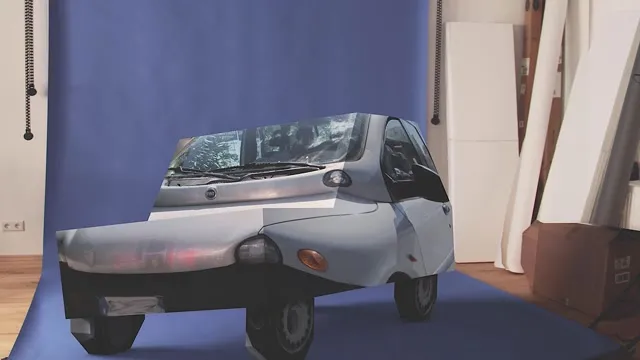

David OReilly
Albert Omoss
-
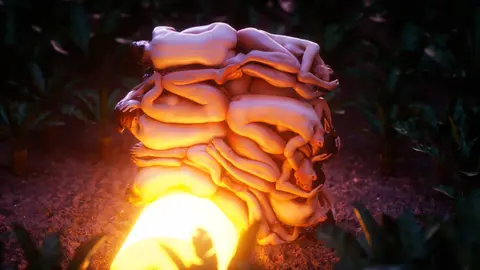
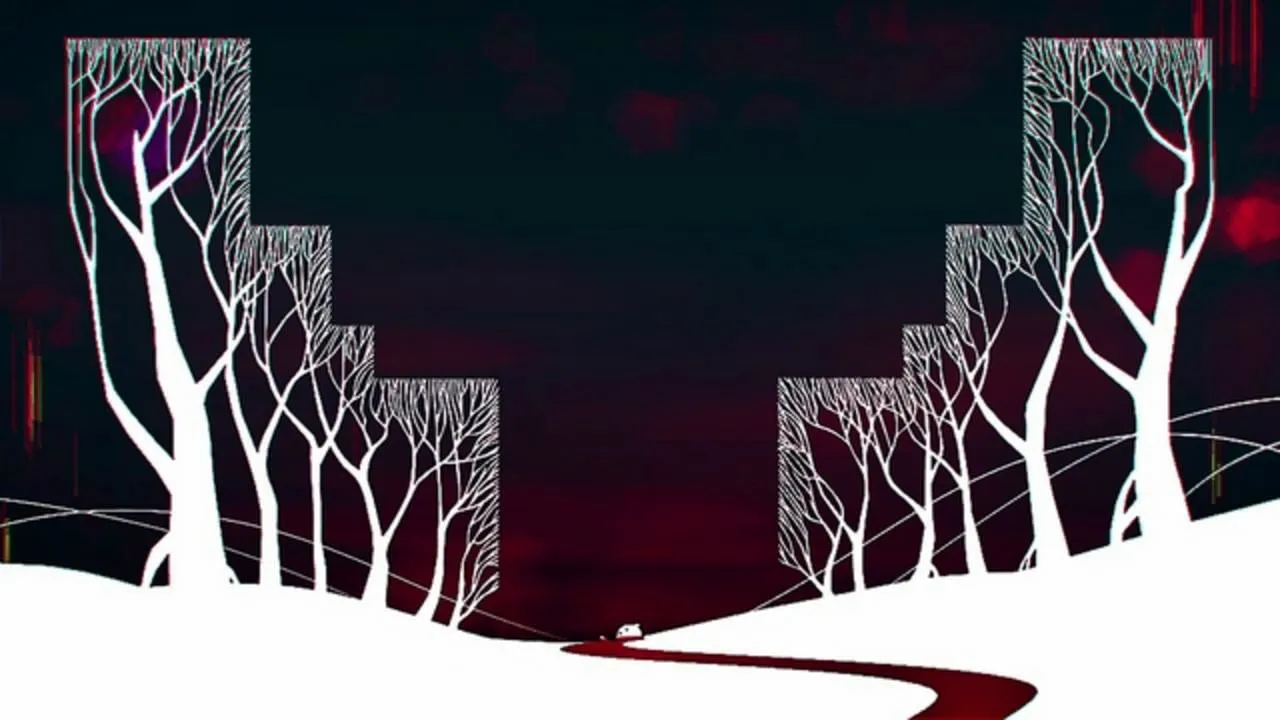
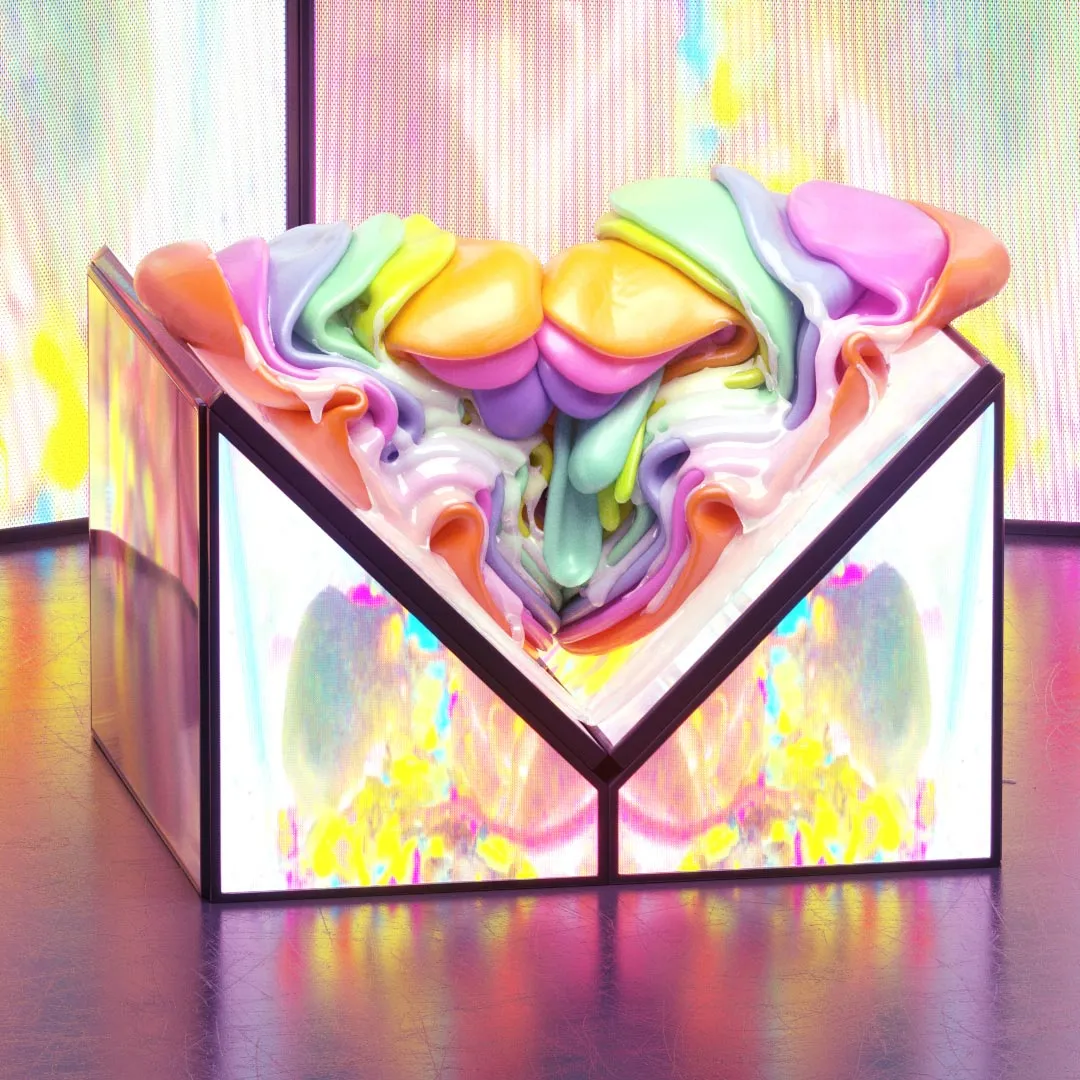
Forms (2014) · Albert Omoss · Source -
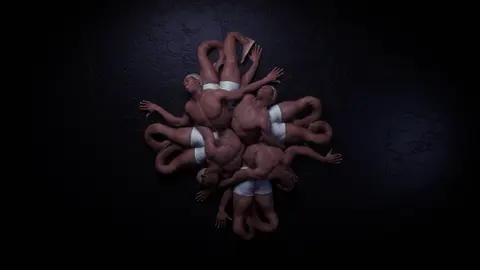
Forms (2014) · Albert Omoss · Source -
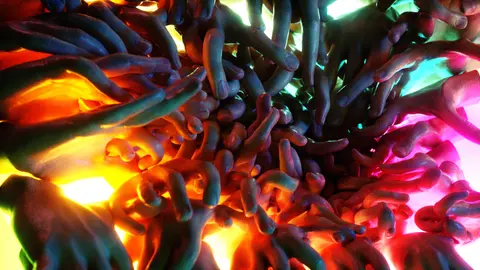
Forms (2014) · Albert Omoss · Source -
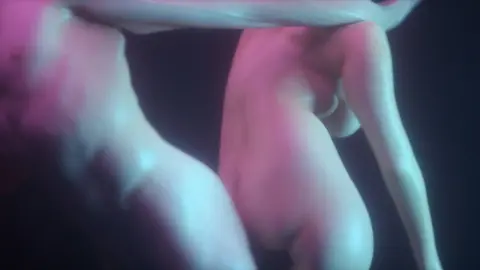
Forms (2014) · Albert Omoss · Source -
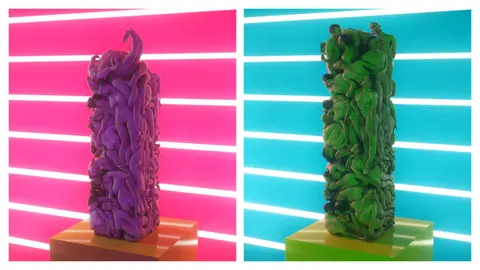
Forms (2014) · Albert Omoss · Source -
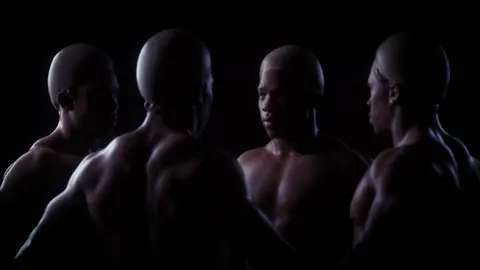
Forms (2014) · Albert Omoss · Source -
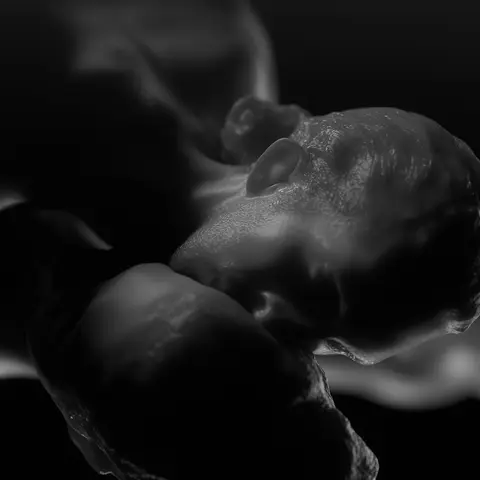
Entangle · Albert Omoss · Source -
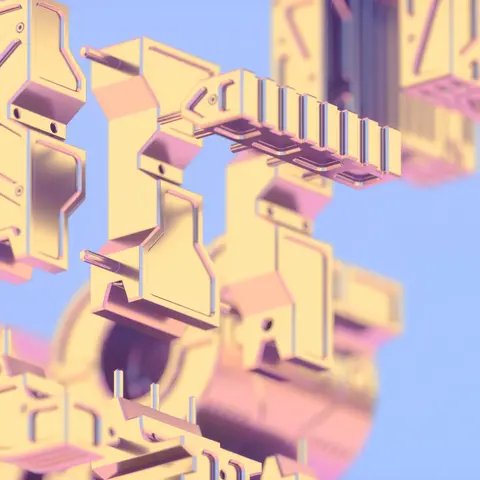
Cognition · Albert Omoss · Source -

Omoshiroi Kuchi · Albert Omoss · Source -
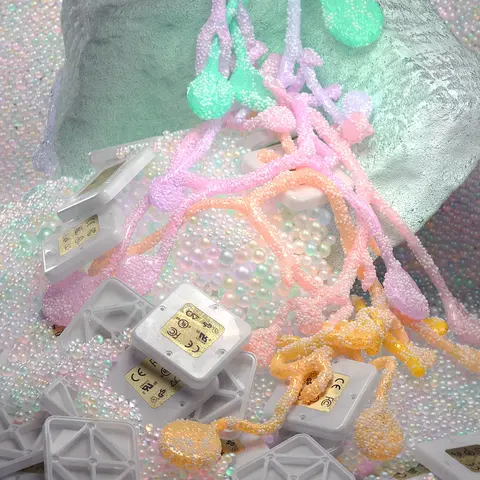
Cost to Consume · Albert Omoss · Source -
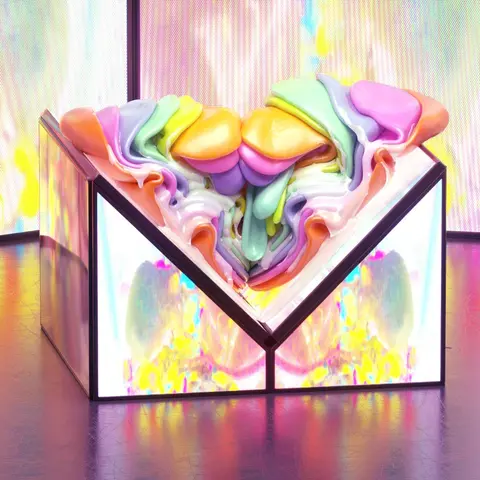
Arashi Nectar · Albert Omoss · Source
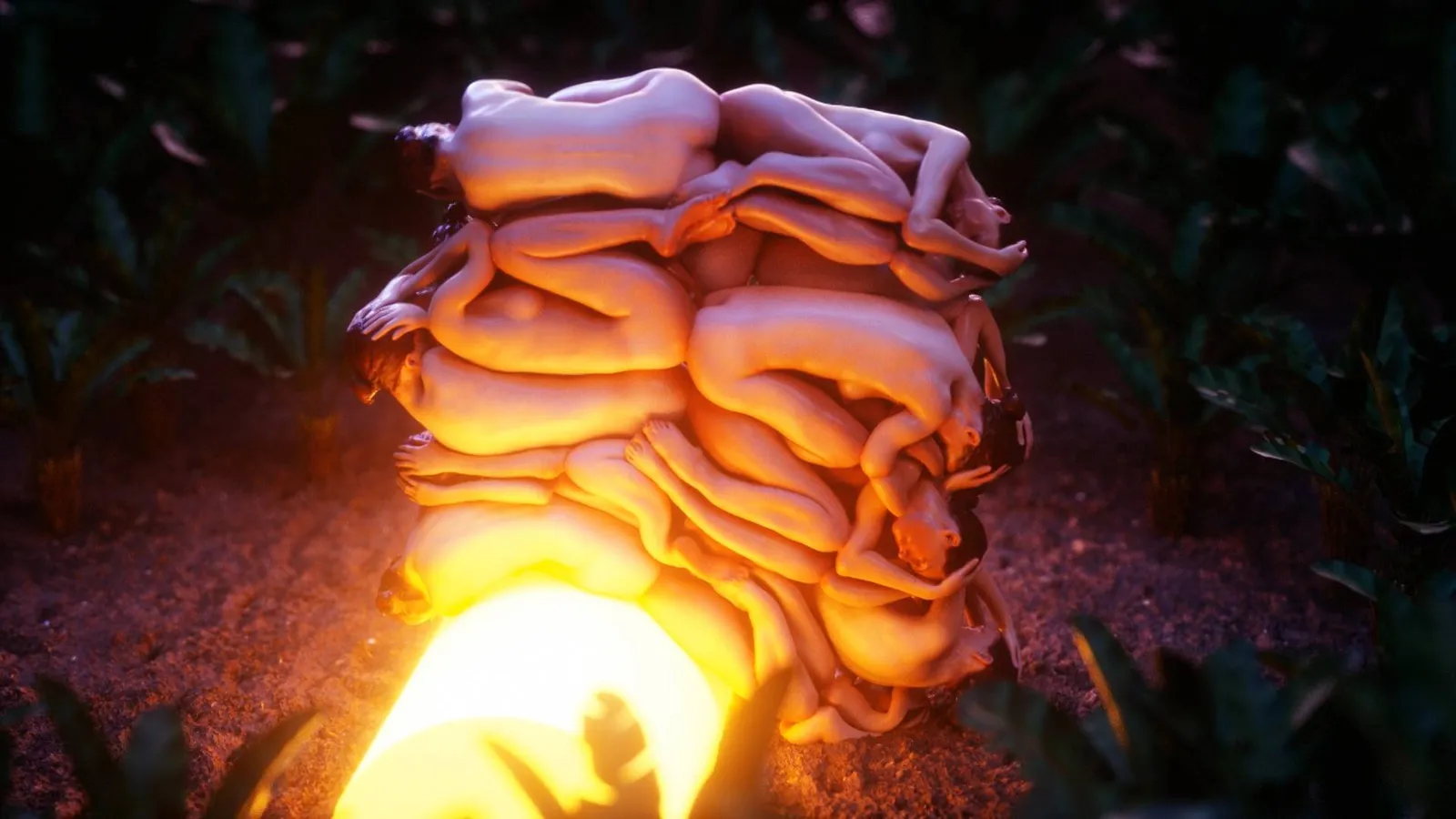
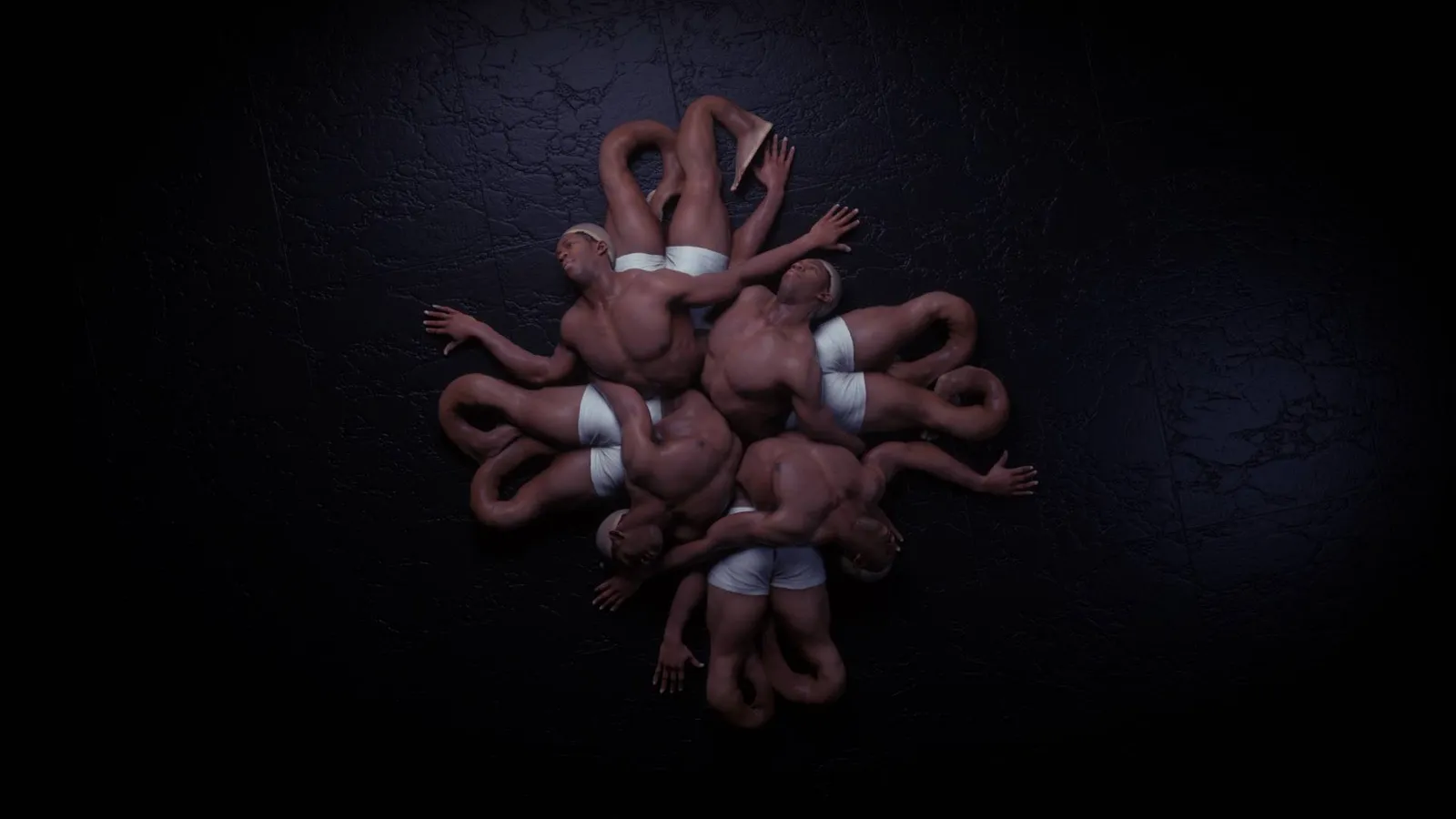
Mike Pelletier
Universal Everything
-
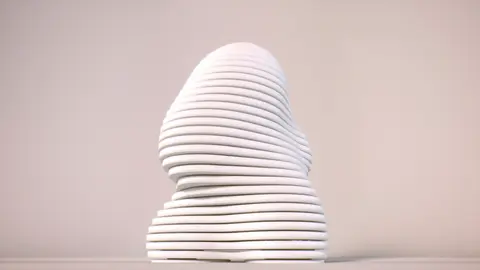
Walking City (2014) · Universal Everything · Source -
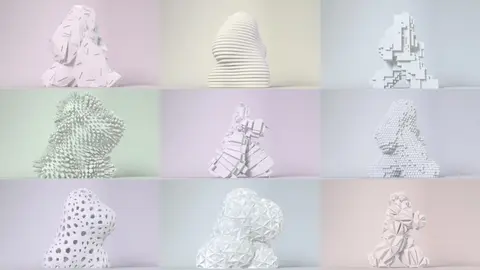
Walking City (2014) · Universal Everything · Source -
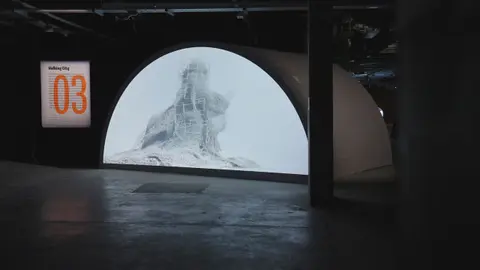
Walking City (2014) · Universal Everything · Source -
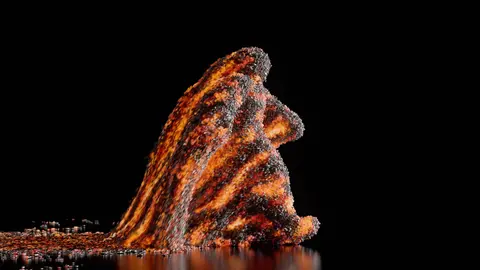
Transfiguration (2020) · Universal Everything · Source -

Transfiguration (2020) · Universal Everything · Source -
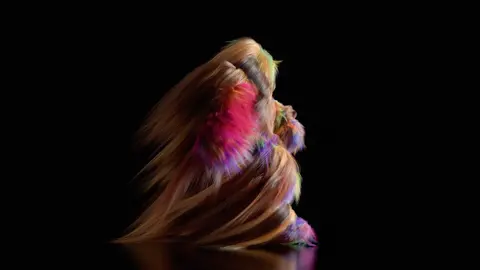
Transfiguration (2020) · Universal Everything · Source -

Transfiguration (2020) · Universal Everything · Source
Techniques
- physics & rigid-body simulation
- ragdoll & soft-body dynamics
- cloth & hair sim
- machine-learning / RL character motion
- procedural noise displacement
- collision-driven secondary motion
- data-moshing of motion-capture
- retiming & blending of solved frames
- FLIP / Navier-Stokes fluid simulation
- FEM soft-body simulation
- morphogenesis / cellular-growth simulation
- reaction-diffusion pattern systems
- example-guided deep RL motion (DeepMimic)
- camera-projection texturing from real photos (one camera, broken from other angles)
- asymmetric 'weak-hand' modelling by eye
- visible wireframe / untextured planes over textures
- live game-pad puppeteering of sim controllers
- operated camera (game-pad drone, real-time VR camera)
Tools
- Houdini
- Cinema 4D
- Blender
- Unreal Engine
- Marvelous Designer
- TouchDesigner
- Octane
- Redshift
- Houdini Vellum
- Bullet / KineFX ragdoll solver
- X-Particles
- Ragdoll Dynamics
What to take from it
Surrender timing to the solver
Stop keyframing the in-betweens. Rig the object, apply a force or constraint, run the sim, and harvest the unrepeatable result. The artificial distance between you and the software is where the spontaneity lives.
Keep the glitch
When the sim snags, shakes, or fails to resolve, don't fix it — frame it. The unresolved jitter and ragdoll collapse read as a signature, not a bug, and are impossible to fake by hand.
Deform the real with the wrong physics
Feed accurate input (mocap, scanned faces, tutorial footage) into a simulation that bends it. The tension between recognisable source and broken processing is what produces the uncanny charge.
Real photos on wrong shapes
Photograph real places, fabric and skin yourself; project each photo from one camera onto rough geometry built by eye from that photo; keep the low resolution and the breaks when the camera turns. One true real-world detail on a wrong body is the uncanny charge.
Draw with the weak hand
Never mirror a body. Make every part slightly off: head too large and off-centre, one shoulder higher, arms of different length, mismatched hands and shoes, clothing as its own volume.
Further reading
- It's Nice That — Diakur's 'Ugly' & dynamic simulation
- Engadget — how 'Ugly' was built on glitch-riddled simulations
- Backflip — MIYU Production (ML/DeepMimic film page)
- David OReilly — Wikipedia
- Albert Omoss — Forms (portfolio)
- RebusFarm — In the eye of the beholder: Nikita Diakur (camera projection)
- Cartoon Brew — the beautiful side of 'Ugly' (photos, projection, game pads, kept glitches)
- ZHdK — Backflip (projection mapping, VR camera, DeepMimic)
- Short of the Week — David Kamp on the sound of Backflip (real foley)